


Losing a pet can deeply affect your mental health, often mirroring the grief of losing a loved one. Research shows that many pet owners experience intense sadness, depression, or anxiety after their loss, with symptoms sometimes lasting over a year. Yet, society often fails to validate this grief, leaving many to feel unsupported.
Key Findings:
- Emotional Impact: 30% of pet owners report severe grief, and 10-15% may develop prolonged grief disorder.
- Mental Health Effects: Depression, anxiety, and sleep issues are common after pet loss, with some turning to unhealthy coping mechanisms.
- Social Challenges: Pet loss grief is often dismissed, leading to feelings of isolation.
- High-Risk Groups: Seniors and those with existing mental health issues face unique challenges when grieving a pet.
Coping Strategies:
- Therapy: Cognitive Behavioral Therapy (CBT) and specialized grief counseling can help.
- Memorials: Creating a tribute for your pet can aid healing.
- Support Groups: Connecting with others who understand your loss can provide comfort.
Grieving a pet is natural and valid. If you're struggling, seeking support can make a big difference.
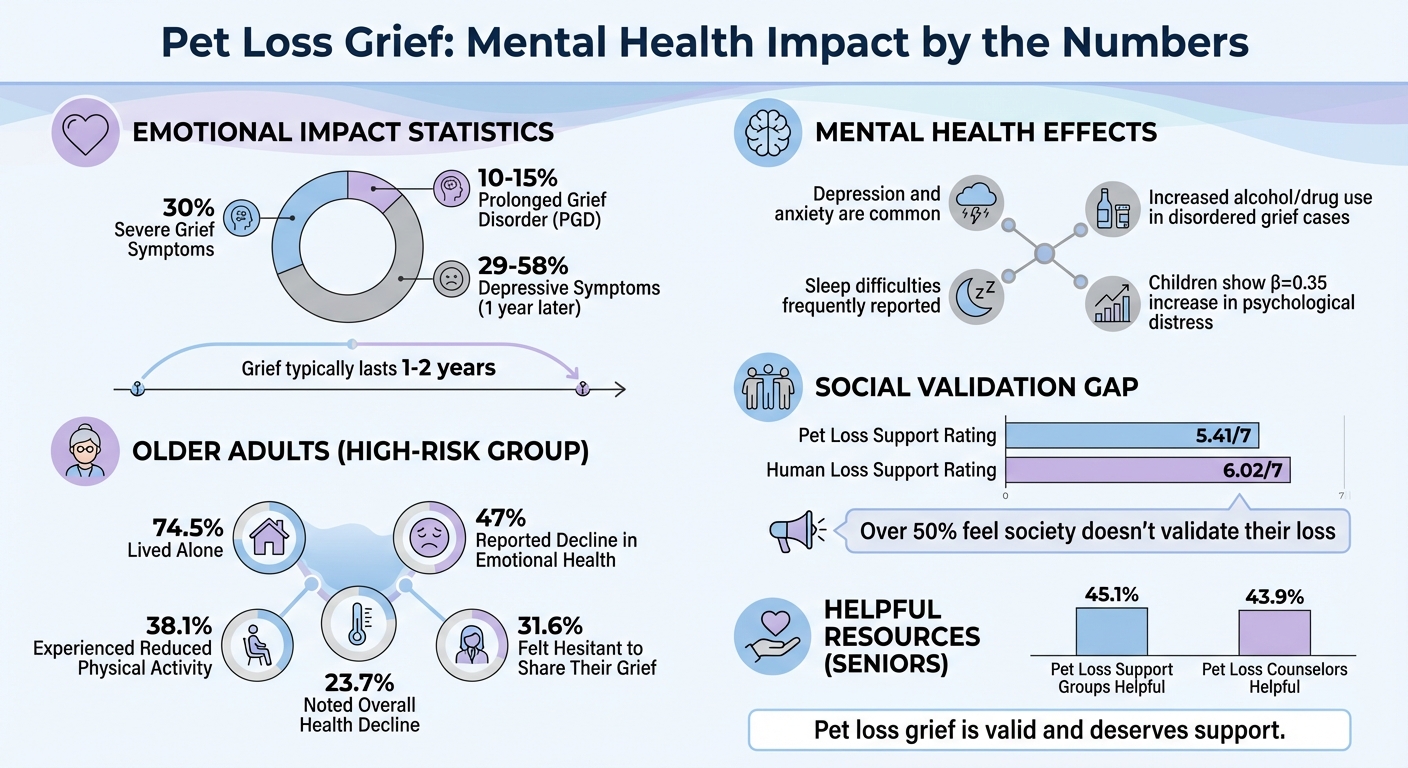
Pet Loss Grief Statistics and Mental Health Impact
What Research Shows About Pet Loss Grief
How Long Does Pet Loss Grief Last?
Grieving the loss of a pet typically lasts between 1 to 2 years. However, for many, the pain can stretch beyond a year, especially in cases of severe grief. Studies reveal that about 10% to 15% of pet owners develop prolonged grief disorder (PGD), a condition where feelings of intense sadness persist and disrupt daily life. In children and teenagers, this type of complicated grief can even predict depression for up to three years after the loss.
Several factors can influence how long someone grieves. A deep bond with a pet, a history of providing intensive care, or experiencing social isolation can increase the chances of prolonged mourning. Demographics also play a role - men who live with others tend to grieve longer than those who live alone, while individuals with higher levels of education are more likely to recover sooner.
Pet loss doesn’t just impact the length of grief; it’s also strongly tied to heightened feelings of depression and anxiety.
Depression and Anxiety After Pet Loss
The emotional toll of losing a pet often extends beyond sadness, leading to serious mental health challenges. Research shows that the diagnostic criteria for Persistent Complex Bereavement Disorder, originally designed for human loss, apply just as well to grieving pet owners.
"Grief disordered individuals exhibited more depression, loneliness, sleep difficulties, negative religious coping, and alcohol/drug coping compared to the rest of the sample. These findings support the application of the DSM-5 model of grief to owners of deceased pets." – Sherman A. Lee, Ph.D., Associate Professor of Psychology
Between 29% and 58% of people grieving a significant loss report depressive symptoms even a year later. Children, in particular, are especially vulnerable, with those who have lost pets showing a marked increase in psychological distress (β=0.35) compared to peers whose pets are still alive. This effect is often more pronounced in boys. Anxiety, loneliness, difficulty sleeping, and even post-traumatic stress symptoms are frequently linked to pet loss. Additionally, those struggling with disordered grief may turn to unhealthy coping mechanisms, such as increased alcohol or drug use.
The circumstances of a pet’s death can also shape the grieving process. Unexpected losses tend to amplify feelings of grief and shame, while natural deaths often result in less intense emotional reactions.
More than a Pet: Recognizing and Supporting Grief in Pet Loss
Pet Loss in High-Risk Groups
When it comes to coping with the loss of a pet, certain groups face unique challenges that can make the grieving process even harder.
Pet Loss in Older Adults
For many seniors, pets are more than just companions - they're lifelines. A study revealed that 74.5% of grieving seniors lived alone, relying heavily on their pets for emotional support and daily companionship. These animals provide structure to their lives, offering a sense of purpose, routine, and even social interaction. When a pet passes away, the loss can have a ripple effect. For example, 47% of older adults reported a decline in emotional health, 38.1% experienced reduced physical activity, and 23.7% noted an overall drop in their health. Losing the daily routines tied to pet care, like walking or feeding, can worsen age-related issues such as limited mobility.
"Disenfranchised grief may isolate the bereaved individual from others and thus impede recovery." – American Psychological Association
Adding to the struggle, 31.6% of grieving seniors felt hesitant to openly share their grief, fearing judgment or misunderstanding. While resources like pet loss support groups (45.1%) and pet loss counselors (43.9%) were identified as helpful, many seniors found these services hard to access.
Mental Health Risks in Vulnerable Individuals
For those already dealing with mental health challenges, the loss of a pet can feel like the ground has been pulled out from under them. Pets often serve as a critical source of comfort and emotional stability, and their absence can worsen conditions like depression and anxiety. In fact, research shows that pet owners are 1.89 times more likely to have experienced depression.
The circumstances surrounding a pet's death - such as euthanasia or an accidental loss - can also intensify feelings of guilt and shame. Without the right support, these emotions can lead to unhealthy coping mechanisms, further complicating recovery. For individuals in this situation, maintaining daily routines and seeking help from therapists who specialize in pet bereavement can be crucial steps toward healing.
sbb-itb-c538f2f
Research-Backed Ways to Cope with Pet Loss
Losing a pet can deeply affect mental health, but research offers practical ways to navigate the grief. These strategies, grounded in evidence, can help ease feelings of sadness, anxiety, and loss.
Therapy Options for Pet Loss Grief
Cognitive Behavioral Therapy (CBT) has proven to be one of the most effective methods for addressing grief after losing a pet. Studies show that CBT-based approaches significantly reduce symptoms of grief, depression, and trauma. In one study, addressing what researchers call "catastrophic misinterpretations" accounted for 69% of the changes in symptoms.
For those whose daily lives are significantly disrupted by their loss, Therapy After the Loss of a Pet (TALP) offers a specialized program. This approach combines CBT techniques with psychoeducation and resilience training, making it especially helpful for what experts refer to as "disenfranchised grief." Kenneth Doka describes this type of grief as being invalidated or dismissed by others:
"Disenfranchised grief messages... actively discount, dismiss, disapprove, discourage, invalidate, and delegitimize the experiences and efforts of grieving."
Experts suggest a three-tier approach to therapy: general psychoeducation for all grieving individuals, targeted CBT or TALP for moderate symptoms, and intensive one-on-one counseling for those experiencing prolonged or severe grief. Research highlights that 22.4% of pet owners continue to struggle with significant symptoms like crying and depression even a year after their loss.
In addition to therapy, creating a tangible memorial can be a powerful way to process grief.
How Memorials Help with Healing
Memorializing a pet isn't just a heartfelt action - it’s a proven method to support emotional healing. A study of 517 pet owners found that creating a memorial helps maintain "continuing bonds", allowing people to hold onto a symbolic connection with their pet rather than feeling pressured to completely "move on". Sharing your pet's story through memorials can help reframe your grief into a narrative that honors their memory.
Planning a memorial - whether it’s a small ceremony, planting a tree in a favorite spot, or putting together a photo album - can provide structure for processing emotions and bring a sense of closure. These acts serve as lasting reminders of the bond you shared.
Lori R. Kogan, PhD, a professor at Colorado State University, emphasizes the importance of individualized grieving:
"These results suggest that it is essential that those grieving the death of their pet be supported and reassured that there is no right or wrong way to grieve, with all options recognized as legitimate in the experience and expression of one's grief."
For those looking to create meaningful tributes, Pet Memory Shop offers a variety of options, including urns, memorial jewelry, and burial markers, to help honor your pet’s memory.
Support Groups and Community Resources
Social support is critical when coping with the loss of a pet. Research reveals that more than half of grieving pet owners feel society doesn’t fully validate their loss. In fact, they report receiving less support compared to those mourning a human loved one, with average ratings of 5.41 versus 6.02 on a 7-point scale.
Support groups can help fill this gap by providing a safe space where emotions are acknowledged and validated. Whether in-person or online, these communities offer what experts call "empathic bridging", allowing individuals to share feelings they might not feel comfortable expressing elsewhere. Resources like the ASPCA Pet Loss Hotline (877-474-3310) and the American Veterinary Medical Association also offer both emotional support and practical advice for self-care.
As Gosse and Barnes point out:
"Receiving understanding from others plays an important role in buffering feelings of grief when a pet dies."
Conclusion: Addressing Pet Loss as a Mental Health Issue
Research highlights that the grief from losing a pet deserves the same level of care and understanding as grief from losing a human loved one. In fact, studies show that nearly 30% of pet owners experience severe symptoms of grief after such a loss. The bond between pets and their owners triggers the release of oxytocin, dopamine, and prolactin - hormones that also play a role in parent-child relationships - helping to explain the depth of this connection.
Psychometric research further validates these findings. For example, a study by Sherman A. Lee demonstrated that the symptoms of pet loss align closely with the criteria for Persistent Complex Bereavement Disorder. As Dr. Lee put it:
"Grief associated with pet loss is similar in many ways to human loss."
The impact of pet loss on children is particularly striking. Dr. Erin C. Dunn examined data from 6,260 children and found that early experiences with pet loss were linked to higher levels of mental health challenges later on (β = 0.35, p = 0.013). She emphasized:
"Pet death may be traumatic for children and associated with subsequent mental health difficulties."
If you're struggling with the loss of a pet, seeking professional support can make a significant difference. Therapies like Cognitive Behavioral Therapy (CBT) and specialized grief counseling have been shown to help ease symptoms. Additionally, creating a memorial, such as those offered by Pet Memory Shop, can provide a meaningful way to honor your pet while supporting your healing journey. Remember, grief is personal - take the time you need to heal.
FAQs
How can I cope with the grief of losing a beloved pet?
Losing a pet is a profoundly emotional experience, and it’s completely natural to feel a mix of intense emotions like sadness, anger, or even guilt. Give yourself the space to feel these emotions without criticism. Sometimes, writing in a journal or reminiscing about the joyful moments you shared can help you navigate your grief and celebrate the special bond with your pet.
Finding a meaningful way to honor your pet’s memory can also bring a sense of comfort. You might hold a small ceremony, plant a tree in their honor, or keep a special memento like a personalized urn or a piece of memorial jewelry. These gestures can serve as lasting reminders of the love and happiness your pet brought into your life.
During this time, it’s important to take care of yourself, too. Stick to simple routines - eat nourishing meals, stay active, and make sure you’re getting enough rest. If your grief feels too heavy to bear or lingers longer than you expect, don’t hesitate to lean on friends, talk to a therapist, or join a pet-loss support group. Healing is a process, and while it takes time, honoring your pet’s memory while caring for yourself can make the journey a little easier.
Are there support groups to help cope with the loss of a pet?
Yes, there are groups dedicated to helping people cope with the grief of losing a cherished pet. These support groups provide a caring environment where individuals can share their emotions, connect with others who truly understand, and gain helpful coping techniques from experienced professionals.
Some organizations even offer virtual sessions, making it convenient to participate from the comfort of home. Meetings are often held weekly or monthly, and many programs give participants the flexibility to join either for a single session or on a more regular basis. These groups can be a lifeline, easing the loneliness that often comes with pet loss and offering meaningful comfort during a tough time.
What mental health challenges can arise after losing a pet?
Losing a pet can profoundly affect mental health, often evoking grief similar to losing a close family member or friend. For many, the loss of a beloved pet brings intense sorrow, which may sometimes evolve into prolonged or complicated grief - especially if the death was sudden or the pet held a central role in the household. Emotional reactions like depression (persistent sadness, emptiness, or lack of interest) and anxiety (restlessness, constant worry, or even panic attacks) are common. On top of that, physical effects such as trouble sleeping, changes in appetite, and, in rare instances, suicidal thoughts can occur.
Unfortunately, the deep pain of pet loss is often underestimated by society, leaving grieving pet owners feeling isolated. This lack of understanding can make the healing process even harder. Factors like a strong emotional bond with the pet, the pet's role as a companion or family member, and limited social support can amplify the sense of loss. Finding ways to honor your pet - like keeping a memorial item or creating a tribute - can help provide comfort and a sense of closure during this difficult time.