


When a family pet dies, it can be a child's first encounter with loss. Memorial activities help kids process grief by creating keepsakes, honoring memories, and finding comfort in shared rituals. These activities not only provide emotional support but also teach children that expressing sadness is natural and healthy. From painting memory stones to planting a tree, there are many ways to help children celebrate the joy their pet brought into their lives.
Key Takeaways:
- Age Matters: Tailor activities to a child’s understanding of death. Younger kids may prefer simple crafts, while older children might enjoy writing letters or creating a tribute video.
- Craft Ideas: Memory books, paw print keepsakes, and decorated stones give children a hands-on way to remember their pet.
- Living Tributes: Planting flowers or trees offers a lasting way to honor a pet's memory.
- Ceremonies: Holding a goodbye ritual or writing a letter helps children say farewell and express their feelings.
- Support: Be honest about death, encourage emotional expression, and maintain daily routines for stability.
Grieving a pet is tough, but these activities can help children focus on the love and happy times they shared.
Family Fun! DIY Memorial Stone Art
sbb-itb-c538f2f
Why Children Need Memorial Activities When Pets Die
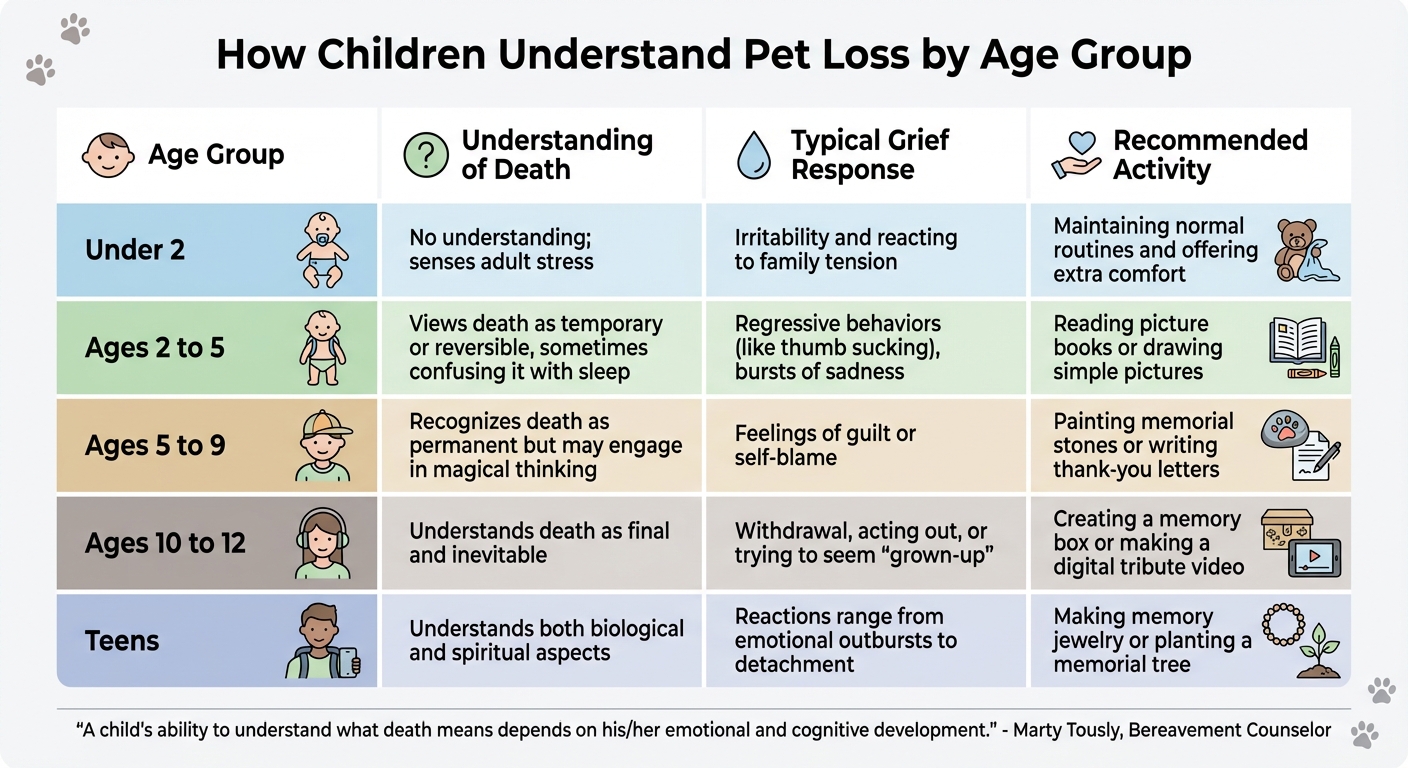
How Children Understand Pet Loss by Age Group
For many children, losing a pet is their first encounter with death. With pets present in 66% of U.S. households, this experience is common - and often deeply impactful for young minds.
How Children Understand Pet Loss at Different Ages
A child’s understanding of death evolves as they grow. For kids under five, death might seem temporary or reversible, much like how leaves fall in autumn but return in spring. A preschooler might genuinely ask when their hamster is coming back, believing the pet will return as if nothing happened.
Between the ages of five and nine, children often experience “magical thinking.” They begin to grasp that death is permanent but may mistakenly believe their actions or thoughts caused the loss. For instance, a child might think, “I yelled at Max yesterday, and now he’s gone - it’s my fault.” Bereavement counselor Marty Tously explains:
A child's ability to understand what death means depends on his/her emotional and cognitive development.
By age ten and up, kids understand that death is final and unavoidable for all living things. Teenagers, with their more developed cognitive and emotional skills, can comprehend both the biological and spiritual aspects of death. However, their reactions may vary widely - from intense emotional displays to appearing completely detached.
| Age Group | Understanding of Death | Typical Grief Response | Recommended Activity |
|---|---|---|---|
| Under 2 | No understanding; senses adult stress | Irritability and reacting to family tension | Maintaining normal routines and offering extra comfort |
| 2 to 5 | Views death as temporary or reversible, sometimes confusing it with sleep | Regressive behaviors (like thumb sucking), bursts of sadness | Reading picture books or drawing simple pictures |
| 5 to 9 | Recognizes death as permanent but may engage in magical thinking | Feelings of guilt or self-blame | Painting memorial stones or writing thank-you letters |
| 10 to 12 | Understands death as final and inevitable | Withdrawal, acting out, or trying to seem “grown-up” | Creating a memory box or making a digital tribute video |
| Teens | Understands both biological and spiritual aspects | Reactions range from emotional outbursts to detachment | making pet memorial jewelry or planting a memorial tree |
These developmental differences highlight the importance of memorial activities tailored to each child’s needs.
How Memorial Activities Help Children Heal
Memorial activities allow children to channel their emotions into meaningful actions. For younger kids, creating keepsakes - like a painted rock or memory jar - can provide comfort. These tangible objects give them something physical to hold onto during moments of sadness.
Such activities also emphasize the pet’s role as a cherished family member. As Marty Tously points out, it’s vital for children to see their pet as irreplaceable. Crafting keepsakes, like goodbye letters or painted stones, helps children focus on gratitude for happy memories rather than solely on the pain of loss. These physical tributes become a structured way to say goodbye.
Memorial activities also create structure during a time of emotional upheaval. A simple ceremony or ritual can give children a respectful way to honor their pet, especially since traditional funerals aren’t typically held for animals. Involving kids in decisions - like picking a memorial stone or choosing photos for a scrapbook - helps them feel empowered and included, giving them a sense of control in the grieving process.
Craft Projects to Remember Your Pet
Hands-on projects can be a powerful way for children to process grief. When kids engage in memorial crafts, they’re doing more than creating art - they’re finding a way to express their emotions. As The Ralph Site team puts it:
If we can teach our children that anger, sadness, guilt, loneliness and the myriad other feelings associated with grief are all natural, we can hopefully support them now and help pave the way for the future.
Simple projects like painting a rock or creating a memory box can help kids hold onto the love they shared with their pet. Here are some ideas for crafts that honor your pet’s memory while offering a creative outlet for your child.
Memory Books and Photo Albums
A memory book is a wonderful way for children to collect and preserve their favorite moments with their pet. Start with a scrapbook or binder and let your child fill it with photos, drawings, and written memories. Younger kids who aren’t able to write yet can describe their thoughts while you jot them down for them.
You can include anything that feels meaningful - pictures, stories, or even small keepsakes. Some families like to add a “patchwork heart” page, where children color different sections to represent specific memories, like a blue section for walks on rainy days or a yellow one for sunny afternoons in the backyard.
For kids who enjoy writing, encourage them to include letters addressed to their pet. These farewell notes can be a way for them to express feelings they didn’t get to share before their pet passed away.
Paw Print Keepsakes and Memorial Rocks
Painting memorial rocks is a simple yet heartfelt activity. Smooth, flat stones from your yard or a local park work perfectly. With some acrylic paint, your child can decorate the rock with the pet’s name, paw prints, or drawings that reflect their pet’s unique personality. Once the paint dries, these rocks can be placed in a special spot, like a garden or a bedroom shelf.
Some families take this a step further by starting a “rock sharing” tradition. They paint memorial stones and hide them in public places with a note inviting finders to share a photo on social media. This way, the memory of the pet can bring a little joy to others.
Another option is creating paw print molds. Using air-dry clay or a DIY mold kit, you can press your pet’s paw into the soft material to make an impression. Once the mold hardens, it can be displayed in a shadow box alongside items like collars, tags, or photos. As FuneralPrints.com explains:
For children especially, the loss of a pet is difficult to process. Keeping a visual reminder of your beloved animal friend may help them in their grieving process.
Memory Boxes and Time Capsules
A memory box offers kids a safe place to store items that remind them of their pet. A simple shoebox or container works well for holding things like collars, tags, or favorite toys. Decorating the box with paint, stickers, or photos makes it even more personal and meaningful.
For a twist, you might consider a time capsule. Along with photos and mementos, include written memories, then seal the capsule with a date to open later - perhaps on the pet’s birthday or adoption anniversary. This adds an element of anticipation and allows your family to revisit those memories in the future.
Another creative idea is a “jar of memories.” Have your child write down their favorite moments on small slips of paper, fold them into origami hearts, and place them in a clear jar. Whenever they’re feeling sad, you can pull out a heart together and relive a special memory.
Plant-Based Memorials: Trees, Flowers, and Gardens
Living memorials offer a thoughtful way for children to honor their pets by nurturing life. These tributes grow and change over time, much like the cherished memories they represent. Planting a tree or creating a garden provides kids with a meaningful space to feel close to their pet, reflect quietly, and even "talk" to them.
Caring for a memorial garden or plant can also help children process their grief by creating moments to celebrate happy memories and find comfort in the act of tending to something alive.
Planting Trees or Flowers
Choosing a plant that reflects your pet’s personality can make the memorial even more special. For example, Forget-Me-Nots symbolize love and remembrance, while roses express eternal love, a poignant reminder that love outlasts loss. A bright sunflower might honor a cheerful pet, and a sycamore tree could represent protection and hope, perfect for a pet who was a loyal guardian.
Pick a meaningful spot for the plant - perhaps where your dog loved to play or where your cat basked in the sun. Involve your child in selecting both the plant and its location. For those seeking a broader impact, the Arbor Day Foundation allows you to plant a tree in a National Forest for a $5 donation in memory of a pet. If you’d prefer something closer to home, a tree seedling for your yard costs around $9.99.
For families without outdoor space or those who move frequently, a houseplant can serve as a portable tribute. You might place it near your pet’s urn or in a sunny corner. If one plant doesn’t feel like enough, consider creating a small garden as a lasting and peaceful reminder.
Creating a Memorial Garden
A memorial garden can become a tranquil space for your family to gather, share stories, and celebrate your pet’s life. Start by having your child sketch a simple design, deciding where to plant flowers, place painted stones, or add meaningful decorations like wind chimes or statues.
Choose plants suited to your climate and the garden’s sunlight. For summer blooms, hydrangeas, lilies, or daisies bring vibrant colors. For shaded areas, hostas and coleus are excellent choices. If you want an autumn-themed garden, maples, mums, or asters provide warm tones of bronze and gold. Ground cover plants, which require less upkeep than grass, can make it easier for kids to help care for the space.
Personalize the garden with touches that reflect your pet's personality. Memorial garden items, such as decorative stones or figurines, typically range from $40–$70. Personalized wind chimes can add a soothing sound, offering comfort whenever your family visits the garden.
As Sandra Grossman, Ph.D., of Pet Loss Partners, beautifully explains:
By finding ways to care for yourself and honor the relationship you shared with them, you will find the pain will continue to diminish while the love continues to grow.
For additional inspiration, check out the wide selection of memorial products available at Pet Memory Shop.
Memorial Ceremonies and Goodbye Rituals
Memorial ceremonies provide a meaningful way to process grief while beginning the journey toward healing. These rituals help children understand that emotions like sadness, anger, and loneliness are a natural part of loss.
It's important to shape the ceremony to fit your child's age and emotional needs. For toddlers (ages 2 to 3), simple goodbyes and consistent routines work best. Preschoolers (ages 4 to 6) might enjoy creative activities like drawing or decorating memorial stones. Elementary-age kids could write poems or help plan the service, while older children and teens might prefer making tribute videos or planting trees in memory of their pet. From holding a pet funeral to writing goodbye letters, there are countless ways to create a personalized remembrance ritual.
Planning a Pet Funeral
A pet funeral can be a comforting way to say goodbye. Choose a location that holds meaning - like your pet’s favorite backyard spot or a nearby park - and involve your child in selecting the place and planning the details. Keep the ceremony simple and heartfelt by playing music that reflects your pet’s personality and inviting family members to share special memories.
Adding symbolic gestures can make the service even more meaningful. You might light candles, observe a moment of silence, or place flowers and painted stones at the burial site. For a home burial, children can help by wrapping the pet in a favorite blanket or decorating a biodegradable casket. Some families even include "tribute foods" - like bacon, tuna, or popcorn - as a nod to their pet’s favorite treats. Setting up a small altar with items like a collar, photos, or toys can also provide a touching way to honor your pet.
Writing Goodbye Letters or Poems
Encouraging your child to write a goodbye letter or poem can be a powerful way to process emotions and celebrate the bond they shared with their pet. These messages often focus on gratitude and happy memories, shifting the emphasis from loss to appreciation. They can be read aloud during the ceremony, stored in a memory box, or even buried alongside your pet.
For additional comfort, you could read a familiar piece like The Rainbow Bridge or help your child craft their own verses. Younger children might prefer drawing pictures with captions instead of writing full letters. Another creative option is to create a Memory Jar, where family members write down favorite moments on slips of paper. This jar can be revisited anytime someone feels the need to reflect on joyful memories.
Yearly Remembrance Traditions
Annual traditions can keep your pet’s memory alive in a way that feels uplifting rather than sorrowful. Lighting a candle on the anniversary of their passing or their birthday is a simple yet meaningful gesture. Taking a family walk to a favorite spot or trail can also bring back happy memories. Another idea is to donate toys or supplies to a local animal shelter in your pet’s name, turning your grief into a way to help others while teaching children about kindness and compassion.
Living memorials, such as planting a tree or creating a garden in your pet’s honor, can also grow into cherished yearly traditions. Watching a tree bloom or tending to a garden can serve as a gentle reminder that love and memories endure.
For more ideas on how to honor your pet’s memory, visit Pet Memory Shop, where you’ll find a variety of keepsakes designed to celebrate the lives of beloved pets.
How to Support Your Child Through Pet Loss
Be present and honest. When discussing death, use straightforward language to avoid confusion. Phrases like "put to sleep" or "went away" can be misleading for children. Instead, explain in simple terms that death means the body has stopped working and can no longer feel pain. Miranda Wichelns, a Licensed Clinical Social Worker and Certified Grief Specialist at CHOC, highlights the importance of this approach:
Honesty shows it is not wrong to talk about death or painful feelings, which will help your child cope with other losses in the future.
Let your child see your emotions - it teaches that grief is normal. Children may experience a wide range of feelings, from anger and guilt to relief, and that's perfectly okay. Reassure them that moments of happiness don’t mean they loved their pet any less. Grief can also show up physically, with symptoms like stomach aches, headaches, or a fluttery "butterflies in the tummy" sensation.
Encourage emotional expression by creating a safe space. This could be a "feelings fort" where your child can draw, journal, or look at photos of their pet. For younger kids, tools like painted "story stones" with different emotion faces can help them identify and share their feelings. Older children might prefer privacy, so respect their need to write private notes or spend quiet time reflecting.
At the same time, keep an eye on their behavior. Look for signs that they might need extra support. While most children are naturally resilient, some may find it harder to process their loss. Watch for ongoing issues like frequent nightmares, withdrawal from friends, or a noticeable drop in school performance. Florence Soares-Dabalos, a Licensed Mental Health Professional at UC Davis, explains:
Children typically know how to grieve; they don't let thoughts cloud the process like adults do.
If these behaviors persist, reaching out to pet grief counseling resources or a specialist can be a helpful step.
Stick to routines and find meaningful ways to honor your pet. Keeping regular schedules for meals, bedtime, and daily activities provides a sense of stability during an emotional time. Memorial activities - like creating a memory box, planting a garden, or holding a small ceremony - can give your child a thoughtful way to remember and celebrate their pet.
Conclusion
Losing a pet introduces children to the concept of death, often for the first time. The memorial activities outlined in this guide - like creating memory boxes or planting a garden - provide meaningful ways to begin the healing process. These activities serve as intentional steps toward emotional recovery, offering children practical outlets to navigate feelings of sadness, guilt, and loneliness. Grief, as these rituals reinforce, is a natural and necessary response.
Participating in remembrance rituals can also help children develop lifelong coping skills. In many ways, experiencing the loss of a pet can prepare them for future losses, fostering emotional resilience and a deeper understanding of how to process grief.
Memorial activities also encourage shifting focus from the pain of loss to the joy of cherished memories. A planted tree, for example, can grow into a living tribute, while simple acts like lighting a candle on the pet's birthday can turn difficult days into moments of warmth and reflection. These traditions help keep the bond alive, offering comfort and a sense of connection even after the pet is gone.
FAQs
How can I help my child cope with the loss of a pet?
Helping a child cope with the loss of a cherished pet begins with honest, heartfelt conversations. Use simple, age-appropriate words to explain that death means the pet’s body has stopped working - they can no longer eat, play, or feel pain. Emphasize that this is a natural part of life, and encourage your child to express their emotions, whether they’re feeling sad, angry, or confused. Let them know it’s perfectly okay to grieve in their own way.
Creating a special way to honor the pet can also be incredibly healing. This could involve lighting a candle, setting up a small memory area with photos and favorite toys, or making a keepsake like a painted stone or memory jar. Reading books about pet loss or drawing pictures together can help your child process their feelings. For lasting tributes, you might explore options like urns, burial markers, or jewelry from Pet Memory Shop to keep your pet’s memory close. These small rituals can bring comfort and help your child begin to find peace.
What are some meaningful ways for children to remember a pet who has passed away?
Helping children cope with the loss of a pet can be a meaningful way to guide them through their grief and help them heal. For younger kids, around ages 3 to 5, simple and hands-on activities work best. Try lighting a candle together (with adult supervision), making a clay paw print, or creating a memory jar filled with notes and drawings. These small gestures can feel comforting and help them process their emotions.
Children in elementary school, between 6 and 10 years old, might appreciate more involved ways to remember their pet. You could help them put together a memory box filled with photos, toys, and written notes, or they could design a scrapbook with pictures and stories about their pet. Another idea is to create a special remembrance area at home or in the garden, complete with a photo and a favorite item that belonged to the pet. This gives them a tangible place to reflect and feel connected.
For pre-teens and teens, aged 11 to 14, activities that allow for creativity and personal expression can be especially meaningful. They might enjoy painting a memorial stone, planting a tree or garden in their pet's honor, or creating a digital slideshow or video to celebrate their pet's life. Keepsakes like memory boxes or custom portraits can also be incorporated into these activities, giving them a lasting tribute to cherish.
How can I help my child cope with the loss of a pet?
Helping your child cope with the loss of a pet begins with creating a supportive environment where they feel comfortable sharing their emotions. Encourage them to talk about their favorite memories and reassure them that it’s normal to feel sad, angry, or even confused. Acknowledging and validating their feelings can help them understand that grieving is a natural part of losing someone - or in this case, a cherished pet - they love.
Engaging in meaningful activities to honor their pet can also be a comforting way to process grief. For example, you might help them create a memory box filled with photos, a collar, or a favorite toy. Other thoughtful ideas include making a memorial stone, starting a scrapbook, or writing down special memories in a journal. These activities not only provide an outlet for their emotions but also celebrate the unique bond they shared with their pet.
Keeping to daily routines while incorporating small moments of remembrance can also be helpful. Lighting a candle, holding a simple ceremony, or taking a moment to share a favorite story about the pet can provide a sense of comfort and continuity. If the grief feels overwhelming, don’t hesitate to reach out to a school counselor or therapist for extra support. By offering open communication, creative ways to honor their pet, and consistent emotional support, you can help your child navigate this difficult time and cherish the memories of their beloved companion.