


Losing a pet can be deeply painful, leaving you with a mix of emotions and memories that are hard to process. Writing offers a way to navigate this grief, providing emotional relief and a means to honor your pet. Here’s how:
- Emotional Release: Writing helps you express feelings like sadness or guilt, reducing stress and improving your mood. Studies show just 15 minutes a day can lower blood pressure and improve emotional health.
- Preserve Memories: Journaling captures the little details - your pet’s quirks, habits, and cherished moments - so they remain vivid over time. Consider prompts like “How did we meet?” or “What was their favorite activity?”
- Find Meaning: Writing helps you reflect on your grief, uncover lessons, and make sense of your emotions. This process can bring clarity and a sense of control.
- Support Healing: Over time, journaling can improve physical health, emotional balance, and resilience. Revisiting past entries shows your progress and growth.
- Honor Their Legacy: Documenting your pet’s life through stories, letters, or poems creates a lasting tribute. Sharing these memories can connect you with others who understand your loss.
Writing isn’t about perfection - it’s about honesty. Whether it’s a letter to your pet or a simple daily journal, these practices help you heal while keeping their memory alive.
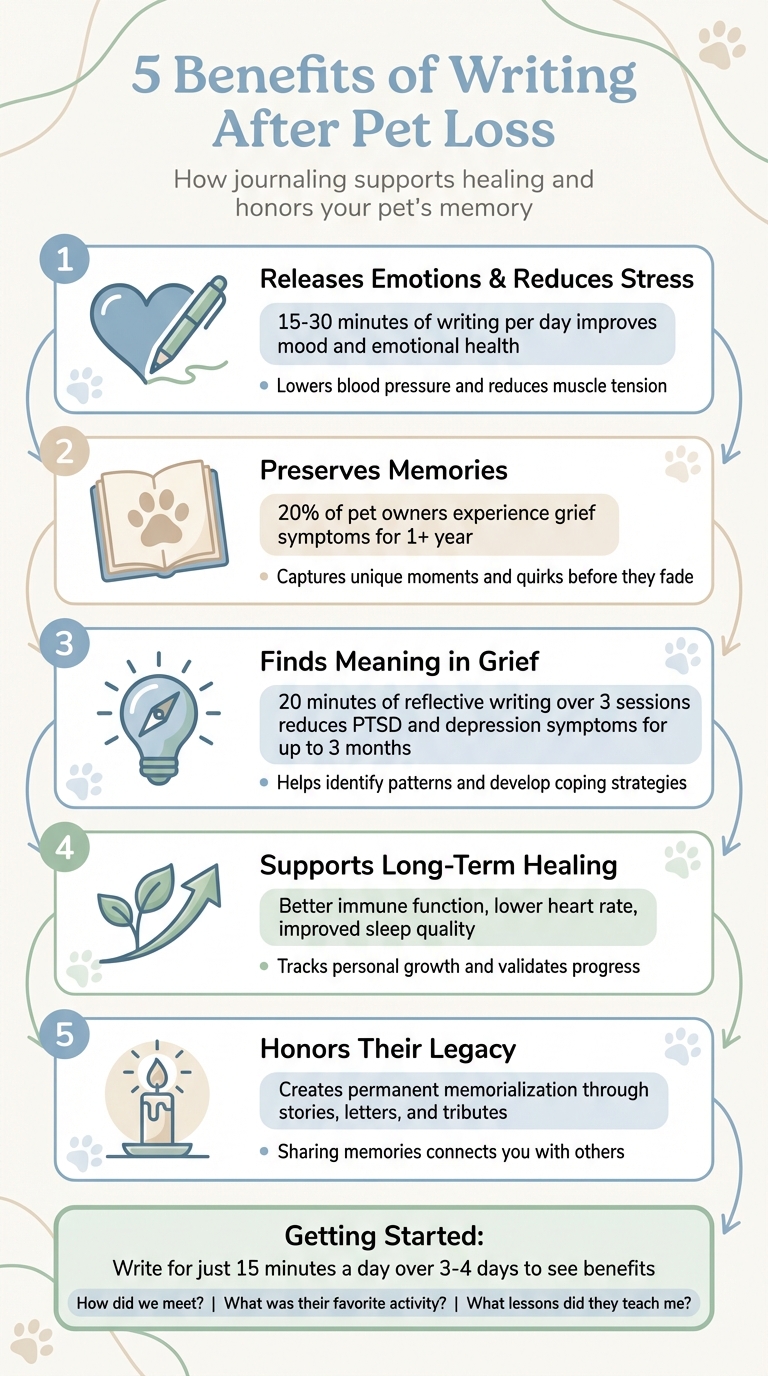
5 Benefits of Writing After Pet Loss: Key Statistics and Health Impacts
Grief Writing After a Dog Dies | Sheila Cooperman
1. Releases Emotions and Reduces Stress
Losing a pet can bring an overwhelming wave of grief that feels impossible to bear. Writing offers a safe space to pour out those emotions without fear of judgment or interruption.
"The beauty of journaling is the opportunity to pen thoughts at any time and to take those thoughts that might appear conflicted in our mind and heart and release them on paper." - Coleen Ellis, Founder, Two Hearts Pet Loss Center
Putting your feelings into words can help organize your emotions, breaking the cycle of painful thoughts that might otherwise loop endlessly in your mind. Research even shows that people who write about their emotions are better equipped to manage them compared to those who don't. This isn’t about rushing to move on - it's about giving your grief a place to land. One powerful way to do this is by writing a letter to your pet.
In the letter, say everything you wish you could have told them: "I'm sorry", "I didn’t know", or "I wish we had more time together." This simple act can ease the guilt that often follows loss. Write without holding back. Studies reveal that writing for just 15 to 30 minutes a day over three to four days can significantly improve your mood and emotional health.
Writing doesn’t just help emotionally - it can also benefit your physical health. Bottling up intense emotions can lead to increased muscle tension, a racing heart, and higher blood pressure. Research shows that releasing these feelings through writing can bring measurable relief. For instance, a study with 49 adults found that those who wrote about upsetting events for 20 minutes a day recovered more quickly after a medical biopsy than those who wrote about neutral topics. Your body feels the difference when your grief has an outlet.
2. Preserves Memories and Creates a Personal Pet Memorial
Memories can fade over time, but writing has a way of capturing the little details that made your pet so special - the way they tilted their head when they were curious, or their favorite sunny spot on the couch. These small, unique moments are what defined the bond you shared, and journaling gives you a way to hold onto them forever. It turns fleeting memories into a lasting tribute.
"A tribute to a life lived, loved, and shared creates a lasting memorial of your beloved pet." - Coleen Ellis, Founder, Two Hearts Pet Loss Center
If you’re not sure where to start, try simple prompts like: "How did we meet?", "What was the funniest thing my pet ever did?", or "What lessons did they teach me?" Many pet owners also create scrapbooks, combining written stories with photos. This blend of words and images - sometimes called emotional photojournalism - helps tell the full story of your pet’s life.
For a more formal tribute, consider writing an obituary or pairing your words with meaningful keepsakes. Options like custom burial markers, memorial jewelry, or photo urns from Pet Memory Shop can help you create a heartfelt memorial. (Bonus: They offer free US shipping on orders over $100.)
Writing doesn’t just preserve memories - it also helps you stay emotionally connected to your pet. Studies show that about 20% of pet owners experience grief symptoms for a year or more. Keeping a written record can ease the weight of that grief while keeping your pet’s memory close to your heart.
3. Helps You Find Meaning in Your Grief
Losing a pet can leave you feeling adrift in a sea of emotions. Writing, however, offers a way to reclaim some sense of control by helping you shape your story and decide how to express your feelings. Jessica Fein, a grief expert and author, puts it beautifully:
"Writing lets us regain some control, not of the ultimate outcome, but of the tsunami of emotions coming our way. With pen in hand, we own our narrative."
This process of moving from raw emotion to thoughtful reflection can help you uncover a deeper sense of meaning in your loss.
When you translate your feelings into words, you shift from being consumed by your emotions to actively examining them. Dr. Lisa Shulman, Professor of Neurology at the University of Maryland, explains this transformation:
"Giving it a concrete description causes it to feel more manageable. And taking the time to put my emotions into words helped me get in touch with and identify the distress I was feeling."
Even dedicating just 15–30 minutes a day to writing over several sessions can deepen your understanding of your emotions and leave a lasting positive impact on your emotional well-being.
As you review your writings, patterns may begin to emerge - patterns you might not have noticed otherwise. You might discover that certain times of day are harder to get through or that feelings of exhaustion tend to accompany specific memories. Recognizing these recurring themes can help you make sense of your emotions and develop strategies to cope with them.
Using prompts can also guide your reflection. Ask yourself questions like, "What did my pet teach me about love?" or "In what ways have I grown through this experience?" Shifting your focus to the positive lessons your pet brought into your life, rather than solely revisiting the pain of loss, can ease your adjustment. Research even shows that writing about these benefits for just 20 minutes over three sessions can significantly reduce symptoms of PTSD and depression for up to three months.
Another meaningful exercise is writing a letter to your pet. This isn't just a way to release emotions - it’s an opportunity to reflect on the unique role they played in your life and the lessons they taught you. By weaving these insights into your story, writing becomes more than a tool for expression; it transforms your memories into a guide for healing and growth.
sbb-itb-c538f2f
4. Supports Long-Term Healing and Personal Growth
Grief doesn’t follow a straight path - and neither does writing. The benefits of writing grow over time, as weeks and months of consistent journaling help you untangle complex emotions and map out actionable steps toward healing. This ongoing practice not only brings clarity to your feelings but also lays the groundwork for building resilience.
Studies show that expressive writing can accelerate physical recovery and improve emotional regulation. Over time, regular journaling has been linked to better immune system function, lower heart rates, reduced blood pressure, and improved sleep quality. Much like earlier reflections, writing becomes a tool that bridges the gap between immediate grief and long-term recovery.
But the benefits don’t stop at physical health. Journaling also tracks your personal growth. Looking back on older entries can validate your progress and provide comfort when healing feels like it’s dragging. Dr. Lisa Shulman, a Professor of Neurology at the University of Maryland, captures this transformation beautifully:
"Each of these steps was a formative step toward healing and emotional restoration. At some point, what had been overwhelming became part of my life story."
Writing also helps you uncover hidden strengths. It can reveal coping strategies you’ve used in the past, giving you tools to navigate your current grief. By documenting these strategies, you not only recognize your own resilience but also honor the role your pet played in shaping it. Coleen Ellis, Founder of Two Hearts Pet Loss Center, explains it well:
"Journaling provides the encapsulation of thought which prompts us to create next steps for ourselves - yet another tool to help us move forward in the healing process."
Through this process of self-reflection, writing becomes more than just an outlet - it’s a path to discovering just how strong you truly are.
5. Honors Your Pet's Legacy
Writing can turn the pain of loss into a heartfelt tribute that captures your pet's personality and the joy they brought into your life. By jotting down their quirks, silly nicknames, and favorite pastimes, you create what Coleen Ellis, Founder of Two Hearts Pet Loss Center, calls a "permanent memorialization". Think about the little things - how they tilted their head when curious or their bursts of playful energy. Without a written record, these cherished memories might fade over time.
Beyond helping you process grief, writing becomes a way to celebrate your pet's unique journey. It shifts the focus from sorrow to appreciation. As novelist John Galsworthy beautifully put it, "No stone stands over where he lies. It is on our hearts that his life is engraved". By documenting their impact, you honor their life and ensure their story is remembered.
Sharing these written tributes can also extend your pet's legacy. Posting an obituary or sharing stories on social media creates a space for others to connect, reflect, and offer their support. It turns your pet's memory into something that resonates beyond your own experience.
Even simple acts of writing can be deeply meaningful. You might pen a letter to your pet, sharing things left unsaid, or write from their perspective to capture the bond you shared. You could create a formal obituary, compose a poem, or pair photos with captions in a scrapbook. These creative outlets not only preserve your pet's memory but also help you navigate the healing process.
As Coleen Ellis reminds us, "To honor death is to honor life". Through writing, you're not just coping with grief - you’re ensuring your pet’s memory lives on in a tangible, lasting way.
Conclusion
Losing a pet can feel like complete chaos, but writing offers a way to regain some sense of order amidst the turmoil. It helps organize emotions, preserve cherished memories, and create space for healing. As Jessica Fein aptly says, "Writing restores a bit of control in the midst of chaos".
Studies show that just 15 minutes of writing can boost both emotional and physical well-being. Over time, this simple act can help you weave your grief into the fabric of your life, enabling you to move forward while keeping your pet's memory close to your heart.
Writing doesn’t require perfection - just honesty. Whether you use prompts, write letters to your pet, or simply jot down your thoughts, these techniques can help you express your feelings. Even dedicating a short time each day can become a meaningful ritual, honoring both your grief and your pet’s legacy.
As Pierre Corneille once said, "One often calms one's grief by recounting it". Writing allows you to do more than just process your loss - it creates a lasting tribute to your pet. Your words capture their unique quirks, their love, and the joy they brought to your life, ensuring their memory lives on.
If you're looking for another way to honor your pet, consider exploring memorial keepsakes at Pet Memory Shop.
FAQs
How does writing help with grieving the loss of a pet?
Writing can be a heartfelt way to navigate the emotions that come with saying goodbye to a beloved pet. It gives you space to reflect on cherished memories, express feelings like sadness or guilt, and start to make sense of your grief. Putting your thoughts into words can help you feel more grounded in your emotions while also creating a personal way to honor your pet’s life.
Journaling regularly has been linked to reduced stress, better sleep, and less anxiety - benefits that can aid both emotional and physical healing during tough times. You don’t need to write a lot; just set aside 10–15 minutes a day to jot down whatever feels right. Whether you’re recounting joyful moments, describing your loss, or simply letting your emotions flow, this simple habit can become a source of comfort. Over time, it might even bring a smile as you remember the love and joy your pet brought into your life. For more guidance, Pet Memory Shop offers tools to help you create a lasting tribute to your cherished companion.
What are some writing prompts to help me remember my pet?
Writing about your pet can be a comforting way to honor their memory and navigate your grief. If you're unsure where to start, these prompts might help spark some thoughts:
- Start with 'I remember...': Think back to those special moments, like the first time your pet made you laugh or a cherished routine you shared every day.
- Focus on specific memories: Write about a holiday or trip you took together, a funny incident that still makes you chuckle, or a moment that perfectly captured your pet's personality.
- Share your feelings: Reflect on what you miss most, how their absence has changed your days, or the joy they brought into your life.
To make the experience even more personal, try keeping a journal near a keepsake from Pet Memory Shop, such as a memorial photo frame or urn. Writing can be a meaningful way to celebrate your bond and keep your pet's memory close to your heart.
How can writing help with healing after losing a pet?
Writing can be an incredibly meaningful way to process the grief that comes with losing a beloved pet. By putting your feelings into words, you create a space to safely express emotions - whether it's sadness, anger, or even cherished memories that bring a smile. This act of writing can help ease the weight of overwhelming emotions, making them feel less daunting. It also allows you to bring buried pain to the surface, giving you a sense of control over your healing process.
Journaling over time can do more than just provide relief - it can help you notice emotional patterns and even reshape how you view your loss. Instead of letting grief dominate, it becomes a chapter in your life story, one that you can carry with you in a healthier way. And the benefits don't stop there. Writing has been shown to improve sleep, lower stress levels, and even contribute to better physical well-being. If you're looking for extra guidance, Pet Memory Shop offers tools like guided journal prompts to help you honor your pet's memory while finding your way through the healing journey.