


Losing a pet can feel as painful as losing a loved one, yet many people face stigma around their grief. Pet loss workshops help by offering structured support to process emotions like sadness, guilt, and anger. Research shows these workshops reduce feelings of isolation, improve coping skills, and promote emotional recovery.
Key findings include:
- Grief is often intense: 82% of pet owners fixate on their loss, and 22.4% still experience significant grief a year later.
- Workshops provide relief: Techniques like Cognitive Behavioral Therapy (CBT) help participants manage negative thoughts, reducing grief symptoms.
- Social support matters: Group settings create connections, reducing isolation and validating emotions.
- Memorial products aid healing: Items like urns or keepsakes help maintain emotional bonds and offer comfort.
Workshops use methods like psychoeducation, CBT, and rituals to address grief's complexity. Combining these with memorial products provides a more comprehensive approach to healing.
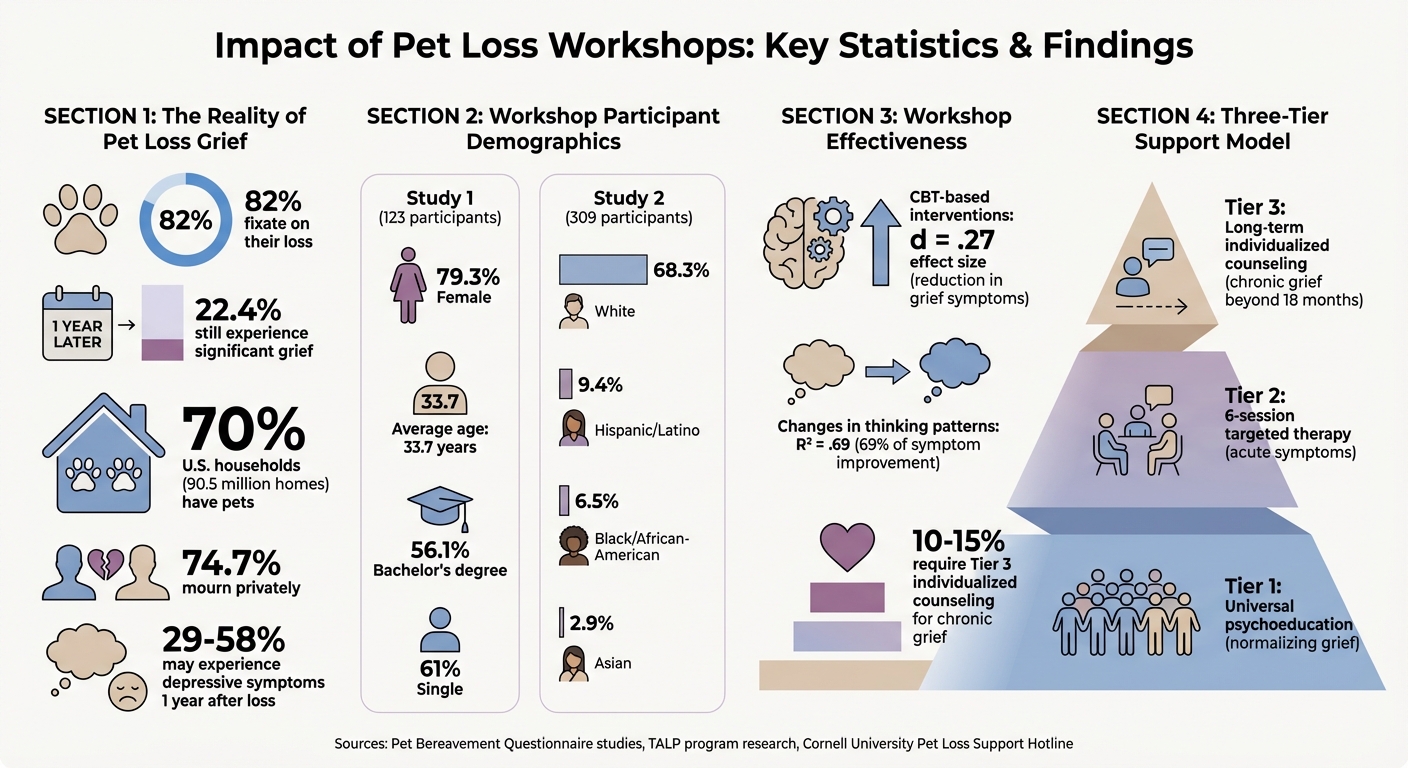
Pet Loss Workshop Effectiveness: Key Statistics and Outcomes
Study Overview and Research Methods
Research Design and Participant Information
Several studies have taken a closer look at pet loss workshops, offering insights into how individuals cope with the grief of losing a beloved animal companion. For instance, a 2025 cross-sectional study involved 123 pet owners who had experienced pet loss. Researchers used the Pet Bereavement Questionnaire (PBQ) to measure the intensity of their grief. The participants were mostly female (79.3%), with an average age of 33.7 years. Over half (56.1%) had earned a bachelor's degree, and 61% were single.
Another study focused on 309 participants who had lost either a dog or a cat, examining how factors like social support impacted their grieving process. Among these participants, the demographic breakdown included 68.3% White, 9.4% Hispanic/Latino, 6.5% Black/African-American, and 2.9% Asian. Additionally, a qualitative study brought in insights from 6 accredited Pet Bereavement Counseling therapists, who shared their expertise on providing specialized grief support.
These diverse participant profiles played a crucial role in shaping a three-tiered program designed to address different levels of grief intensity. The program, called TALP (Therapy After the Loss of a Pet), was developed to tackle the unique challenges associated with grieving a pet.
- Tier One: Focuses on normalizing the grief experience through psychoeducation.
- Tier Two: Offers a structured six-session intervention based on Cognitive Behavioral Therapy (CBT) to alleviate acute symptoms.
- Tier Three: Provides long-term, individualized counseling for those at risk of experiencing chronic grief.
Workshop Structure and Format
Drawing from these research findings, the workshops were designed to address specific aspects of grief through structured formats. For example:
- The Grief Recovery Method: A six-session program with two-hour meetings that utilized The Grief Recovery Handbook For Pet Loss to guide participants through their emotions.
- The CBT-based TALP program: Another six-session workshop that combined psychoeducation, resilience training, and coping strategies.
- The G-TEP protocol: A 90-minute, eight-step group session focused on stress management.
To evaluate the effectiveness of these workshops, researchers used tools like the Grief Experience Inventory (GEI), which compared grief from pet loss to grief from human loss by measuring emotions such as despair and anger. They also tracked participants' progress over time with longitudinal assessments, checking in at intervals of 2, 4, 8, and 26 weeks, as well as one year after the loss. These methods provided a clearer picture of how grief evolved and how the workshops contributed to emotional recovery.
Key Findings: How Pet Loss Workshops Help
Emotional Relief and Coping Methods
Pet loss workshops provide a much-needed space for people to process the complex emotions that often accompany losing a beloved animal companion. Research highlights that these workshops create a "safe place" where participants can work through feelings like guilt, shame, anger, and loneliness. Notably, changes in distorted thinking patterns accounted for a large portion of symptom improvement (R² = .69). Using Cognitive Behavioral Therapy (CBT) techniques, attendees were able to challenge "if only" thoughts and experience significant relief from their grief.
CBT proved particularly effective, showing a measurable reduction in grief symptoms (d = .27). This approach helped participants move from a state of passive suffering to actively finding ways to adapt and cope. Instead of feeling trapped in their pain, individuals gained practical tools to make sense of their loss and begin to heal.
"The shame that people feel about their emotions during the loss of a pet may cause them to isolate and hide their feelings."
Workshops also introduced the concept of "emotional oscillation", which encourages participants to embrace both positive and negative emotions rather than suppressing them. This approach not only alleviated personal grief but also laid the groundwork for collective healing within the group.
Building Social Support Networks
In addition to personal healing, these workshops play a vital role in building social connections. The group setting fosters "empathic bridging", where participants validate each other's experiences of the human–animal bond - something society often overlooks. Considering that approximately 70% of U.S. households (90.5 million homes) have pets, the grief accompanying pet loss is a shared, though frequently unacknowledged, experience.
The workshops help reduce feelings of isolation by connecting people who understand the depth of this bond. Many participants find themselves transitioning from being supported to offering support to others, an exchange that boosts self-esteem and promotes recovery. Additionally, high levels of perceived social support within these networks have been linked to reduced attachment anxiety and avoidance after a loss.
"We have to normalize that this grief is real."
- Dr. Amy Sullivan, Clinical Health Psychologist, Cleveland Clinic
Small group formats, with limited participants, create an environment where individuals feel safe to share their stories. This intimate setting encourages open dialogue and mutual understanding, allowing participants to honor their pets without fear of judgment.
Supporting Yourself and Other Grieving Hearts- Webinar #2 of "The Animal Loss Grief Journey"
sbb-itb-c538f2f
Different Workshop Approaches for Grief Support
Pet loss workshops use a variety of methods to help individuals navigate grief, and research suggests that combining approaches often yields better results than relying on a single method. By understanding these different techniques, people can find the type of support that aligns best with their needs. Let’s take a closer look at some of the key methods and their impact on grief recovery.
One standout approach is Cognitive Behavioral Therapy (CBT), which has been shown to effectively reduce symptoms of grief. Studies reveal that CBT-based interventions are particularly helpful in alleviating depression, anxiety, and trauma, with an effect size of d = .27 at post-treatment. These workshops focus on challenging negative thought patterns that can keep individuals stuck in their grief. However, CBT does require skilled, professional facilitators, which can make these sessions pricier or harder to access. To address various aspects of grief, other models often complement CBT.
A well-structured option is the three-tier model, which adapts support to the severity of grief. This model includes:
- Tier 1: Universal psychoeducation that provides basic information to normalize the grief experience for everyone.
- Tier 2: Targeted therapy, such as the six-session TALP program, for individuals whose grief disrupts daily life.
- Tier 3: Individualized counseling for the 10–15% of people dealing with chronic grief that persists beyond 18 months.
This tiered system ensures that resources are allocated effectively, focusing on the specific needs of each individual.
Another approach, the Continuing Bonds method, shifts away from the traditional idea of "letting go." Instead, it encourages maintaining a meaningful connection with the lost pet through rituals, photographs, or mementos. While this can offer comfort and help people integrate their loss into daily life, it may also temporarily intensify grief or make moving forward more challenging for some. Its success often depends on whether the individual's grief is socially acknowledged. For those experiencing disenfranchised grief, this approach might even increase feelings of distress.
Table: Workshop Methods and Their Effects
| Workshop Method | Primary Focus | Key Benefits | Potential Challenges |
|---|---|---|---|
| Cognitive Behavioral Therapy (CBT) | Thought and behavior patterns | Proven to reduce depression and anxiety symptoms | Requires trained professionals; higher cost |
| Psychoeducation | Normalizing grief | Affordable; validates the "right to grieve" | May not be enough for chronic grief cases |
| Continuing Bonds | Memorialization and rituals | Offers comfort; integrates loss into life | Can make it harder for some to move forward |
| Resilience-Based | Balancing emotional and action responses | Adapts to individual coping styles | Needs careful assessment of coping mechanisms |
| Peer Support Groups | Social connection | Reduces isolation; builds community | Group dynamics may not suit everyone; others' grief can feel overwhelming |
These methods highlight the diverse ways workshops can address grief, offering individuals options that cater to their emotional and practical needs. By tailoring support to different circumstances, these approaches create opportunities for meaningful healing.
Combining Workshops with Memorial Products
How Memorial Products Support Healing
Bringing together the structure of pet loss workshops and the comfort of memorial products creates a well-rounded approach to healing. Memorial products serve as physical reminders of cherished memories, offering a sense of stability during grief. When someone touches a necklace crafted from their pet's paw print or holds a beloved, worn collar, they find a way to steady themselves amidst emotional chaos. These items engage memory and sensory centers, helping to ease the pain of loss.
Memorial products also play a crucial role in validating grief that often goes unacknowledged. A burial marker or an engraved urn sends a powerful message: your loss is real and significant. Lisa Hutchison, a Licensed Mental Health Counselor, explains:
"Rituals help you grieve by acknowledging the life and times shared with your pet. In addition to remembering, rituals create a continuing bond of connection to a deceased pet's spirit which offers comfort and healing".
Rather than pushing individuals to "move on", these keepsakes encourage a healthy emotional connection with their pet. Stephen Moeller, a Grief Recovery Specialist, emphasizes that effective memorialization is about:
"completing their relationship" with their pet, allowing them to "enjoy their fond memories of the lifetime they shared, rather than reliving those moments related to the loss alone".
For the 22.4% of pet owners who still experience grief symptoms a year after their loss, these physical reminders provide long-lasting comfort. By combining workshops with memorial products, the healing process becomes more meaningful and impactful.
Pet Memory Shop's Support Resources

Pet Memory Shop offers a range of products designed to complement the healing process facilitated by grief workshops. Their urns provide a respectful way to preserve remains, with a simple guideline for sizing: one cubic inch per pound of body weight. For instance, a 50-pound dog would require a 50-cubic-inch urn. Memorial jewelry offers a deeply personal way to maintain a connection, while burial markers create a lasting tribute that acknowledges the importance of your loss.
The shop also features memory boxes and keepsake items to store collars, ID tags, and favorite toys. These items not only preserve memories but also act as therapeutic tools. Research from Cornell University's Pet Loss Support Hotline highlights that engaging with keepsakes can significantly improve long-term emotional well-being. By combining these tangible resources with workshop strategies, Pet Memory Shop ensures ongoing support for those navigating grief. Plus, with free U.S. shipping on orders over $100, these healing tools are made readily accessible when you need them most.
Conclusion
Research highlights that pet loss workshops provide essential emotional support, helping individuals process grief in healthier ways. While 74.7% of pet owners tend to mourn privately after losing a beloved animal companion, those who participate in structured support systems report reduced feelings of guilt, depression, and social isolation. These workshops offer a safe space to validate emotions that are often overlooked or dismissed.
In addition, studies suggest that pairing workshop strategies with memorial products can further aid the healing process. Items like urns, jewelry, and burial markers do more than preserve cherished memories - they help establish what researchers call "continuing bonds", allowing pet owners to maintain meaningful emotional connections with their pets. As Dr. Lori R. Kogan from Colorado State University explains:
"It is essential that those grieving the death of their pet be supported and reassured that there is no right or wrong way to grieve, with all options recognized as legitimate in the experience and expression of one's grief".
For the 29% to 58% of individuals who may still experience depressive symptoms a year after their loss, access to both social support and tangible memorials can make a profound difference. Pet Memory Shop addresses this need by offering a combination of meaningful memorial products and supportive resources. With over 10,000 satisfied customers and free U.S. shipping on orders over $100, they ensure these resources remain accessible when you need them most.
Ultimately, both emotional and physical forms of support play a vital role in easing the pain of loss. Grief deserves acknowledgment, and healing requires intentional support - whether through community workshops or memorial products, taking deliberate steps to process loss promotes long-term emotional well-being.
FAQs
How do pet loss workshops help people feel less alone in their grief?
Pet loss workshops offer a welcoming space where people can connect with others who truly understand the unique bond shared with a beloved pet. Through sharing personal stories and hearing those of others, participants often find comfort in realizing they’re not alone in their grief.
Led by experienced professionals, these workshops provide guidance on coping strategies and encourage open emotional expression. Activities such as guided storytelling or creating keepsakes allow attendees to honor their pets’ memories while building a sense of community. This shared journey helps validate emotions and eases feelings of loneliness, making the process of healing just a bit more manageable.
How can memorial products help with grieving the loss of a pet?
Memorial products, such as personalized urns, paw-print jewelry, and engraved keepsakes, offer a heartfelt way to honor the memory of a beloved pet. These items provide grieving pet owners with a tangible connection to their companion, bringing comfort and helping them navigate the difficult process of saying goodbye.
Studies suggest that physical mementos can help ease emotional pain by transforming grief into a more reflective and meaningful experience. Whether it’s a decorative urn or a piece of memorial jewelry, these keepsakes allow pet owners to celebrate their pet’s life while keeping their memory close in everyday moments. Pet Memory Shop offers a carefully chosen collection of memorial products to help preserve the bond with your cherished pet and support the healing journey.
How does Cognitive Behavioral Therapy (CBT) help in coping with pet loss during workshops?
Cognitive Behavioral Therapy (CBT) is a popular approach in pet loss workshops because it offers practical methods to navigate the complexities of grief. By focusing on identifying and reshaping negative thoughts tied to the loss of a pet, CBT helps individuals adopt healthier perspectives. This shift can alleviate emotional pain, reduce the risk of prolonged grief, and promote emotional recovery.
These workshops often include structured activities like relaxation techniques, goal-setting, and problem-solving to tackle everyday challenges - like the emotional impact of encountering a pet’s belongings. Participants create a personal "grief toolbox", filled with strategies they can use well beyond the workshop. With this supportive framework, grieving pet owners are better equipped to process their loss and find emotional stability.