


When a pet dies, many kids need more than words. They need something they can do. A small memorial can help a child show sadness, remember good times, and feel less alone.
I’d sum it up like this:
- Memorial activities give grief a clear place to go
- They help kids of different ages express feelings in simple ways
- They can lower shame, confusion, and self-blame
- Simple rituals - like planting a tree, making a memory box, or writing a letter - can help over time
- Some kids may need extra help if signs like nightmares, school problems, or social withdrawal do not ease
A few facts stand out in this topic: grief in children often shows up in waves, not in a straight line, and kids may blame themselves for things they did not cause. That is why letting them help choose the memorial matters. Choice can make the loss feel less sudden and less scary.
Here’s the short version of what I took from the article:
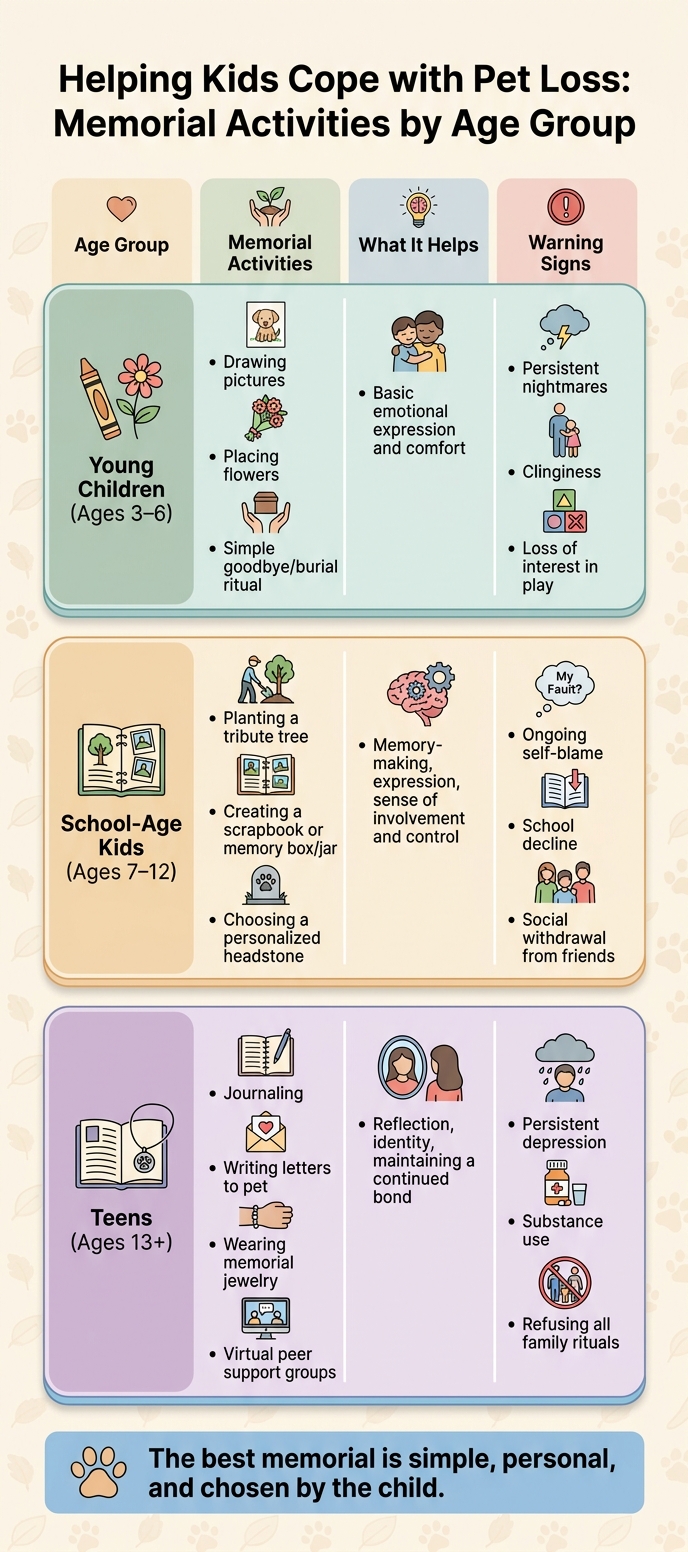
- For ages 3–6, simple actions like drawing pictures or placing flowers often work best.
- For ages 7–12, hands-on projects like scrapbooks, memory jars, or a tribute tree can help.
- For teens, journaling, letters, keepsakes, or peer support may feel like a better fit.
- If grief leads to persistent nightmares, deep sadness, separation anxiety, school decline, or self-blame, it may be time to talk to a pediatrician, school counselor, or licensed therapist.
Pet Loss Memorial Activities by Age: Helping Kids Grieve & Heal
Helping Children Cope with Pet Loss | Solace Tree's Guide for Families & Grief Support
sbb-itb-c538f2f
Quick Comparison
| Age Group | Memorial Ideas | What It Helps With | Signs More Help May Be Needed |
|---|---|---|---|
| 3–6 | Drawings, flowers, simple goodbye ritual | Basic expression and comfort | Nightmares, clinginess, loss of interest in play |
| 7–12 | Scrapbook, memory box, tribute tree, marker | Memory, expression, sense of involvement | Self-blame, school trouble, pulling away from friends |
| 13+ | Journaling, letters, jewelry, support groups | Reflection, identity, continued connection | Depression, substance use, refusing all family rituals |
The main point is simple: the best memorial is not the biggest one. It is the one that fits the child, feels personal, and gives them a gentle way to remember.
How Memorial Activities Support Healthy Grief
Memorial activities give grief a shape a child can work with. When a child takes part in a memorial, grief becomes a clear ritual - a safe place to show feelings that can otherwise feel too big or hard to name. That kind of structure matters. A memorial gives children a place to put love, sadness, and memory.
What memorials give children: structure, expression, and connection
Rituals can help children stay close to good memories instead of getting stuck only in the pain of loss. When a child helps decide how a pet will be remembered - by picking a favorite photo, choosing a plant, or deciding what words belong on a marker - the goodbye feels personal and real. It doesn’t feel like something that simply happened to them.
Those benefits can show up in different kinds of memorials.
Types of memorial activities and what each one helps with
Not every memorial activity does the same job. Some help children let feelings out. Others help them stay connected to their pet. And some help them make sense of the loss.
| Memorial Category | Sample Activities | Coping Need Addressed |
|---|---|---|
| Expression-based | Writing an epitaph, choosing a photo for a headstone, storytelling | Helps children express feelings |
| Continuing-bond | Planting a tribute tree; lighting a memorial tea light on special dates | Helps children stay connected |
| Meaning-making | Donating to an animal rescue in the pet's name; creating a garden marker | Helps children find purpose |
A tree gives children something living to visit and watch change over time. In other words, the exact activity matters less than the role it gives the child. The best memorial is one the child helps make. That sense of choice can make it easier to match the memorial to the child.
Memorial Activities Kids Can Help Create
Keepsakes and storytelling projects
Once children have a sense of what they want to remember, it helps to give them a simple project they can help make.
A memory box or memory jar gives the whole family a way to add memories over time. You might place a collar, a favorite toy, or a photo in the box. Or you can drop small notes into the jar with happy moments written on them, so those memories turn into a shared record the family can come back to.
For older kids, writing letters directly to their pet can help get feelings onto paper when saying them out loud feels too hard. A photo scrapbook gives school-age children and teens a personal way to sort through memories by picking photos, writing captions, and decorating pages. An engraved stone marker can also give children a physical place to remember their pet.
Nature-based memorials and family rituals
For children who need a place they can return to, a living memorial can make remembrance feel easier to see and hold onto.
Planting something outside gives grief a physical place to land. A small tree, a group of flowers, or a simple garden bed can become a spot a child visits whenever they miss their pet.
A stone grave marker gives children something permanent to return to. Pairing it with a memorial pebble and tea light holder can create a simple ritual: using a pet memorial LED candle set for safety, light it on the pet's birthday or anniversary. That kind of repeated ritual gives children a gentle way to revisit the memory over time.
Choosing the right activity for your family
Use these options to match the memorial to your child's age and level of involvement.
Keepsake Activities
| Activity | Adult Support Needed | Best Age Fit |
|---|---|---|
| Memory Box | Low | All ages |
| Memory Jar | Low | All ages |
| Photo Scrapbook | Medium | School-age / Teens |
| Letters to Pet | Low | School-age / Teens |
Nature-Based Memorials
| Memorial Type | Repeat Visits | Emotional Focus |
|---|---|---|
| Planting a Tree | High (seasonal) | Growth, legacy, and enduring bond |
| Flower Garden | High (spring/summer) | Beauty, renewal, and living memory |
| Memorial Pebble | On special dates | Ritual, quiet reflection, and lighting the way |
The best choice depends on the child's age, attention span, and comfort with grief.
Matching the Memorial to the Child
Once you know the memorial options, the next step is simple: match the memorial to the child’s age and to how they handle feelings.
Age-appropriate activity choices for young children, school-age kids, and teens
A memorial should fit the child’s stage of development and comfort level. What helps a 4-year-old may not work for a 14-year-old, and that’s okay.
- Young children (ages 3–6): Drawing a picture, placing flowers, or helping with a simple burial ritual
- School-age kids (ages 7–12): Planting a tribute tree, creating a scrapbook, or choosing a personalized headstone
- Teens (ages 13+): Journaling, wearing memorial jewelry, or connecting with peers who understand pet loss
If a child pushes back or seems more upset during the memorial process, pay attention. That can be a sign they need more help, or just a gentler approach.
Signs a child may need more support
Most children grieve in waves. They may seem fine one day and heartbroken the next. That’s normal.
What matters is whether the hard signs stick around. Watch for persistent nightmares, separation anxiety, self-blame, school decline, social withdrawal, or ongoing depression. If those signs continue instead of easing with time, contact a pediatrician, school counselor, or licensed mental health professional. Understanding the stages of pet loss grief can help, as this is real grief, and a child should not have to work through it alone.
Including memorial products in a child-friendly way
Some families want something physical the child can return to. That can help. A keepsake gives grief a place to land.
Physical memorial items such as an urn, burial marker, or memorial jewelry can give a child something tangible to hold onto. Introduce these items gently, and let the child take the lead. Offer a few choices and ask what feels right instead of handing them a finished memorial they didn’t help choose. Pet Memory Shop offers urns, burial markers, memorial jewelry, and grief support resources that can support a simple home memorial. The goal is to give the child a place to remember the pet.
| Age Group | Suitable Memorial Activities | When Extra Support May Be Needed |
|---|---|---|
| Young Children (3–6) | Drawing pictures, placing flowers, simple burial rituals | Persistent nightmares, separation anxiety, or loss of interest in play |
| School-Age (7–12) | Planting a tribute tree, creating a scrapbook, choosing a personalized headstone | Ongoing self-blame, school decline, or social withdrawal |
| Teens (13+) | Journaling, wearing memorial jewelry, participating in virtual support groups | Persistent depression, substance use, or refusing all family rituals |
Conclusion: Helping Kids Remember and Heal
Pet loss is real grief. When a child loses a dog, cat, or any deeply loved animal, they deserve care, patience, and understanding of the grieving process. Memorial activities give that grief a place to go and help children see that the loss is real.
As Gary Kowalski, author of Goodbye, Friend, writes:
"The actual moment of goodbye often finds us unprepared, thrusting us into a difficult journey through sorrow... rituals to honor your pet... [are] an essential resource."
That’s why even a small memorial can make a difference.
The best memorial is simple and personal. A tree, stone, or keepsake urn gives a child something physical they can return to. That steady presence matters. What counts most is that the child helps choose it and can come back to it over time. Pet Memory Shop offers urns, burial markers, memorial jewelry, and loss support resources for families putting together a simple home memorial.
Once that memorial is in place, family rituals can help keep the pet’s memory close. Family rituals matter too. Whether it's a memorial candle lighting ceremony or a shared story time, a A simple ceremony, shared as a family, shows children that their feelings are valid and that they do not have to carry grief by themselves. The goal is simple: help the child feel less alone and give the pet’s memory a lasting place. When that happens, healing can begin.
FAQs
How do I choose the right memorial for my child?
Choosing the right memorial is deeply personal. The goal is simple: pick something meaningful and lasting that reflects your child’s bond with their pet. Small personal touches can help a lot, like engraving the pet’s name or choosing colors that match the pet’s spirit and personality.
Pet Memory Shop offers respectful memorial products, including caskets, urns, burial markers, and memorial jewelry. Looking through these options together can be a gentle, comforting way to honor the pet’s life.
What if my child does not want to join a memorial activity?
If your child doesn’t want to take part in a memorial activity, it’s best to respect that boundary. Grief is personal, and pushing them into something before they’re ready can backfire.
What helps more is a calm, supportive space where they feel safe sharing their feelings on their own timeline. If your family could use a little extra help with those conversations, Pet Memory Shop also offers resources that may make talking about pet loss feel a bit gentler.
How long is pet grief normal in kids?
There’s no set timeline for how long pet grief is normal in kids. Grief is deeply personal, and losing a pet can stir up intense, complicated feelings because the bond between a child and a pet is often so strong.
Some kids seem okay after a few days. Others carry that sadness for weeks or months. Both can be normal.
What matters most is giving a child room to feel what they feel, instead of expecting them to “move on” by a certain date. Healing doesn’t follow a calendar.