


One pet loss call can ease isolation, calm guilt, and help you take the next step. In these stories, I see the same pattern across 4 support lines: people felt less alone when someone listened without judgment, named their stages of grief, and helped them think through what came next.
Here’s the article in plain terms:
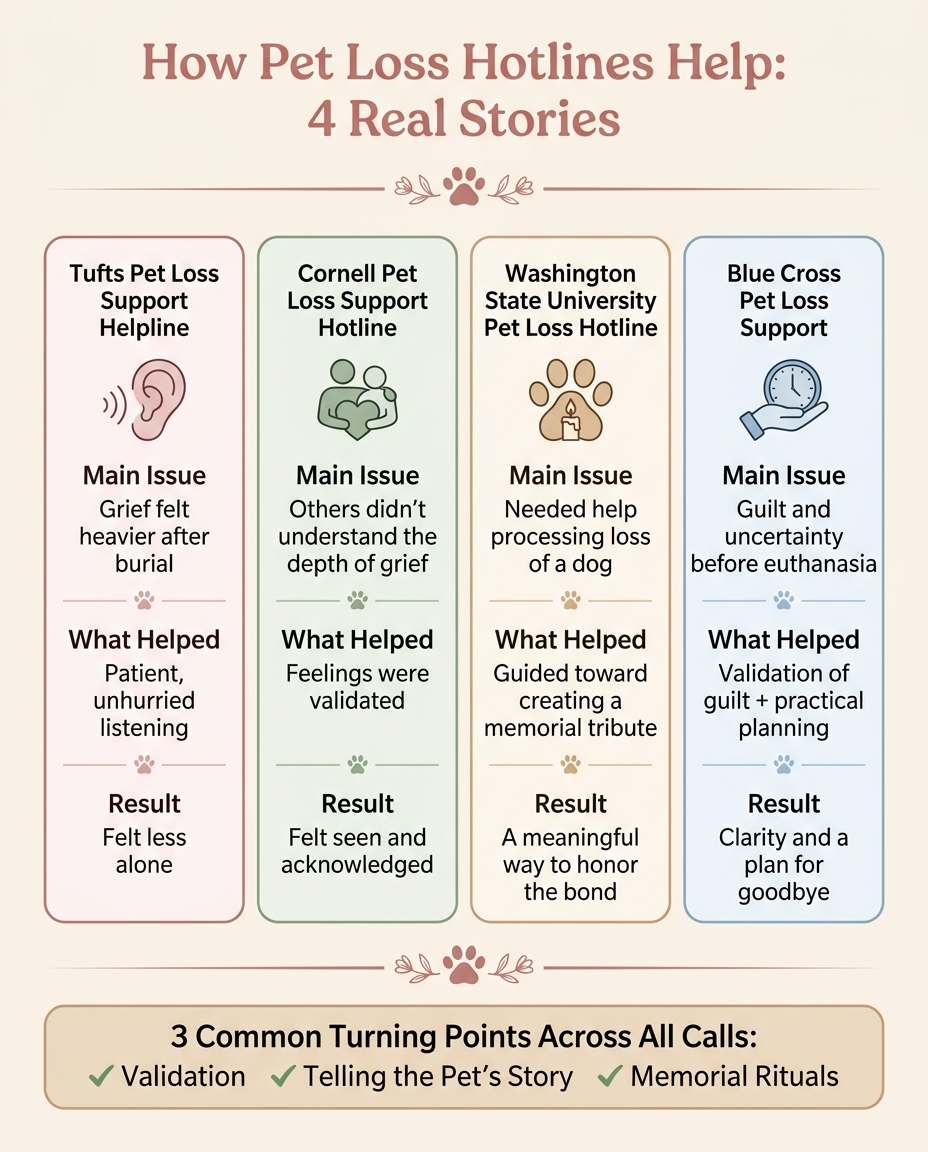
- Tufts: a caller felt crushed after burial and found relief in being heard.
- Cornell: a caller felt alone because other people did not get her grief, and the call helped her feel seen.
- Washington State University: a caller moved from pain to action by making a memorial tribute.
- Blue Cross: a caller reached out before euthanasia and got help with guilt, planning, and goodbye decisions.
A few points stand out right away:
- Pet grief is often dismissed, which can make loss feel heavier.
- Support lines help with both feelings and next steps.
- Common turning points were validation, telling the pet’s story, and memorial rituals.
- The article covers grief after death and before euthanasia.
| Hotline | Main issue | What helped | Result |
|---|---|---|---|
| Tufts | Grief felt heavier after burial | Patient listening | Less alone |
| Cornell | Other people did not understand | Feelings were validated | Felt seen |
| Washington State University | Needed help after losing a dog | Memorial tribute idea | A way to honor the loss |
| Blue Cross | Guilt before euthanasia | Validation and planning | More clarity for goodbye |
My takeaway: these stories show that pet loss hotlines do not “fix” grief. They give you a place to talk, sort through pain, and decide what to do next.
Pet Loss Hotlines Compared: What Each Support Line Offers
What are the best pet loss support groups and hotlines? #shorts
sbb-itb-c538f2f
Case Study 1: Tufts Pet Loss Support Helpline - The Relief of Being Heard
The Tufts Pet Loss Support Helpline is part of the Cummings School of Veterinary Medicine at Tufts University. Its role is simple and powerful: trained student volunteers listen, don’t cut people off, and make space for grief to be taken seriously.
When Grief Continued After the Burial
After burying her dog, one caller thought the pain would start to ease. Instead, it felt even heavier. People around her seemed to move on fast, and that left her carrying the loss by herself. What she was dealing with fit the pattern of disenfranchised grief.
A Calm Call That Made Room for Grief
When she called the Tufts helpline, the volunteer listened with patience. There was no rush, no brushing past her feelings, and no attempt to make the loss sound smaller than it was. She got the chance to tell her pet’s story and put words to everything that came after.
That kind of response mattered. It helped her feel heard and less alone. Many find similar comfort in virtual pet loss support groups where shared experiences foster healing. The grief didn’t disappear, of course, but it felt a little less crushing. For some callers, that same kind of support also becomes a path toward more help and coping resources.
Case Study 2: Cornell and Washington State University Hotlines - Finding Ongoing Support
The first story was about being heard. These calls show the next step: what support can look like when someone needs their grief acknowledged or needs a clear way to honor a pet.
Cornell: Addressing Loneliness When Others Don't Understand
One caller felt alone after losing her pet because people around her didn't grasp how deep her grief ran. That kind of dismissal can make a hard loss feel even heavier.
When she called Cornell, the volunteer validated her feelings and acknowledged the importance of her bond with her pet.
Sometimes that's the part people need most. Not advice. Not a fix. Just someone saying: what you're feeling makes sense.
Washington State University: From a Hotline Call to a Memorial Tribute
The first call shows emotional validation. The second shows how hotline support can lead to action.
A caller to the Washington State University Pet Loss Hotline needed help after losing his dog. During that conversation, he was guided toward making a memorial tribute for his dog. That gave him a concrete way to honor the loss.
For some people, grief needs words. For others, it helps to do something with their hands or heart. A memorial can give shape to feelings that are otherwise hard to hold.
Case Study 3: Blue Cross Pet Loss Support - Help With Grief Before the Loss
Blue Cross Pet Loss Support shows how hotline support can help before a pet’s euthanasia appointment, not only after the loss.
Preparing for Euthanasia With Less Fear and More Clarity
One caller reached out before her pet’s euthanasia appointment because she felt overwhelmed by guilt and uncertainty. She wasn’t sure if she was making the right choice.
This was anticipatory grief. The volunteer met that fear head-on. She validated the caller’s guilt and uncertainty, and reminded her that deep love can make end-of-life decisions much harder.
That simple moment of validation mattered. Instead of feeling stuck, the caller could begin to see a clear next step.
How the Call Made Practical Next Steps Feel Possible
Once the guilt had been acknowledged, the conversation shifted. It moved away from fear and toward planning.
After she felt calmer, she was able to think about the goodbye itself and what kind of remembrance might help. For some families, that means a small ritual or ceremony. For others, it may be an urn, a burial marker, or memorial jewelry - something they can hold onto after the appointment.
She ended the call with a clearer plan for goodbye, and the appointment felt easier to face.
What These Pet Loss Hotline Stories Have in Common
Put these stories from Tufts, Cornell, Washington State, and Blue Cross side by side, and the same theme shows up again and again: people felt better when someone simply listened without judgment. That's the thread running through all of them.
Pet loss is often disenfranchised grief - the kind of loss that friends, coworkers, or even family members may not fully recognize. And that's where these hotlines step in. They fill the space between deep pain and the lack of support people often run into.
Validation, Storytelling, and Memorialization as Turning Points
Callers tended to improve when they had room to talk openly about their pet, the loss itself, and the guilt they were carrying. Telling the story out loud helped them work through grief instead of holding it by themselves.
Pet memorials also mattered. Tributes, rituals, and keepsakes gave people something concrete to do with their grief and a way to honor the bond they had with their pet.
Conclusion: One Conversation Can Start the Healing Process
Pet loss hotlines can ease isolation, help owners sort through guilt and emotional overload, and make space for remembrance that feels meaningful. They don't push people to "move on." They give grief room to breathe.
Reaching out for support is a practical step when grieving a pet.
FAQs
When should I call a pet loss hotline?
Call a pet loss hotline any time you need support, guidance, or just a kind person to talk to while you grieve. These services can help you work through the hard feelings that often come after losing a beloved pet.
If you're looking for support, Pet Memory Shop shares a list of pet loss hotlines and phone support resources. You can also reach them directly at support@petmemoryshop.com for more help.
Can a hotline help before euthanasia?
Yes. Support resources can help a lot when you're facing the hard decision of euthanasia. Talking to someone can bring comfort, strength, and a sense that your feelings make sense during a deeply emotional time.
Pet Memory Shop offers a Pet Loss Support Center and email support at support@petmemoryshop.com, so you don't have to go through these moments alone.
What happens during a pet loss call?
During a pet loss call, you’re connected with a caring support resource who can help you work through grief. It’s a safe space to talk with someone who understands the bond between people and their pets.
Whether you need advice, support, or simply someone to listen, you can share your feelings openly.