


Pet grief often comes in waves, not a straight line. Understanding the stages of pet loss grief can help you navigate these unpredictable emotions. From what I see in this research roundup, the strongest trigger points tend to come from deep attachment, broken daily routines, memory cues, and chosen remembrance habits.
If I had to put the whole article into a few plain points, it would be this:
- The closer the bond, the sharper the grief spikes can feel
- Daily habits like feeding, walking, and bedtime often become repeat trigger points
- Sounds, smells, places, objects, and dates can set off sudden sadness, even long after the loss
- Photos, keepsakes, and memorials can hurt at one stage and comfort at another
- Isolation matters: more than 65% of pet owners say they feel alone in their sorrow after a pet dies
- When other people dismiss the loss, trigger reactions can feel more confusing and harder to carry
In other words: pet loss triggers usually aren’t random. They often connect back to love, habit, memory, and the way a pet shaped everyday life.
What stands out most to me is that grief reactions tend to hit hardest when a pet was part of both a person’s emotional life and their daily schedule. And that helps explain why an empty bowl, a quiet hallway, or an anniversary date can stir up sadness months or years later.
Why Losing a Pet Hurts So Much (And Why It Hits Harder Than You Expect)
sbb-itb-c538f2f
How Attachment and Daily Routines Shape Grief Triggers
The bond between a person and their pet is one of the clearest signs of how hard grief triggers may hit. Research shows that people who see their pets as family members often go through deeper grief reactions, and that fits with the way pets are more and more treated as part of the family. That matters because close bonds don't just shape feelings. They shape the whole day.
A pet can become part of the rhythm of home. Feeding time, walks, bedtime, even those quiet moments on the couch start to feel automatic. After the loss, those same moments can sting because they keep pointing back to what's missing.
What Studies Say About Attachment Strength
Research describes pet loss as an ongoing bond, not just a single event. That helps explain why reminders can keep setting off sadness long after the loss itself. The relationship doesn't simply switch off. In many cases, it lingers in habits, memories, and the small details of daily life, which is why some find comfort in art therapy to cope with pet loss.
Studies also show that stronger attachment is tied to more intense and longer-lasting grief triggers. People who saw their pets as a main source of emotional support tend to have the sharpest trigger responses. By contrast, people with strong but more structured bonds often report more moderate reactions, usually linked to certain dates or places.
Why Feeding, Walking, and Bedtime Routines Become Repeated Triggers
Once a pet becomes part of the day's structure, the loss often shows up most in those repeated moments. When a routine disappears, each scheduled point in the day can turn into a reminder of the absence. It's a bit like reaching for a light switch in a room you've left behind. Your body still expects the old pattern.
| Type of Routine | Example | Frequency of Triggering |
|---|---|---|
| Bedtime / Comfort | A dog lying on the owner's feet in bed every night for 12 years | Nightly; highly repetitive |
| Caregiving Tasks | Feeding times or preparing specific meals | Multiple times daily |
| Daily Presence | Shared quiet spots in the home | Constant; triggered by physical spaces |
Beyond routines, specific places, objects, and sensory cues can trigger the same grief response.
Memory Cues, Places, and Objects That Trigger Grief Waves
Grief isn't only tied to daily routines. It can also flare up through sounds, places, objects, and certain dates. Once the bigger routines disappear, smaller reminders can hit with surprising force and reopen the sense of loss.
Sounds, Smells, Favorite Places, and Anniversary Dates
The absence of familiar sounds - like purrs or calls - can trigger an immediate grief surge. The same goes for places tied to a pet's daily life. A favorite chair, sleeping spot, or walking route can turn into a steady reminder of who's missing.
Date-based triggers work a little differently. You can see them coming, but that doesn't make them easy. Research points to loss anniversaries, adoption anniversaries, and remembrance dates as common trigger points. Studies also suggest grief may grow stronger in the 6–8 weeks leading up to those dates.
Physical keepsakes often follow a similar pattern, though the change tends to happen more slowly. What hurts at first may, over time, start to feel comforting.
Collars, Toys, Photos, and Other Physical Reminders
Objects tied to a pet's everyday life sit in a hard middle ground in grief research. A collar, a toy, or another keepsake can bring on sharp pain, yet that same item may later offer comfort.
Research suggests timing matters as much as the object itself. In early grief, keepsakes often make the pain stronger. Later, those same items can become sources of comfort.
That's part of what makes these reminders so tough to deal with. For some people, they slowly shift from symbols of loss into part of remembrance, instead of being tied only to grief.
How Continuing Bonds and Memorials Affect Grief Triggers
Unlike accidental cues, memorials are chosen reminders. Research looks at memorials through the idea of continuing bonds: an ongoing connection that changes form after death. That shift matters. It changes how we look at memorials and rituals. Instead of treating them as signs that someone is "stuck", this view sees them as healthy ways to express a relationship that still exists in a different form.
What Studies Say About Photos, Rituals, and Keeping Special Items
Continuing bond practices are different from accidental triggers because they are intentional. Research says these practices can help people make sense of the loss. At the same time, they can keep grief close to the surface.
A photo might feel comforting one day and bring a sharp wave of sadness the next. Both reactions can be true at once. That can matter even more when other people downplay the loss or act like it shouldn't hurt as much as it does. In these cases, joining virtual pet loss support groups can provide a safe space to share experiences with others who understand.
How Memorial Products Fit Into Coping and Remembrance
Planned memorials like urns, jewelry, and markers can give people something physical to hold onto in remembrance. Pet Memory Shop offers memorial products and coping resources.
Still, the same memorial can soothe, steady, or reopen grief depending on timing and attachment. In plain terms, it's a bit like hearing an old song after a hard breakup. Sometimes it helps. Sometimes it hits a nerve.
The table below sums up what research says about common bond expressions.
| Bond Expression | Research-Identified Benefits | Research-Identified Risks |
|---|---|---|
| Chosen remembrance practices (photos, rituals, anniversaries) | Supports meaning-making and provides structured time for remembrance. | Can trigger sudden sadness or anticipatory distress as dates approach. |
| Physical Objects (urns, jewelry) | Offers a physical anchor; jewelry allows for discreet, daily connection. | Constant physical presence can keep grief close to the surface. |
| Memorial Spaces | Creates a permanent tribute and supports reflection. | Specific locations may become emotionally difficult to visit over time. |
These reactions vary from person to person, which is why the same memorial can comfort one person and deepen grief for another.
Who May Experience Stronger Triggers: What the Research Shows
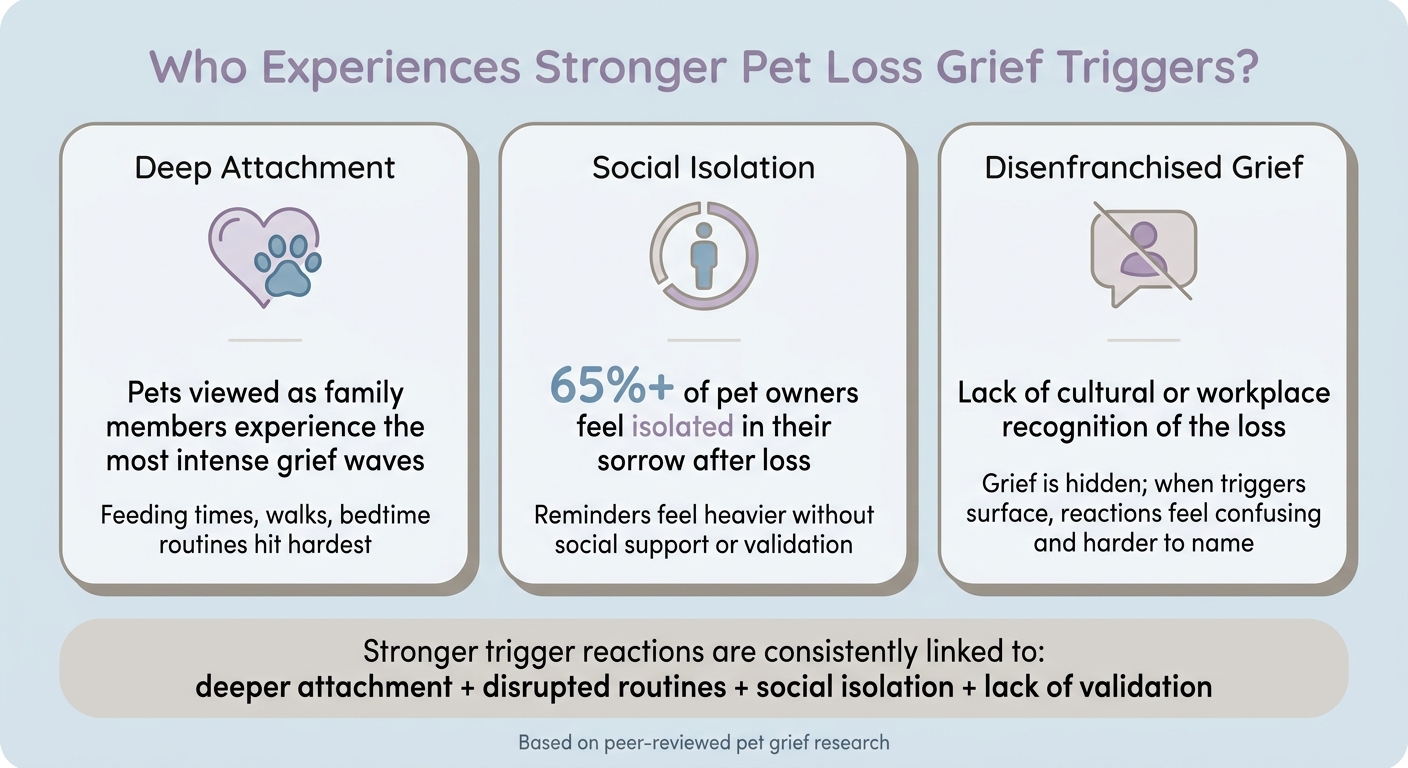
Pet Loss Grief Triggers: Risk Factors & What Research Shows
Risk Factors Linked to More Intense Grief Reactions
Not everyone reacts to reminders in the same way. Research shows that some people have grief triggers that feel stronger, show up more often, or last longer after pet loss.
One of the clearest risk factors is attachment depth. Study findings repeatedly link deeper attachment with stronger trigger reactions. When someone saw their pet as a family member, reminders tied to everyday life, like feeding time or a usual walk, can hit especially hard, though unique pet loss memorial gifts can sometimes offer a sense of comfort during these moments.
Social isolation can also make these moments heavier. Over 65% of pet owners report feeling isolated in their sorrow following the loss of a pet. That kind of loneliness can make a simple reminder feel bigger than it might otherwise.
Then there’s disenfranchised grief. This happens when other people don’t recognize the loss or treat it like it matters less than other kinds of grief. When that validation is missing, people may hide what they feel. And when triggers surface anyway, the reaction can feel more confusing and harder to name.
The table below shows how these risk factors can show up in daily grief triggers.
| Risk Factor | Associated Research Finding | How it shows up |
|---|---|---|
| High Attachment | Pets viewed as family members | Intense grief waves during daily routines |
| Social Isolation | Over 65% of owners feel isolated in their sorrow | Self-doubt when reminders occur |
| Disenfranchised Grief | Lack of cultural or workplace validation for the loss | Internalized self-doubt or hidden grief |
Key Takeaways From the Studies
Across the studies, the same pattern keeps showing up. Stronger trigger reactions are linked to deeper attachment, disrupted routines, social isolation, and a lack of validation.
FAQs
Why do pet loss triggers feel sudden?
Pet loss triggers can hit out of nowhere because grief rarely follows a neat path. When you’ve shared a close bond with a pet, familiar cues can stir emotional memories fast, bringing back both your pet and the pain of saying goodbye.
Things like certain places, everyday objects, or old routines can spark a wave of sadness before you’ve had a chance to brace yourself.
How long can pet loss triggers last?
Research doesn’t give a fixed timeline for pet loss triggers, because grief is deeply personal. Memories, changes in daily routines, or small reminders can bring on sudden sadness long after a pet has passed.
Because the bond with a pet can run deep, these reactions are a normal part of healing. Over time, triggers may show up less often, but they can still come and go.
Are memorial items helpful or painful?
Memorial items can be both comforting and painful.
On one hand, they can bring comfort. They honor a pet, acknowledge the bond you shared, and give that love a place to go. For many people, that can help with healing over time.
On the other hand, they can spark sudden sadness. That often happens when the memories are tied to daily routines, habits, and attachment. Seeing the item might hit hard for a moment.
That doesn’t mean the item is a bad choice. It may simply mean you’re grieving, and the item has become part of that process.