


Losing a pet can feel overwhelming, and writing a pet obituary is a meaningful way to honor their memory. A pet obituary celebrates your pet’s life, personality, and the bond you shared. It’s an opportunity to reflect on their quirks, favorite activities, and the impact they had on your life. Sharing this tribute can also invite support and shared memories from friends and family.
Key Takeaways:
- What to Include: Basic details (name, breed, dates), personality traits, favorite memories, and their impact on your life.
- How to Write: Gather memories, choose a format (chronological, themed, or letter-style), and write from the heart.
- Where to Share: Social media, online memorial pages, printed keepsakes, or private memory boxes.
- Memorial Ideas: Pair obituaries with physical items like engraved markers, memory boxes, or cremation jewelry.
Writing a pet obituary helps preserve their legacy and provides comfort during a difficult time.
Why Everyone Should Talk About Pet Death | E. B. Bartels | TEDxWellesleyCollege

sbb-itb-c538f2f
What to Include in a Pet Obituary
A pet obituary is more than just a timeline of events - it's a heartfelt tribute that captures the essence of your pet's life. It blends important details with personal anecdotes, creating a picture of the joy, love, and even the chaos they brought into your life.
Basic Information
Start with the essentials: your pet's name (including any nicknames), breed, color, the date they joined your family (often called "Gotcha Day"), and the date of their passing. You might also want to acknowledge the people - family members, friends, or even other pets - who loved and cared for them. These foundational details set the stage for a tribute that goes beyond the surface.
Once you've laid out the basics, dive into the memories and quirks that made your pet one of a kind.
Personality and Memories
Paint a picture of your pet’s personality by sharing the little things that made them special. Maybe it was Dodge, proudly showing off the holes he dug in the backyard, or Cuddles, the ginger kitten who greeted you with a gentle nuzzle every day after being rescued. Bring their favorite activities to life - whether it was chasing a squeaky toy, basking in a sunny window, or waiting eagerly by the door to welcome you home. Even the quirks, like a funny habit or an endearing routine, can bring a smile to those who read it.
"You don't need a once-in-a-lifetime moment to be the most special time with your pets - you can just talk about your daily interaction." - Peaceful Pastures Pet Cemetery
These daily moments often hold the most meaning, but your pet’s influence likely extended beyond the everyday.
The Pet's Impact and Legacy
After sharing their story, reflect on the impact your pet had on your life. Did they teach you patience, show you what unconditional love looks like, or remind you to find joy in the little things? These lessons often become a lasting part of their legacy, helping you navigate the stages of pet loss grief. For instance, one tribute beautifully expressed that every life, no matter how small, deserves love and protection.
You can also share how you plan to honor their memory. Maybe you'll donate to an animal shelter, plant a tree in their favorite spot, or simply carry forward the kindness they inspired in you. You might even explore art therapy ideas to create a visual tribute. These gestures not only celebrate their life but also ensure their influence continues, reminding you that their presence lives on in your heart.
How to Write a Pet Obituary
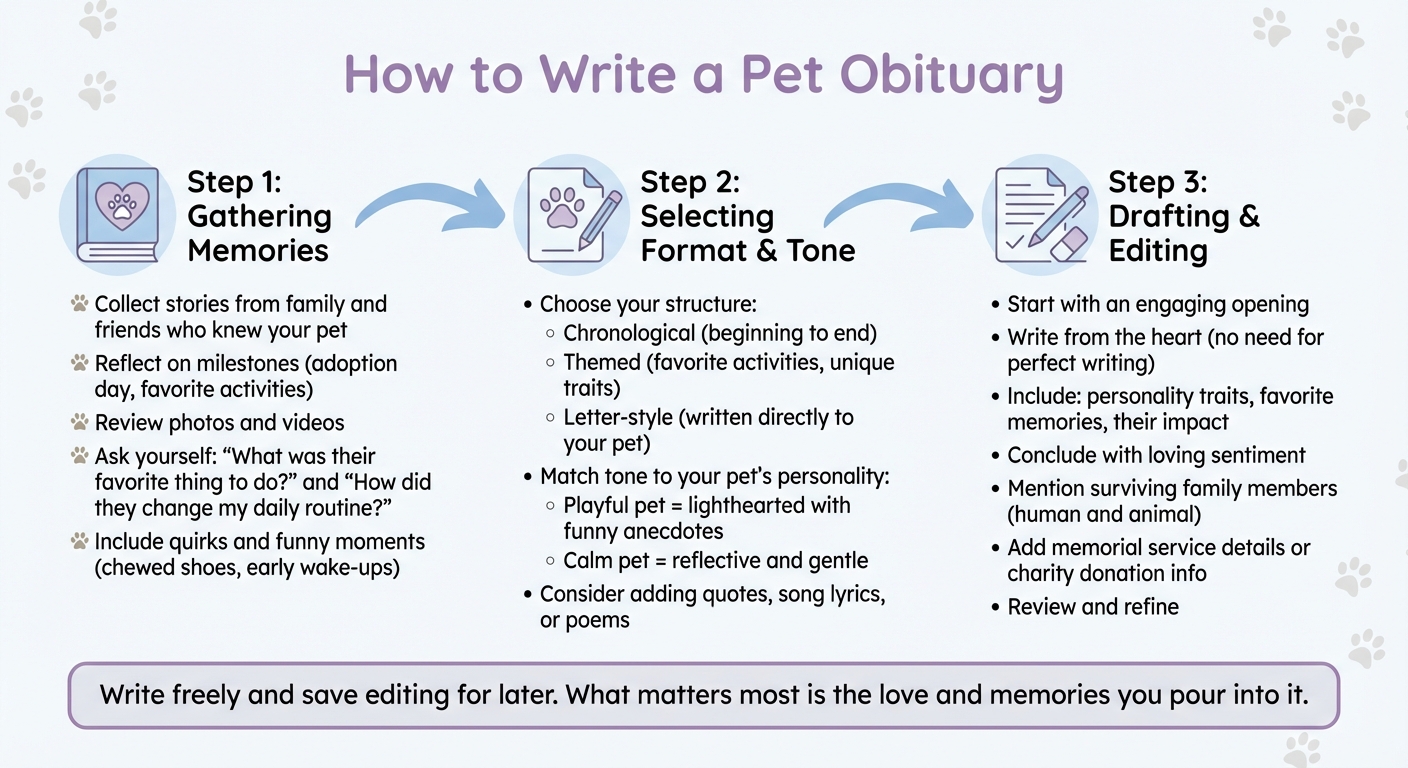
How to Write a Pet Obituary: 3-Step Process Guide
Writing a pet obituary is a meaningful way to honor your beloved companion. It’s a chance to celebrate their unique personality and the joy they brought into your life. To start, gather memories, decide how to tell their story, and create a tribute that feels personal to you and your family.
Gathering Memories
Begin by collecting cherished stories and moments from everyone who knew your pet. As Peaceful Pastures Pet Cemetery says, "A pet's obituary should be crafted by the people who know them best. You can use the ideas from your family or friends to create a heartfelt tribute."
Think about the little details that made your pet special. Reflect on milestones like the day they became part of your life. Maybe you found them on the street, like Cuddles, the tiny ginger kitten who "rubbed against our feet", or perhaps they were bursting with energy from the start, like Buddy, who couldn’t sit still for a second. Flip through old photos or watch videos to jog your memory of those moments, big and small. Ask yourself questions like, “What was their favorite thing to do?” or “How did they change my daily routine?” These prompts can help you get started, even if you’re feeling stuck.
Even memories that once seemed frustrating - like chewed-up shoes or early morning wake-ups - can add a touch of humor and authenticity to your tribute. These quirks, combined with the milestones you recall, paint a complete and heartfelt picture of your pet’s life.
Selecting a Format and Tone
Choosing how to structure your pet’s obituary is a personal decision. A chronological format tells the story of their life from beginning to end, while a themed approach focuses on sections like “Favorite Activities” or “Unique Traits.” Alternatively, some people write directly to their pet in a letter-style format, creating an intimate and emotional tribute.
The tone of the obituary should reflect both your pet’s personality and your own feelings. Jenny Simone from PetFunerals.com explains, "You can choose any mood and tone you find suitable, whether sad, nostalgic, cheerful, or emotional." If your pet was playful and mischievous, a lighthearted tone with funny anecdotes might feel right. If they were calm and gentle, a reflective tone might better capture their essence. You can also include meaningful quotes, song lyrics, or poems that resonate with your feelings and memories.
Once you’ve decided on the format and tone, you’ll be ready to start drafting your tribute.
Drafting and Editing
Start your draft with an opening that sets the tone. For example, you might begin with, “Let me tell you about Cooper and why he was the best dog anyone could ever have”. Use the memories you’ve gathered to build out the story, whether you’re following a timeline or grouping moments by themes. Keep your pet’s unique personality at the heart of every sentence.
Jenny Simone reminds us that this process doesn’t require polished writing skills: "That doesn't require having stellar writing skills or creating an artful, lengthy text. All it takes is writing from your heart and reflecting on your pet's characteristics and the time you shared." Write freely, and save the editing for later.
Conclude with a loving sentiment. You might mention surviving family members - both human and animal - and include details about any memorial services or memorial plaques or suggested charities for donations. Finally, review your draft to ensure it captures everything you want to say. Once complete, your tribute will stand as a heartfelt celebration of your pet’s life and the bond you shared.
Using Pet Obituaries in Memorials
Once you've crafted a heartfelt obituary for your pet, you can turn it into a lasting tribute through various memorial products and displays. Whether digital or physical, these tributes help preserve your pet's memory in meaningful ways. Below are some ideas for weaving your pet's obituary into memorials that reflect their unique spirit.
Different Writing Styles
The format of your pet's obituary can vary depending on how you plan to display it. A full narrative works well for online memorial pages or printed cards, while a shorter version may be better suited for headstones or plaques. Social media posts often call for a concise announcement paired with a favorite photo. You could also opt for a poetic touch, blending verses with obituary details on garden stones or memorial plaques. The key is to choose a style that resonates with you and fits the medium you’re using to honor your pet’s memory.
Pairing Obituaries with Memorial Products
Pairing your written tribute with physical memorial items adds a personal touch to your remembrance. For instance, you could use a meaningful line from the obituary as an inscription on a garden stepping stone or a custom memorial marker. The details from the obituary - like your pet’s birth dates, nicknames, or favorite activities - can also be incorporated into engraved markers, jewelry, or other keepsakes.
Some families create memory boxes that include a printed obituary, photos, and a beloved toy, offering a private space for reflection. For those looking to keep their pet close, cremation jewelry such as pendants or bracelets can hold a small portion of ashes, with designs inspired by themes from the obituary. Companies like Pet Memory Shop offer a variety of personalized options, including urns priced between $24.99 and $159.99, engraved memorial jewelry ranging from $34.99 to $99.99, and garden stones starting at $39.99.
Digital and Physical Displays
Digital tributes provide a way to share your pet's full obituary with friends and family, inviting them to contribute memories and photos. You can post the obituary on social media or create a dedicated tribute page online. Another option is to turn the obituary into a video slideshow, pairing the text with photos and music. Keeping the video to two or three minutes ensures it remains impactful.
For physical displays, consider framing a printed obituary alongside a portrait of your pet to create a meaningful centerpiece for your home. Custom engraved granite markers, priced between $79.99 and $199.99, can feature your pet’s name, dates, and a special message. If you're placing an outdoor marker, durable materials like granite or bronze are ideal to ensure the tribute lasts over time.
You can also combine digital and physical elements. For example, post the full obituary online and display a framed photo with a QR code next to your pet’s urn, linking directly to the digital tribute. This hybrid approach bridges the gap between traditional and modern ways of remembering your beloved companion.
Conclusion
Writing a pet obituary is more than just a collection of words - it’s a meaningful step in the healing process after losing a beloved companion. As VCA Animal Hospitals puts it:
"The exercise of recalling important facts about your pet highlights the significance of their life and can be comforting".
Creating this tribute offers a way to release emotions, whether you choose to share it publicly or keep it private. Reflecting on cherished memories - like those funny quirks, chewed-up shoes, or those early morning wake-up calls - can bring both comfort and a smile. Forget about perfect writing; what truly matters is the love and memories you pour into it. As Jenny Simone from PetFunerals.com wisely says:
"A eulogy will celebrate your fur baby's memory and help you process your feelings".
This tribute not only helps you navigate your own grief but also invites others to join in remembering your pet. Sharing an obituary on social media or a memorial page often leads to an outpouring of support, with friends and family sharing their own stories and reminding you that you’re not alone.
A thoughtfully written obituary becomes a lasting testament to your pet’s impact on your life. Whether you tuck it into a memory box, frame it beside a favorite photo, or pair it with meaningful pet loss gifts from Pet Memory Shop (https://petmemoryshop.com), it serves as a tangible reminder of the love and lessons your pet brought into your world - keeping their legacy alive for years to come.
FAQs
What tone should I use when writing my pet's obituary?
The tone of your pet’s obituary should mirror the special connection you shared and how you’d like others to remember them. Would you prefer it to be warm and heartfelt, light and humorous, or formal and reflective? Take a moment to think about your pet’s personality - their quirks and habits can help shape the tone. Maybe a funny story captures their playful spirit, or a touching memory highlights the love they brought into your life.
If your pet filled your days with laughter, a lighthearted tone can celebrate that joy. On the other hand, a reflective tone might be better suited to honor the deeper lessons they taught you, like unconditional love or patience. It’s also helpful to think about your audience: a tribute meant for close family might feel more personal, while one shared publicly could take on a more inclusive voice. Whatever tone feels right, keeping it consistent will help create a meaningful and heartfelt tribute.
What are some meaningful ways to honor my pet with their obituary?
A pet obituary can serve as a heartfelt way to honor and celebrate your pet's life. To make it even more special, you might consider printing it on high-quality cardstock or having it professionally bound. Pairing it with a favorite photo and displaying it in a frame or memory box can provide daily comfort and a loving reminder of your pet. Another meaningful option is engraving a short excerpt on a custom urn or memorial jewelry, creating a deeply personal keepsake.
For a more creative approach, you could include the obituary in a video montage, combining photos, home videos, and music. This can be shared at a memorial service or on social media to celebrate your pet's life with others. Another idea is to create a memory jar by printing the obituary on small paper strips and placing them in a decorative jar alongside mementos, like a paw-print mold or a lock of your pet’s fur. These thoughtful gestures can help preserve your pet’s memory in a way that feels both personal and comforting.
Can I share my pet's obituary on social media? How should I write it?
Yes, sharing your pet’s obituary on social media can be a heartfelt way to honor their memory while inviting others to celebrate their life. To make your post meaningful and easy to read, focus on keeping it short and sincere:
- Begin with their name in bold or all caps, paired with a brief description (e.g., BUDDY – Our Loyal Golden Retriever).
- Share key details like their birth and passing dates (e.g., January 15, 2010 – October 5, 2023), their age, and a short tagline (e.g., "Forever our squirrel chaser and cuddle buddy").
- Add a personal note with a couple of sentences about their favorite quirks, a special memory, or the impact they had on your life.
- Include a photo that reflects their personality. A square or portrait-style image works well for most social platforms.
- Incorporate hashtags like #RainbowBridge or #PetObituary, and consider adding a gentle emoji (🐾, ❤️) for an extra touch of warmth.
You can close with a simple invitation for friends to share their favorite memories or stories. Keeping your post under 300 words ensures it’s easy to read and share on platforms like Instagram or Facebook.