


Planting a memory tree for your pet is a heartfelt way to honor their life while creating a living, growing tribute. This guide walks you through selecting the right tree, preparing the planting site, and caring for it to ensure it thrives as a meaningful reminder of your companion. Here's what you need to know:
- Why Plant a Memory Tree? It symbolizes your pet's lasting presence and offers comfort as it grows. It also benefits the environment by providing oxygen, shade, and wildlife habitats.
- Choosing the Right Tree: Consider your pet's personality, your local climate, and the available space. For example, an oak tree represents strength, while a cherry tree reflects joy. Use the USDA Plant Hardiness Zone Map to find species suited to your area.
- Preparing the Site: Pick a meaningful spot, clear a 3-foot radius of weeds, and test the soil. Mix compost or aged manure into the soil for nutrients, especially if incorporating cremation ashes.
- Planting Steps: Dig a hole twice as wide as the root ball, position the tree with the root flare slightly above ground, backfill with soil, and apply mulch while keeping it away from the trunk.
- Caring for the Tree: Water weekly for the first two years, prune carefully to remove dead branches, and monitor for pests or disease. Protect the tree from damage with guards and mulch.
How To - Planting a Memorial Tree with Shirley Bovshow - Hallmark Channel

Benefits of Planting a Memory Tree
A memory tree is more than just a tribute - it's a living, breathing symbol of your pet's lasting presence in your life. Unlike plaques or stones that remain static, a tree grows and changes with the seasons, mirroring the ongoing connection you shared. It’s a heartfelt way to honor your pet while embarking on a personal journey of healing.
Caring for a memory tree can be a therapeutic experience. The act of planting and nurturing it gives you a sense of purpose and control, transforming grief into a meaningful and restorative activity. Lori M., reflecting on her own memorial tree, shared:
It warms my heart and makes me smile whenever I think of Louis' tree. I recommend this gift to anyone who is considering it.
Beyond its personal significance, a memory tree also contributes to the environment by producing oxygen, providing shade, and creating a habitat for wildlife. Jackie & Irene captured this beautifully when they said:
A living tree in honor of our sweet dog Sonny would be planted... Eventually growing up to provide shelter and comfort for wildlife... The power of love and caring, sealing the circle of life.
Whether you plant it in your backyard or work with organizations like Trees for a Change - an initiative that has been planting memorial trees since 2007 - it becomes a lasting tribute to your pet. Opting for a young tree between 2 and 4 feet tall gives it the best chance to thrive, ensuring that this living memorial continues to grow and flourish as you care for it in the years to come.
Choosing the Right Tree for Your Pet Memorial
Selecting a tree to honor your pet is a heartfelt way to celebrate their memory. To make this tribute meaningful, choose a tree that reflects your pet's spirit, thrives in your local climate, and fits your available space. The goal is to ensure the tree not only grows well but also serves as a lasting reminder of your beloved companion.
Think about your pet's personality. Was your pet loyal and protective? An oak tree, often associated with strength and wisdom, might be a fitting choice. If your pet brought joy and energy into your life, a cherry tree - symbolizing happiness and good fortune - could be perfect. You might even select a tree your pet loved or one tied to a special memory you shared. Adding a symbolic element to your choice can make the tribute even more personal and meaningful.
Trees with Symbolic Meanings
Many trees carry deep symbolic meanings that can beautifully represent your pet's legacy. For instance:
- Silver birch: Associated with hope and new beginnings.
- Rowan (Tree of Life): Represents inspiration and protection.
- Hazel: Symbolizes wisdom and learning, ideal for smaller spaces.
- Fig: Often linked to success and wisdom, another great option for compact areas.
These symbolic connections can help you honor the unique qualities that defined your pet’s life.
Climate and Soil Considerations
While symbolism is important, your chosen tree must also thrive in your local environment. Start by checking the USDA Plant Hardiness Zone Map using your zip code to identify trees suited for your region’s winter temperatures.
In urban areas, where soil compaction and pollution can be challenges, resilient species like Hackberry (Zones 3–9) or London Planetree (Zones 5–9) are excellent options. If you live in the South, the Live Oak (Zones 7–10) is a robust, long-lived choice, known for withstanding salt spray and wind. For those in Northern climates, the Northern Red Oak (Zones 3–8) grows quickly and offers stunning fall colors.
Soil type also matters. For example:
- Eastern Redcedar thrives in limestone-rich soils.
- Shumard Oak handles poor drainage well.
Additionally, consider the tree’s mature size. A Bur Oak needs ample space, making it better suited for large, park-like areas, while smaller varieties are ideal for suburban yards.
Before planting, take note of the sunlight in your chosen spot. Trees needing full sun require at least six hours of direct sunlight daily, while shade-tolerant species can manage with just two hours. Once you’ve matched the right tree to your environment and space, you’ll be ready to plant a living tribute that will grow and flourish in memory of your pet.
Selecting and Preparing the Planting Location
After deciding on the tree species, the next step is finding a spot that not only honors your pet’s memory but also suits the tree’s growing needs.
Choosing a Meaningful Location
Pick a location that holds sentimental value - perhaps a place where your pet loved to relax or play - and also meets the tree’s growing requirements. As Inscripture suggests:
To commemorate the life of a pet, you could consider planting the tree in their favourite spot in the garden as a daily reminder of your four-legged friend.
Maybe it’s the sunny patch where they basked or the shady corner they claimed as their own. Wherever you choose, make sure the site provides the right conditions for the tree to thrive. For example, some trees need full sun (6+ hours of sunlight daily), while others do well in partial shade (2–4 hours) or minimal sun (<2 hours).
Space is another key factor. Trees need room to grow, so plant at least 15 feet away from buildings to give roots and branches enough space to expand. Before digging, it’s critical to call 811 at least two days ahead so utility workers can mark underground gas and water lines. If the chosen spot is on public or shared property, like a park or schoolyard, be sure to get permission first.
On average, a DIY memorial tree project - covering the sapling and basic supplies - costs between $100 and $150.
Once you’ve chosen the perfect spot, it’s time to prepare the soil to give your tree the best start.
Preparing the Soil
Healthy soil is essential for your memory tree to grow strong. Start by clearing the planting area of weeds, grass, and brush within a 3-foot radius. This reduces competition for water and nutrients.
When digging the hole, aim for a depth of 12–18 inches and make it 2–3 times wider than the tree’s root ball. The extra width helps the roots spread into the surrounding soil more easily. Use a garden fork to loosen compacted soil at the bottom of the hole, making it easier for roots to penetrate. To enrich the soil, mix in a 2–3-inch layer of compost or aged manure into the top 6–8 inches. This improves both nutrient content and drainage.
If you’re including your pet’s cremation ashes, mix them thoroughly with soil or compost to dilute the high salt content and maintain a pH between 6.0 and 7.0. Testing the soil beforehand can help you make adjustments - use lime to raise the pH or sulfur to lower it, if needed.
With the soil ready, your tree will have the foundation it needs to grow as a lasting tribute to your beloved pet.
sbb-itb-c538f2f
How to Plant Your Memory Tree
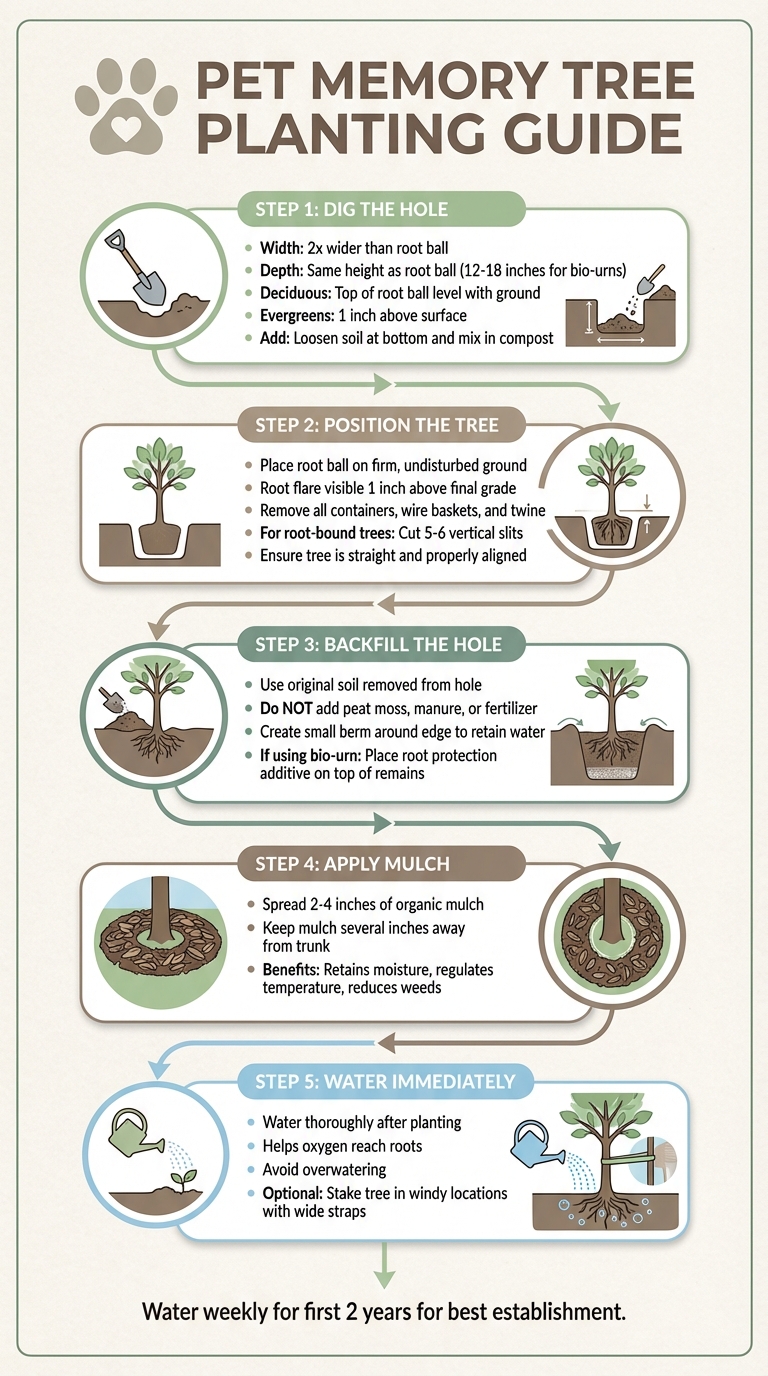
Step-by-Step Guide to Planting a Pet Memory Tree
Once you've prepared the planting site and soil, it's time to get your memory tree securely in the ground. Here's how to do it step by step.
Digging the Hole
Start by digging a hole that's at least twice as wide as the tree's root ball but only as deep as the root ball itself. For deciduous trees, the top of the root ball should sit level with the ground. For evergreen trees, dig a slightly shallower hole - about an inch less than the root ball's height - so the top sticks out just above the surface. If you're planting with a biodegradable memorial urn, aim for a hole that's 12–18 inches deep.
Loosen the soil at the bottom of the hole and mix in some organic matter or compost to make it easier for the roots to establish. To ensure the root ball stays level, lay a shovel handle across the hole as a guide.
Once the hole is ready, it's time to position your tree and make any necessary adjustments.
Positioning the Tree and Adding Amendments
Place the root ball on firm, undisturbed ground, not on loose backfill, to prevent the tree from settling too deep. The root flare - where the trunk starts to widen - should be visible and sit about 1 inch above the final ground level. As the Colorado State Forest Service advises:
"The root collar (flare) must be visible 1 inch above final grade after planting; trees planted too deep will drown."
Before planting, remove all containers, wire baskets, and twine. For balled-and-burlap trees, take off the wire basket and peel back as much burlap as possible to avoid root damage. If the tree is root-bound, gently cut 5 to 6 vertical slits around the root ball to encourage the roots to grow outward.
Make sure the tree is straight and aligned in the direction you want. Backfill the hole using the same soil you removed earlier. Avoid adding peat moss, manure, or fertilizer directly into the hole, as this can create a "potted tree" effect, limiting root growth into the surrounding soil. If you're using a memorial bio-urn system, place the root protection additive directly on top of the cremated remains before positioning the tree roots.
Use any leftover soil to create a small berm around the edge of the hole. This will form a basin to help retain water during the critical early weeks.
Applying Mulch and Watering
Spread 2–4 inches of organic mulch around the base of the tree, but keep it a few inches away from the trunk. Mulch helps the soil retain moisture, keeps the temperature steady, and reduces weed growth.
Water the tree immediately after planting to help oxygen reach the roots, but be careful not to overwater. If you're planting in a windy location, consider staking the tree. Use wide straps that allow the trunk to move naturally, as this movement helps develop strong roots and stems.
With these steps complete, your memory tree is planted and ready to grow, serving as a lasting tribute to your loved one.
Caring for Your Memory Tree
Once your memory tree is planted, consistent care is crucial to ensure it develops strong roots and thrives. This care not only supports its growth but also strengthens its significance as a living tribute to your beloved companion. During the first two years, your memory tree will focus on root establishment rather than visible growth. Typically, it takes about 12 months per inch of trunk diameter for a tree to fully establish its roots, making regular care during this period essential for its long-term health.
Here’s how to nurture your memory tree as it grows into a lasting memorial.
Watering and Fertilizing Schedule
For the first two years, water your tree deeply once a week, providing 1–2 inches of water to soak the top 6 inches of soil. Focus on the drip line - the area beneath the outer edges of the branches - where most water-absorbing roots are located within the top 2 feet of soil.
To check if your tree needs water, try the trowel test: insert a trowel into the soil about 2 inches deep. If it feels moist, you can skip watering for that week. As the Arbor Day Foundation explains:
A damp soil that dries for a short period will allow adequate oxygen to permeate the soil.
Avoid frequent, shallow watering. Instead, aim for deeper, less frequent sessions to encourage roots to grow deeper into the soil. Continue watering weekly through the fall until the ground freezes, ensuring the tree enters winter with sufficient moisture. Once the tree is established, watering every two to three weeks during dry spells is typically enough.
Hold off on fertilizers during the first year. Instead of chemical options, enrich the soil with organic matter or compost to promote healthy growth. Keep in mind that some species, like Magnolias, Japanese Maples, Dogwoods, Beeches, and Birches, are more sensitive to drought and may require closer monitoring.
Pruning and Ongoing Maintenance
In addition to watering, careful pruning and routine maintenance play a key role in keeping your tree healthy. Avoid heavy pruning during the first few years, as it can hinder the tree’s ability to generate energy through its foliage, slowing its growth. As Iowa State University Extension recommends:
Newly planted trees require only corrective pruning. Remove structural defects, such as double leaders and dead, broken, or crossing branches.
Leave lower branches intact during the early years to help strengthen the trunk. Gradually remove these branches over a period of 5 to 10 years, ideally when they are no more than 1 to 2 inches in diameter. Also, keep an eye out for basal sprouts (suckers) at the base of the tree and remove them to ensure the tree’s energy is directed toward the main trunk.
Regular inspections are important to catch signs of pests or disease, such as unusual changes in leaf color, thinning foliage, or slowed twig growth. Keep mulch 4–6 inches away from the trunk to prevent rot and fungal infections. Leaf & Limb emphasizes:
Being proactive and monitoring your tree for any changes is the best way to keep a plant in tip-top shape.
To protect the bark, consider installing guards around the base to prevent damage from lawnmowers or string trimmers, which can create entry points for disease. If you notice any unexplained issues, consult a certified arborist or your local cooperative extension office for expert advice.
Conclusion
After following the planting and care tips, the final step is to embrace the ongoing growth and meaning of your memory tree.
Planting a memory tree for your pet is so much more than just a gardening activity - it's a heartfelt tribute that grows richer over time. By choosing a tree that suits your local climate and holds special significance, preparing the soil with attention, and committing to regular care, you're creating a living legacy that honors your pet's life. This thoughtful process weaves together your pet's spirit with the natural beauty of your garden.
Unlike traditional memorials, a tree serves as a powerful symbol of life's renewal and continuity. As Trees for a Change so eloquently puts it:
A memorial tree for pets is more than just a gesture; it's a symbol of life, renewal, and love.
Caring for this tree can be a deeply healing experience, offering comfort as you navigate your grief. The tree you choose will reflect your pet's unique personality, creating a peaceful space for cherishing memories. With many trees capable of thriving for centuries, your tribute will stand as a lasting reminder for generations to come.
To make the space even more special, consider adding a memorial plaque, garden stone, or bench. For a personalized touch, Pet Memory Shop offers custom granite markers and garden stones priced between $39.99 and $199.99, which pair beautifully with your memory tree.
This tree becomes a living testament to the bond you shared with your pet - a reminder that love continues to flourish, even in the face of loss.
FAQs
How can I choose the perfect tree to honor my pet's memory?
Choosing a tree that mirrors your pet’s personality can be a heartfelt way to celebrate their memory. Start by reflecting on their special traits - were they full of energy, fiercely loyal, sweet-natured, or always up for an adventure? You can pair these qualities with a tree’s symbolic meaning. For instance, an oak tree stands for strength and wisdom, while a cherry tree evokes feelings of joy and happiness.
Be sure to select a tree that will thrive in your local environment. Check its USDA hardiness zone to ensure it’s a good fit for your area. Also, evaluate the planting site carefully - make sure there’s enough room for the tree to reach its full size and that the soil, sunlight, and drainage align with its growing requirements.
For an extra personal touch, consider choosing a tree that reminds you of your pet’s favorite outdoor spot or a cherished activity you shared. To make the tribute even more special, you can add a personalized memorial marker or plaque at the tree’s base. These can be found through Pet Memory Shop, offering a lasting way to honor your pet.
What should I think about when choosing a spot to plant my pet’s memory tree?
Selecting the perfect spot for your pet's memory tree is a heartfelt step toward creating a tribute that lasts. Start by picking a location where the tree can thrive. Most trees need plenty of sunlight - about 6 hours of direct sunlight daily - and well-draining soil to prevent issues like root rot. Also, consider the tree's potential size. For example, species like oaks can grow up to 40–60 feet tall, with canopies stretching as wide as 30 feet, so make sure there's enough room for it to flourish.
Before planting, it's essential to check local regulations. Some areas have rules about burial depth - often requiring at least 2 feet - and specific distances from water sources to protect groundwater. Also, ensure you have permission to plant on the property, as not all locations allow backyard memorials.
Lastly, choose a spot that holds personal meaning or offers a sense of privacy and ease of access. It could be a peaceful corner of your yard or a place your pet loved to spend time. By considering practical needs, legal requirements, and sentimental value, you can create a special place to remember your cherished companion.
How can I help my pet memory tree grow strong and healthy?
To help your memory tree grow strong and healthy, make sure the soil stays consistently moist. Water it whenever the top couple of inches feel dry. Spread a 2–4 inch layer of mulch around the base to retain moisture, but be sure to leave about 3 inches of space around the trunk to avoid rot. If the tree needs extra support, use stakes for stability. Focus pruning efforts on removing dead or damaged branches only. For the first 2–3 years, keep a close eye on soil moisture to minimize transplant stress and encourage the development of a robust root system.