


If I want pet fur to last, I need to keep it clean, fully dry, and stored away from heat, sun, and moisture. A small lock - often about 1 inch long - is enough for most memorials, from lockets to resin pieces to small jars.
Here’s the short version:
- Collect a small amount gently
- Use clean scissors and tweezers
- Clean only if the fur is dirty
- Air-dry it indoors until no moisture is left
- Store it in acid-free paper or a sealed vial
- Keep storage below 77°F
- Add silica gel if using a sealed container
- Handle the fur as little as possible when placing it in a memorial
One missed step can shorten how long the fur lasts. Even a little moisture can lead to damage after sealing.
Best memorial formats covered in the article:
- Fillable lockets and pendants
- Clear resin ornaments
- Small vials and keepsake jars
Best storage choices at a glance:
| Option | Protection | Can I see the fur? | Moisture risk | Best use |
|---|---|---|---|---|
| Acid-free envelope + archival box | High | Low | Low | Safe storage before use |
| Sealed glass vial + silica gel | Very high | High | Very low | Storage and display |
| Airtight ceramic jar | High | No | Low | Shelf display |
| Resin encapsulation | Very high | High | None after sealing | Permanent keepsake |
I’d think of the process in five parts: collect, clean, dry, store, place. That simple order does most of the work.
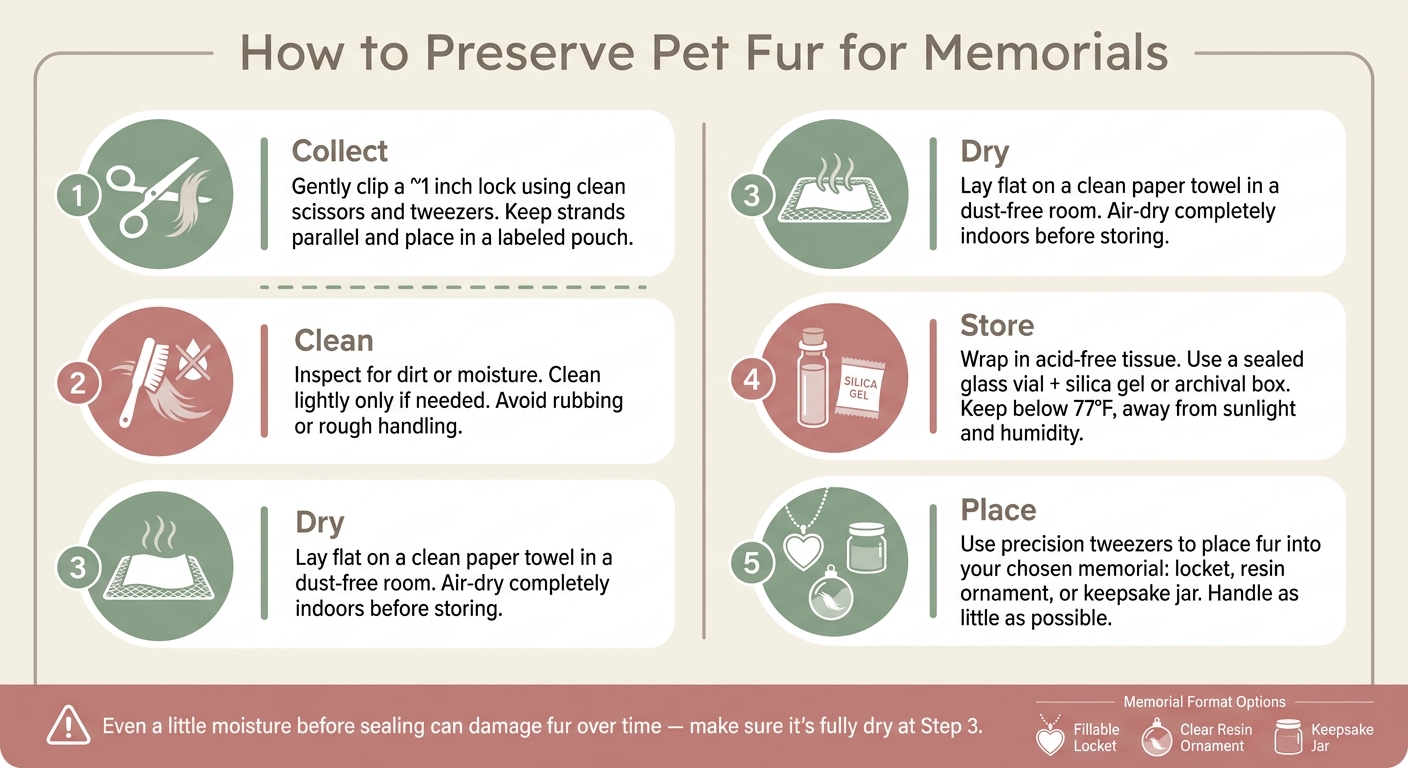
How to Preserve Pet Fur: 5-Step Memorial Process
Making Your Own Pet Hair Keepsakes: UV Resin
How to collect pet fur safely and respectfully
Collect the fur slowly and gently, whether it comes from grooming or after a pet's passing. The aim is simple: keep the lock neat and intact so it works well in a locket, ornament, or keepsake jar.
Tools to use and how much fur to collect
Take only the amount your memorial item needs. A small lock is often enough, and taking less makes the process easier on both you and your pet.
Before you start, gather these supplies:
- Fine-tipped tweezers - to handle and line up delicate strands without tangling. Use them to hold the fur in place while you trim or gather the lock.
- Clean scissors or grooming shears - to snip a small lock without pulling
- A small, secure pouch or envelope - to keep the fur dry and contained
How to clip and align the fur
Handle the fur with a light touch and try to keep the lock as neat as you can. If you're trimming from a live pet, use clean scissors to snip a small lock from the outer coat. Never pull the fur or cut close to the skin.
Use tweezers to line the strands up so they lie parallel to each other. That small step makes a big difference. If the fur gets rolled or bunched, it can tangle and become harder to place in a memorial piece.
Put the fur in the pouch or envelope right away to keep it clean and dry. Label the pouch with the pet's name and the date collected.
If the fur has dirt or moisture on it, clean and dry it before storing it.
How to clean and dry pet fur before storing it
After you collect the fur, take a close look for any dirt or moisture before you store it. Even a small amount can harm a sealed keepsake over time, so it helps to handle the lock as little as possible.
How to clean fur gently
If you can see dirt on the fur, clean it lightly and only when needed. The idea isn't to wash it thoroughly. It's to clean just enough to protect the fur before it goes into a memorial item. Go extra gently with finer fur, and skip any rough movement or rubbing. That helps keep the fur's natural texture in place.
How to air-dry fur completely indoors
Lay the fur flat on a clean paper towel or a mesh rack in a dust-free room. Then let it dry all the way. This part matters more than people think: any moisture left behind can damage the fur over time once it's stored.
Once the fur is fully dry, place it in archival storage.
sbb-itb-c538f2f
How to store preserved fur for long-term protection
After drying, move the fur into a protected storage setup. Store it indoors in a steady spot, away from humidity, direct sunlight, and sharp temperature changes. Keep the storage area below 77°F.
Archival materials and moisture control for fur storage
Wrap the fur in acid-free tissue or archival paper before placing it in a container. If you're using a sealed container, add a small silica gel packet to pull in any leftover moisture. This is especially helpful during humid weather and in the summer.
Storage options compared: protection, visibility, and access
| Storage Option | Protection Level | Visibility | Moisture Risk | Access |
|---|---|---|---|---|
| Acid-free envelope + archival box | High | Low | Low | High |
| Sealed glass vial with silica gel | Very High | High | Very Low | Moderate |
| Airtight ceramic jar | High | None | Low | High |
| Resin encapsulation | Very High | High | None | None (Permanent) |
Pick the storage option that matches how long you plan to keep the fur before placing it in the memorial item. If you go with resin, use jewelry-grade resin with UV inhibitors to help slow yellowing.
When you're ready, the next step is placing the preserved fur into the memorial item.
How to place preserved fur into memorial items
Once the fur is fully dry, place it into the memorial item with as little handling as possible.
Placing fur into lockets, ornaments, and keepsake jars
Use precision tweezers to lift small bundles and guide them into place.
For fillable lockets, keep each bundle small enough for the locket to close all the way without pressing down on the fur. After the fur is in place, close the locket fully to help shield it from moisture. For clear ornaments and keepsake jars, use a contrasting background so the fur stands out: light liners for dark fur, dark liners for white fur. Before sealing, add a small archival-quality tag with your pet's name and collection date.
Memorial formats compared: durability and ease of use
| Memorial Item | Durability | Visibility of Fur | Practicality |
|---|---|---|---|
| Fillable Lockets | High | Low (unless glass-faced) | High (wearable) |
| Clear Ornaments | Medium | High | Low (seasonal/display) |
| Keepsake Jars | High | High | Medium (display only) |
Conclusion: Key steps for preserving pet fur
The full process comes down to five steps:
- collect gently
- clean carefully
- dry completely
- store with archival materials
- choose a memorial format that fits how your family wants to remember your pet
Each step protects the next one. If the fur isn't fully dry before sealing, it can break down inside even the best locket or jar.
Whether you pick a wearable locket or a jar for a shelf, the result is a personal memorial that helps keep your pet close.
FAQs
How long does preserved pet fur last?
When pet fur is preserved by a professional in high-quality, jeweler-grade resin, it’s made to last a lifetime.
The resin forms a permanent, airtight, waterproof seal that helps shield the fur from moisture, oxygen, and other outside elements. With proper care, including avoiding long stretches of direct sunlight, these keepsakes can stay clear and intact for decades.
Can I preserve fur from a pet that passed away days ago?
Yes. Fur from a pet that passed away a few days ago can still be saved for memorial keepsakes, as long as it has stayed fairly clean and dry.
Once collected, it can be sealed in high-quality resin to make a lasting memorial piece.
What if the fur is slightly damp before sealing?
Pet fur should be completely dry before you seal it in resin. If moisture gets trapped inside, it can affect curing and leave the finish cloudy or weakened over time.
If the fur feels damp, let it air dry all the way in a clean, temperature-controlled space before you start. That extra patience helps protect the memorial from damage later on.