


A pet memorial garden usually stays in good shape with four simple habits: clean gently, keep items steady, water plants the right way, and protect materials before hard weather hits. In most cases, that means checking stone and urns in spring, deep watering in summer, clearing leaves in fall, and guarding against freeze-thaw damage in winter. One key fact stands out: water expands by about 9% when it freezes, which is why cracks often show up after cold weather.
If I wanted the short version, I’d boil it down to this:
- Spring: wash markers with plain water, check for cracks, fix leaning pieces, and add mulch
- Summer: water early, pull weeds, watch for heat stress above 100°F, and shield resin, wood, and urns from sun and storms
- Fall: clear leaf buildup, plant before frost, and add mulch for root insulation
- Winter: keep moisture out of porous materials, store small ceramic pieces indoors, and avoid salt near stone and beds
A few material notes matter most:
- Granite handles winter better than many other stones
- Marble and ceramic need more care in freezing weather
- Wood and resin need sealing to slow weather wear
- Flat plaques collect more grime and leaf debris than upright markers
Below is a quick side-by-side view of the year so you can see the main job in each season at a glance.
| Season | Main job | Main risk |
|---|---|---|
| Spring | Inspect, clean, replant | Winter cracks, shifting soil, residue buildup |
| Summer | Water, weed, protect | Heat stress, UV fading, storm damage |
| Fall | Clear, plant, mulch | Leaf stains, soil changes, early frost |
| Winter | Cover, store, monitor | Freeze-thaw cracking, trapped moisture |
If you keep up with those small seasonal jobs, the space is much easier to care for year after year.
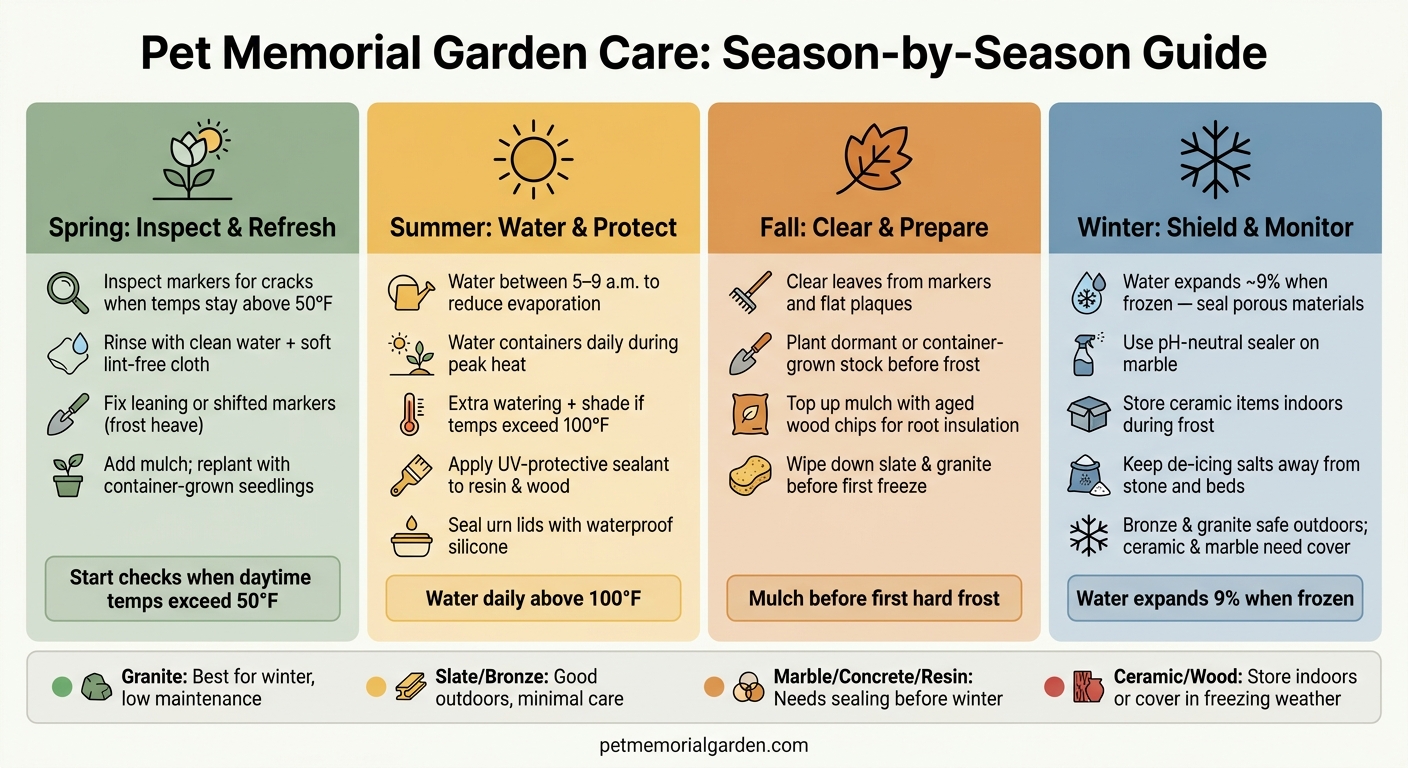
Seasonal Pet Memorial Garden Care Guide: Season-by-Season Cheat Sheet
Spring Tasks: Inspect, Clean, and Replant
When daytime temperatures stay above 50°F for several days, it’s time to walk through the memorial garden and see what winter left behind. Start with a close look at the markers, the soil, and the plants.
Check for Winter Damage and Clean Memorial Surfaces
Begin with the markers and stones. Winter can be hard on them. Freeze-thaw cycles often make small cracks spread, especially in porous materials. Granite usually handles this better than slate, marble, and ceramic, so those materials need a closer look.
Check if any markers have shifted or started to lean. Frost heave can move soil during winter, and that movement can throw things out of place. Also look at engraved lettering and laser-etched images. Dirt, moss, or other buildup can make details harder to see. If the site has outdoor urns or other pet memorial markers, inspect the seals and watch for cracks or fading caused by cold-weather exposure.
For cleaning, keep it simple:
- Rinse with clean water
- Wipe gently with a soft, lint-free cloth
- Rinse lettering well so no residue is left behind
Flat, ground-level plaques usually need more frequent cleaning than upright markers. Rain doesn’t wash out their engravings as well, so grime tends to stick around.
Refresh Soil, Mulch, and Spring Plantings
After cleaning the area, turn to the beds. Add new plantings where needed, and use container-grown plants or quart-pot seedlings instead of bare-root stock. That small choice can make spring replanting a lot smoother.
Trim away dead or diseased branches so new growth has room to come in. If you have miniature tribute trees, remove dead or yellowing leaves as well. It helps keep pests under control and keeps the planting looking cared for.
Spring Plant Options by Zone and Care Level
Match each plant to the site’s USDA zone, light conditions, and the amount of care you can give it.
| Plant Name | USDA Zone Range | Pet Safety | Maintenance Level |
|---|---|---|---|
| Pink Dogwood | 5–8 | Non-toxic | Low |
| White Dogwood | 5–9 | Non-toxic | Low |
| Japanese Maple | Varies | Non-toxic | Moderate |
| Dwarf Spruce | Varies | Non-toxic | Low |
Dogwoods work especially well in memorial spaces. They bloom early in the season, and their fruit feeds songbirds in winter. For smaller gardens, a Japanese Maple brings seasonal color without using much space.
As growth fills in, summer care shifts to watering, weeding, and heat protection.
sbb-itb-c538f2f
Summer Tasks: Watering, Grooming, and Heat Protection
Summer care shifts from spring cleanup to moisture control, weed removal, and heat defense.
Water Deeply and Adjust for Beds, Shrubs, and Containers
Water early, between 5 and 9 a.m., to cut evaporation and reduce stress on plants. For established beds and shrubs, soak the soil well, then wait longer between watering sessions. That pattern helps roots grow deeper instead of staying near the surface. New plantings need water more often while their roots settle in.
Container memorials dry out much faster than in-ground plantings, especially in the hottest stretch of summer. Check them daily during peak heat. If temperatures climb above 100°F, water more often and give sensitive plants temporary shade.
Control Weeds, Deadhead Flowers, and Watch for Heat Stress
Pull weeds before they go to seed. It's a small job that can save you a much bigger one later. Deadhead spent blooms too, so the space keeps a clean, cared-for look.
Check leaves often for signs of heat stress, such as scorch or drooping. At the same time, watch for pests and disease as part of your normal summer routine.
Use hand removal and physical barriers for pest control. Avoid pesticides or other chemical treatments near markers.
Protect Markers, Urns, and Decor from Sun and Storms
Summer weather can be rough on memorial items. Strong sun and sudden storms wear things down over time. Resin and wood need extra attention here. UV exposure can fade resin and make it brittle, while wood can warp, bleach, and rot. A UV-protective sealant or marine-grade varnish helps both materials and should be applied every few years.
For outdoor urns, add a thin bead of waterproof silicone around the lid or screw threads to help block summer humidity and storm moisture. Set memorial items on level, well-drained ground, away from mower paths and other busy spots. If an item is light enough to tip or blow over, anchor it or move it indoors before severe storms.
| Summer Hazard | Protection Strategy | Best Materials |
|---|---|---|
| Intense sun/UV | Apply UV-resistant sealant; use polished finishes | Granite, bronze, marine-grade treated wood |
| Heavy rain | Ensure drainage; seal urn lids with silicone | Slate, granite, stainless steel |
| High winds | Choose dense, heavy materials; anchor lightweight items | Granite, bronze, concrete |
| Garden chemicals | Remove memorial before spraying; use pet-safe pest control | All materials |
Fall and Winter Tasks: Prepare, Protect, and Monitor
As summer upkeep winds down, turn to cleanup and winter prep before the first freeze. Once temperatures fall, the job changes. It’s less about growth and more about protecting what’s already there. Fall gives you a chance to head off winter damage to both plants and memorial pieces.
Clear Leaves, Plant for Next Spring, and Add Insulation
Clear leaves and dirt from around pet grave markers and beds as they fall. On memorial plaques set flat on the ground, debris can collect in the engraving and wear on the lettering infill over time.
Fall is also a good time to plant container-grown seedlings or dormant stock. That gives roots time to settle in before winter sets in.
Before the first hard frost, top up mulch with aged wood chips or another mulch. That extra layer helps insulate roots from sharp temperature swings.
Prevent Freeze-Thaw Damage to Stones, Benches, and Garden Decor
Water expands by about 9% when it freezes. That matters more than it may seem. If moisture gets into porous stone, ceramic, or concrete, it can crack the material from the inside.
Before the first freeze, wipe down slate and granite markers with clean water and a soft, lint-free cloth. This removes dirt and organic growth that can hold moisture against the surface. Skip bleach, acidic cleaners, and other household products on stone or slate. For porous materials like marble, use a high-quality pH-neutral sealer to help block moisture entry.
A few other cold-weather steps are worth doing:
- Bring small ceramic items indoors.
- Keep de-icing salts and chemical garden treatments away from memorial stones and planted beds.
Winter Care by Material Type
Once beds are cleared and mulched, protect the memorial items themselves. Different materials run into different problems when temperatures drop below freezing. The table below shows the most common memorial garden materials, the main winter risk for each one, and the safest way to care for them.
| Material Type | Main Cold-Weather Risk | Safe Cleaning / Protection Method | When to Store or Cover |
|---|---|---|---|
| Granite | Very low porosity makes it highly resistant to freeze-thaw damage | Wipe with water and a soft cloth; sealer is usually unnecessary | Generally safe to leave uncovered year-round |
| Welsh Slate | Dirt buildup in flat engravings | Splash with clean water; wipe with a soft lint-free cloth | Safe outdoors; keep upright when possible so water sheds more easily |
| Marble | High risk of freeze-thaw cracking and erosion | Use a high-quality pH-neutral sealer and avoid acidic cleaners | Cover or move indoors if small or unsealed |
| Ceramic | Brittle and prone to cracking in heavy frost | Wipe with a damp cloth; seal screw-top threads or urn lids with clear waterproof silicone | Store indoors during frost or winter months |
| Concrete / Resin | Can crack or fade without moisture protection | Apply a weather-resistant sealant before freezing weather | Cover if hairline cracks are visible |
| Wood | Rot, fungal growth, and warping from moisture | Apply marine-grade sealant every few years | Store indoors or cover with breathable material if untreated |
| Metals (Bronze / Steel) | Bronze forms a protective patina; low-grade steel may rust | Use Type 316 marine-grade stainless steel for the best resistance | Safe outdoors; bronze patina is protective, not damaging |
Conclusion: A Simple Seasonal Routine That Keeps the Space in Good Condition
A pet memorial garden stays in good shape with small, seasonal care. In spring, inspect and clean. In summer, water and protect. In fall, clear and prepare. In winter, shield materials from harsh weather. It’s a simple rhythm that works: pick durable materials, clean them gently, and stay ahead of the forecast.
Key Habits to Carry Into Each Season
Gentle cleaning always wins. Use clean water and a soft, lint-free cloth on slate and granite. Skip bleach and acidic cleaners.
Material choice shapes your maintenance load. Choose granite if you want a marker that asks for less upkeep.
Plants and soil need attention too. Pick hardy, multi-season plants, and keep the soil moist but never soggy.
Act before severe weather arrives. Seal porous materials before winter, and move or cover memorial items before garden treatments.
FAQs
How often should I inspect a pet memorial garden?
How often you inspect a memorial depends on two things: the type of memorial and where it sits.
Granite headstones usually don’t need much. In most cases, a simple rinse and wipe a few times a year is enough to keep them looking clean.
Flat ground plaques need a bit more attention. Dirt tends to settle into the engraved lettering, so regular checks help stop buildup before it gets harder to clean.
A good rule of thumb is to inspect the memorial from time to time and clear away dirt, leaves, and other debris. That matters even more if it’s placed under trees or in a spot where grime tends to collect.
Which memorial materials hold up best outdoors year-round?
Granite and bronze are the best picks for year-round outdoor use in a pet memorial garden.
Granite is dense and low-porosity, which means it stands up well to weather, freeze-thaw cycles, and everyday wear. If you want a material that can sit outside through rain, sun, snow, and changing seasons without much fuss, granite is a safe bet.
Bronze also holds up very well outdoors. Over time, it forms a protective patina that helps shield it from corrosion. That aging process is part of what makes bronze such a lasting option for memorial plaques and markers.
Slate can work outdoors too, but it often needs a bit more upkeep to keep engravings clear and easy to read.
What should I do before the first hard freeze?
Before the first hard freeze, take a little time to protect your pet memorial garden from freeze-thaw damage. Water can slip into small cracks, freeze, expand, and cause trouble fast.
Seal memorial urns well - ideally with waterproof silicone or epoxy for outdoor placement - to help keep moisture out. Clean stone memorials and clear away debris so surfaces stay in better shape through winter.
If your memorial includes living tributes, get plants ready for dormancy. Move sensitive containers to a protected area to help prevent waterlogged soil.