


If I want a pet memorial garden sign that lasts outdoors, I’d start with granite, slate, or bronze. For most yards, a 12 x 8-inch or 16 x 10-inch marker is large enough to read, and a 1 to 2-inch thickness helps it stay in place over time.
Here’s the short version:
- Granite is usually the best pick for long-term outdoor use, especially in wet or freeze-thaw climates.
- Slate has a darker, natural look and works well if I want engraved text with a softer style.
- Bronze has a formal look and low upkeep, but it often costs more.
- Metal stake signs, acrylic, and resin cost less, but they tend to wear out sooner.
- Deep-cut lettering is easier to read outdoors than shallow marking.
- Laser-etched photos show best on dark polished granite, especially Absolute Black.
- Placement matters: I’d keep the sign away from mower paths, heavy foot traffic, and spots under trees.
- Simple wording wins: a name, dates, and a short line like “Forever in Our Hearts” is often enough.
Quick Comparison
| Material | Best For | How Long It Tends to Last | Upkeep | Price Range |
|---|---|---|---|---|
| Granite | Permanent yard memorials | Very long | Low | $$–$$$ |
| Slate | Natural-looking memorials | Long | Low | $$ |
| Bronze | Formal plaques | Very long | Low | $$$ |
| Cast stone/concrete | Lower-cost fixed markers | Medium | Medium | $–$$ |
| Metal stake signs | Small or temporary markers | Shorter | Medium | $ |
| Acrylic/resin | Budget-friendly custom shapes | Shorter | Medium | $ |
What matters most is simple: I’d match the sign to the weather, the spot in the yard, and the look I want years from now. From there, the main choices are material, lettering, size, personal details, and how I install and clean it.
sbb-itb-c538f2f
Types of Pet Memorial Garden Signs and How They Compare
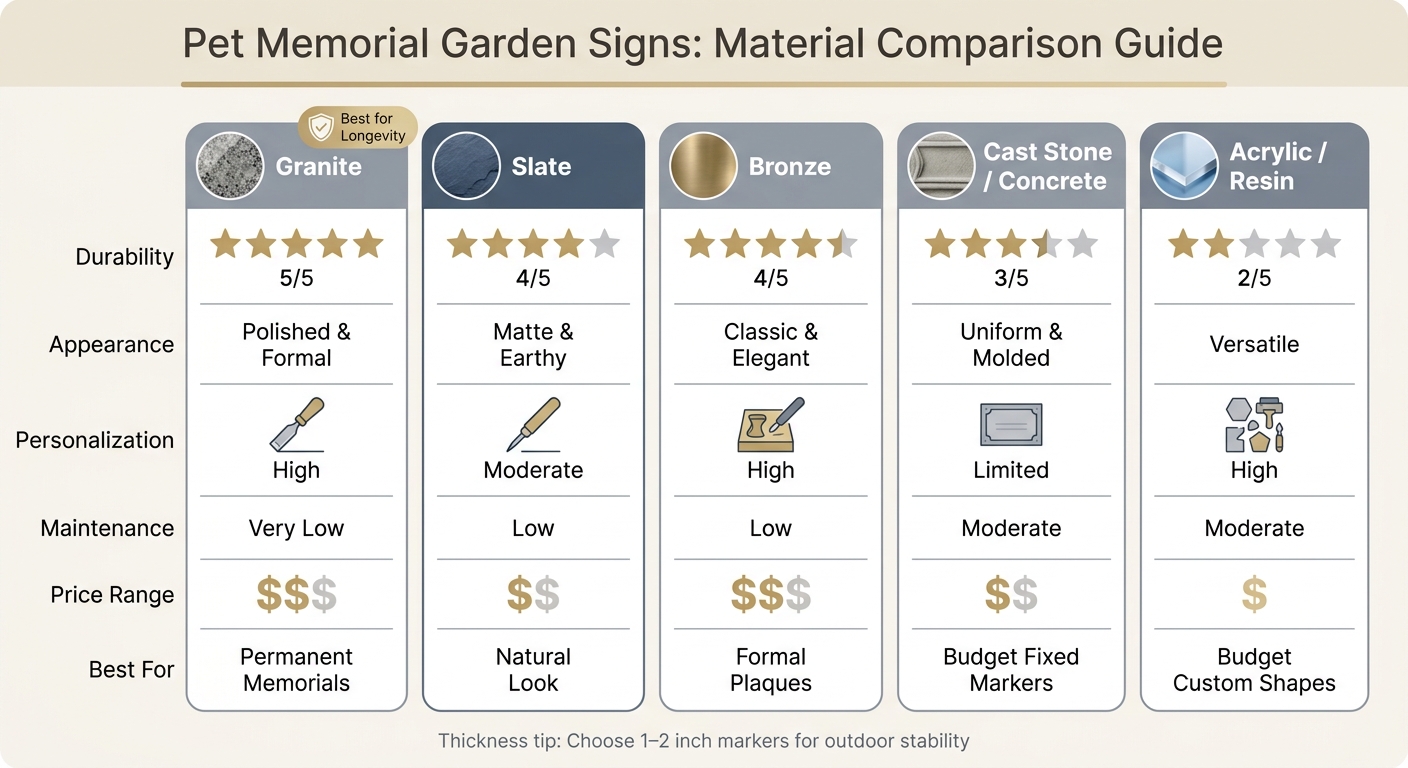
Pet Memorial Garden Signs: Material Comparison Guide
Outdoor memorial signs differ most in material, how long they last, and how they’re displayed. The most common styles are flat stones, upright markers, wall plaques, and bench plaques. The right pick comes down to placement, weather exposure, and how personal you want the memorial to feel.
Natural Stone and Cast Stone Markers
Granite is the most durable common option for a permanent outdoor memorial. It’s hard, has low porosity, and handles freeze-thaw conditions well. If you want a photo memorial, Absolute Black granite gives the best contrast for laser etching.
Slate is another solid natural stone choice. It has an earthy look and holds color well outdoors. That makes stone the best fit when permanence matters most.
Cast stone and concrete are molded, so they offer less room for customization, but they usually cost less. They make sense if you want a simpler memorial and don’t need the long lifespan of granite or slate.
Metal, Bronze, Acrylic, Resin, and Photo Signs
Bronze plaques have a classic, formal look. Cemeteries often favor bronze and granite because both materials are attractive and easy to care for. The catch is cost. Cast bronze plaques usually sit at the higher end of the market.
Metal stakes are light, easy to place, and often sold as waterproof and rustproof. Some start at around $12. They’re handy, but they don’t last as long as stone.
Acrylic and resin signs are light and can be printed or shaped in many styles. Their main downside is wear over time. They can fade, which makes them a better match for lower-cost memorials than for a permanent outdoor setup.
Comparison Table: Durability, Appearance, Personalization, Maintenance, and Price
| Material | Durability | Appearance | Personalization | Maintenance | Typical Price (USD) |
|---|---|---|---|---|---|
| Natural Stone (Granite) | Highest; lasts generations | Polished or speckled; formal | High - laser etching & sandblasting | Very low; occasional wipe-down | Moderate to high |
| Natural Stone (Slate) | High; color holds for centuries | Matte, dark, earthy | Moderate - deep engraving | Low; can be polished if scratched | Moderate |
| Cast Stone / Concrete | Moderate; weathers faster | Uniform, molded look | Limited to casting | Moderate | Low to moderate |
| Metal / Bronze | High | Classic, elegant, traditional | High - cast text or relief | Low | High |
| Acrylic / Resin | Low to moderate; can fade over time | Versatile; can mimic stone or metal | High - molded shapes and printed designs | Moderate | Low |
Material affects how long a sign lasts, how easy it is to read, and how much care it needs. Outdoors, size and lettering matter just as much.
How to Choose the Right Material, Size, and Lettering for Outdoor Use
Pick the material based on your climate, how much sun and rain the sign will get, and how far away people need to read it. After that, size and lettering make the biggest difference in whether the sign still reads well out in the garden.
Weather Resistance and Long-Term Readability
Granite holds up well in most U.S. climates because it handles moisture and temperature swings without much trouble. Its low porosity matters here: when water seeps into porous stone and then freezes, it expands and can cause cracks. Granite resists that kind of damage.
Slate also does well outdoors, though it can chip if something hits it. Bronze lasts a long time and doesn't ask for much upkeep. On the flip side, it's smart to skip porous stones and any material that tends to fade, weaken, or break down in strong sun or wet weather.
Engraving Methods, Sign Size, and Viewing Distance
Readability comes down to two things: cut depth and color contrast. Sandblasting cuts deep grooves, which helps the lettering stay easy to read from farther away.
Laser etching works differently. It's a shallow, non-contact process, so it depends more on contrast than depth. It tends to work best on dark polished stone like Absolute Black granite, especially if you want a photorealistic portrait of your pet.
For size, a 12 x 8 inch or 16 x 10 inch marker fits most backyard memorials well. Those sizes are big enough to read from across the yard without taking over the space. A 6 x 4 inch plaque is a better fit for a smaller garden area. One simple trick: cut a piece of cardboard to the size you're considering and set it in the garden before you order.
Stone markers should also be 1 to 2 inches thick. That extra thickness helps them stay stable outdoors and resist shifting over time.
Maintenance Table: Cleaning and Care by Material
Once you've picked the sign, care is pretty simple.
| Material | Cleaning Method | Products to Avoid | How Often to Inspect |
|---|---|---|---|
| Granite | Water and a soft cloth | Bleach, household chemicals | Annually for organic buildup |
| Slate | Warm water, lint-free cloth | Acidic cleaners, bleach, pesticides | Every 6 months, especially if laid flat |
| Metal / Bronze | Damp cloth, mild soap | Abrasive scrubbers | Seasonally - check any metal parts for corrosion or loose stakes |
| Resin | Mild soap and water | Solvents, alcohol-based cleaners | Quarterly - monitor for fading or brittleness |
Upright or angled signs usually stay cleaner than flat markers.
Personalization Ideas That Make the Memorial Feel Meaningful
After you choose the material and size, the next step is deciding what the marker should say and show. This is where the piece starts to feel personal.
Names, Dates, Short Inscriptions, and Layout Choices
Most memorial signs include the pet's name, dates, and maybe a short phrase. The main thing is to keep the layout clean. A line like "Forever in Our Hearts" usually lands better than a long paragraph.
Font choice also changes the feel of the marker. A serif font gives it a more classic look, while a sans-serif font feels simpler and more modern.
Paw Prints, Breed Artwork, Hearts, and Photo Elements
Small symbols can say a lot without adding more words. Paw prints, hearts, angel wings, and breed silhouettes can make the sign feel tied to that one animal.
If you want to add a photo, laser-etched portraits tend to work best on Absolute Black granite. The dark, polished surface gives the strongest contrast, which helps the image come through clearly. For the best result, use a high-resolution photo with sharp focus and a simple background.
If the marker is for more than one pet, go with a larger size so the layout doesn't feel crowded.
Coordinating the Sign With Other Memorial Items
It also helps to match the sign with other memorial plaques or pieces nearby. Using the same material, finish, or motif can help the space feel pulled together without making it look busy.
Placement, Installation, and Final Buying Considerations
Once you've picked the design, placement and installation do a lot of the heavy lifting. They affect how long the sign holds up and how easy it is to read over time.
Where to Place the Sign in a Yard or Memorial Garden
Place the sign at the burial site, ensuring you follow local burial laws, a favorite resting place, or the main point of a memorial garden. A small cluster of plants and stones can help frame the area and make it feel more intentional.
Try not to place the sign directly under trees, where sap and falling leaves can build up on the surface. It also helps to keep it away from mower paths and spots with heavy foot traffic. Upright markers tend to work better in quieter areas, while flat markers are a smart pick when you want a lower-profile look. If you're applying fertilizers or pesticides nearby, move the sign first or cover it.
Installation Methods by Sign Type
Installation depends on the type of sign, but the goal stays the same: keep the marker level, secure, and easy to care for.
| Sign Type | Installation | Stability and Safety |
|---|---|---|
| Flat/Flush Marker | Place on level ground with a gravel or sand base. | Needs level ground; engraved areas can collect more dirt and water. |
| Upright Headstone | Set on a level granite or concrete base. | Best for long-term stability and visibility. |
| Stake Sign | Push into soft soil and align straight. | Good for temporary markers or softer soil. |
| Wall/Bench Plaque | Mount with outdoor-rated hardware or adhesive. | Works well for memorial benches or garden walls. |
For outdoor use, markers that are 1 to 2 inches thick tend to hold up better. If the marker is going into a formal pet cemetery, check the pet cemetery's rules before you order. Some places have set requirements for materials, dimensions, and installation methods.
Conclusion: How to Choose a Sign That Lasts and Feels Personal
Choose the material, placement, and installation method that fit your climate and the way you want the memorial to look as it ages. Keep the placement protected, make sure the design stays readable over time, and be honest about how much upkeep you're willing to handle.
Pet Memory Shop offers personalized memorial markers and burial products for a lasting tribute.
FAQs
Which material is best for my climate?
For most outdoor climates, granite is the best pick for a pet memorial garden sign. It has low porosity and high density, which helps it stand up to physical damage, chemical weathering, and freeze-thaw cycles that can crack more porous stones.
Welsh slate is another durable, low-maintenance choice. By contrast, marble and sandstone are more likely to wear down from acid rain and crumble over time.
How do I choose the right sign size?
Choose the size based on what feels right and where the sign will sit.
- Small plaques (6 in. x 4 in. or 8 in. x 6 in.) work well in quiet garden corners or on indoor altars.
- Medium markers (12 in. x 8 in. or 16 in. x 10 in.) are a good fit for backyard burials.
- Larger markers (20 in. x 12 in. or more) make sense in more formal spaces or for larger animals.
A simple cardboard template can help you picture the scale before you decide.
What engraving style lasts longest outdoors?
For the longest-lasting outdoor lettering, choose sandblasted engraving on granite. The letters are cut deep, so they stay easy to read for as long as the stone holds up.
Laser etching doesn’t fade, but the marks are shallow. Outdoors, that means dirt and growth can build up and make the lettering harder to see. Gentle cleaning can bring the contrast back, but if you want the most dependable low-maintenance option, sandblasting is the better pick.