


Yes - you can add a small amount of your pet’s ashes to a memorial portrait, and most artists only need a tiny sample. In most cases, I’d focus on 4 things first: how visible I want the ashes to be, what style of portrait I want, which photo I’ll use, and where I’ll display the piece.
Here’s the short version:
- Ashes can be blended into paint or drawing materials for a smooth, low-visibility finish.
- Ashes can also be placed in resin, wax, or textured surfaces if I want them to show more.
- A small sample is usually enough, so the main urn often stays closed.
- A clear photo matters most because the artist will use it to match my pet’s face, eyes, coat, and expression.
- Before sending anything, I’d confirm the sample size, shipping steps, return of unused ashes, text details, and final framing plan.
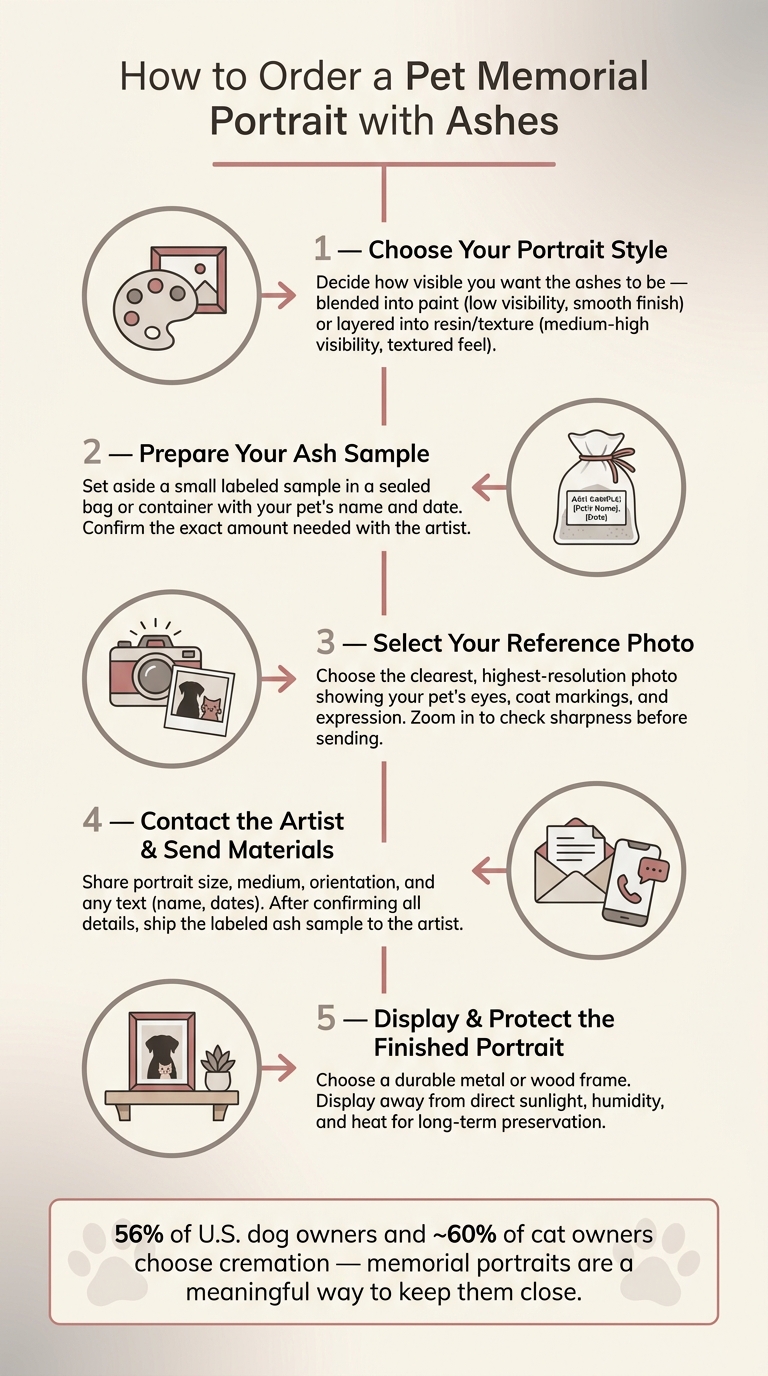
About 56% of U.S. dog owners and about 60% of cat owners choose cremation, according to industry estimates. That helps explain why more families now want memorial pieces that combine a pet’s image with a physical part of them.
Add Ash to a Pet Memorial Painting
sbb-itb-c538f2f
Quick Comparison
| Option | Ash visibility | Surface feel | Best for |
|---|---|---|---|
| Paint mixed with ashes | Low to medium | Smooth | A framed portrait with a simple look |
| Pencil or mixed media with ash accents | Low to medium | Light texture | A softer memorial style |
| Resin, wax, or textured piece | Medium to high | More texture | A piece where the ashes are easier to notice |
If I were ordering one, I’d keep the process simple: pick the portrait type, set aside a labeled ash sample, choose the sharpest photo I have, and decide on a safe display spot before the artwork arrives.
Ways to use ashes in a pet memorial portrait
The first big decision is simple: how visible you want the ashes to be in the finished portrait, and whether you want the surface to feel smooth or textured.
Mixed into paint or drawing media
In this approach, a small amount of ash is blended into paint, gesso, or drawing media before it's applied. The effect is subtle. You usually won't see a clear ash layer, but the ashes are still physically part of the piece.
The surface stays smooth, so the portrait looks much like standard framed art and pet memorials. For many families, that's the right fit. It keeps the memorial part close and meaningful without making it the first thing you notice.
Layered into texture, resin, or wax-based surfaces
This option makes the ashes more present in the piece itself. They can be worked into a textured background or sealed inside resin or wax. That gives the portrait more texture and makes the ashes easier to notice, both visually and by touch.
Resin-based pieces also tend to be durable. They can feel a bit more decorative than a flat painted portrait, which some people love and others may not.
Portrait styles that work well with ashes
| Style | Visibility of ashes | Texture | Display feel |
|---|---|---|---|
| Painted portrait with ashes mixed into paint | Low to medium | Smooth | Traditional framed art |
| Pencil or mixed-media portrait with ash accents | Low to medium | Light texture | Soft, understated memorial |
| Textured resin or cast portrait | Medium to high | Noticeable | Handcrafted and decorative |
Once you choose a style, the next step is preparing the ash sample and reference photo.
How to prepare the ashes and reference materials
Getting everything ready before you contact the artist makes the process smoother and a lot less stressful. You only need to sort out two things: the ash sample and the reference photo.
How to set aside a small ash sample safely
In most cases, the artist only needs a small amount of ash, so the main urn can stay closed. Place the sample in a small sealed bag or container, then label it with your pet's name and the date.
It also helps to check two details before sending anything:
- How much ash the artist needs
- Whether any unused ashes will be returned
That small step can save time and avoid mix-ups later.
How to pick a reference photo and memorial details
Choose a clear, high-resolution photo that shows your pet's eyes, coat markings, and expression. A simple trick helps here: zoom in on the image first. If it turns blurry, pick a sharper one.
A busy background is usually fine. Most artists can adjust it or swap it for something simpler, so the main thing is making sure your pet looks clear in the photo.
If you want text in the design, send the name and dates in the exact format you want shown. You can also share any details that matter to you, like a color palette, collar color, or specific markings. If you'd rather keep the design simple, just send the name and dates.
Once the ashes and reference materials are ready, the artist can begin the portrait.
How to create the portrait, step by step
How to Order a Pet Memorial Portrait with Ashes: Step-by-Step Guide
Send your instructions, ashes, and design preferences
With the ash sample labeled and the reference photo chosen, the artist can start the work. Reach out to the artist directly by email or phone and go over the details before you ship anything. Share the portrait size, medium, orientation, and any text you want included, such as names or dates.
After the artist confirms everything, you can send the ash sample.
How the ashes are added and the artwork is finished
The artist mixes in the ash sample using the medium you chose, then finishes the portrait based on your reference photo and approved details.
If the design includes engraving or lettering, make sure those details are approved before the final finish goes on. Before that last step, the artist checks that the portrait reflects your pet's expression and personality.
How to protect, display, and preserve the finished portrait
Once the portrait is finished, the last step is protecting it for long-term display.
How to frame and place the portrait
Keep the portrait away from direct sunlight, humidity, heat, and frequent handling. Mantels, shelves, or a dedicated memorial space with unique pet loss memorial gifts can all work well in a home.
Choose a durable frame. Metal and wood are the best fit for long-term display, while ceramic and glass are better for low-traffic spots.
Before you order, look at the details that shape both the final appearance and where the portrait will go in your home.
Before you order
- Portrait method and ash visibility: Confirm how the ashes will be added and how visible they will be.
- Ash sample size: Follow the artist's exact instructions.
- Reference photo quality: Use the clearest, highest-resolution photo you have.
- Display plan: Pick the frame and display location before the portrait arrives.
Getting these details sorted early makes it easier for the finished piece to become a lasting memorial in your home.
FAQs
Will the ashes be visible?
It depends on the portrait’s design. In some pieces, like those made with clear resin, the ashes are visible and become part of the portrait itself. In others, the ashes stay tucked inside and out of view.
If you want to know exactly where the ashes go and whether they’ll be seen, check the product details or contact Pet Memory Shop.
How much ash is needed?
Usually, only a small amount of cremated remains is needed - often just a teaspoon or two. The exact amount can vary based on the artist’s process.
For the exact amount needed for your portrait, contact Pet Memory Shop. Your pet’s remains will be handled with care and respect throughout the process.
Can I use an old photo?
Yes. You can use an older photo for your pet memorial portrait, as long as the image is clear and high-resolution.
Pick a photo that shows your pet well, with a pose and composition that reflect their personality and little mannerisms.