


Pet memorial spaces in the U.S. fall into three main types: cemetery-style sites, nature-based gardens, and public art memorials. In this list, I found 7 places that show how shared pet remembrance can look very different from one site to the next.
Here’s the short version:
- Hartsdale Pet Cemetery and War Dog Memorial shows the early history of public pet remembrance.
- Aspin Hill Memorial Park stands out for scale, with 50,000+ burials.
- Los Angeles Pet Memorial Park offers a formal city setting with durable markers.
- Angels Rest at Best Friends Animal Sanctuary ties remembrance to a working animal sanctuary and monthly ceremonies.
- Carolina Memorial Sanctuary Pet Memorial Garden centers on low-impact burial and open daily access from sunrise to sunset.
- Rainbow Bridge Garden at Eloise Woods uses a familiar grief symbol in a nature-based burial park.
- New Rainbow Bridge Pet Memorial at Alliance for the Arts shifts remembrance into a shared public arts space.
One market figure helps explain why these places matter: the U.S. pet funeral and memorial market is projected to hit $3.2 billion by 2033, and 61% of pet owners prefer professional pet memorials and services.
Rainbow Bridge: pet memorial brings comfort to owners
sbb-itb-c538f2f
Quick Comparison
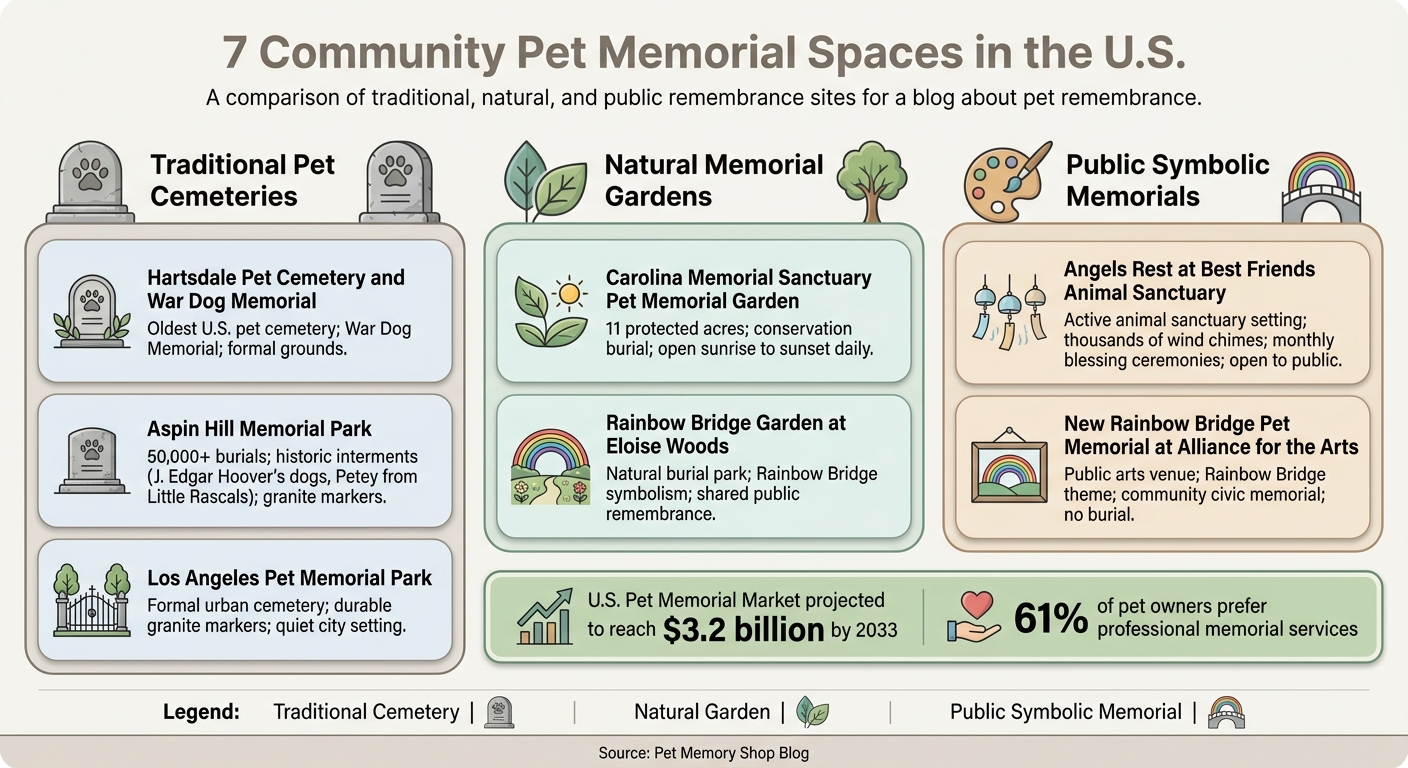
7 Community Pet Memorial Spaces in the U.S.: A Visual Comparison
| Place | Type | Main point | Access note |
|---|---|---|---|
| Hartsdale Pet Cemetery and War Dog Memorial | Pet cemetery | Early public pet memorial site; War Dog Memorial | Check current visitor rules |
| Aspin Hill Memorial Park | Pet cemetery | 50,000+ burials; historic animal interments | Ask staff about marker rules |
| Los Angeles Pet Memorial Park | Pet cemetery | Orderly city memorial setting | Confirm access before visiting |
| Angels Rest at Best Friends Animal Sanctuary | Sanctuary memorial | Wind chimes and monthly blessing ceremonies | Open to the public |
| Carolina Memorial Sanctuary Pet Memorial Garden | Natural burial garden | Low-impact burial on 11 acres | Open daily, sunrise to sunset |
| Rainbow Bridge Garden at Eloise Woods | Natural burial garden | Pet memorial space inside a natural burial park | Shared public remembrance space |
| New Rainbow Bridge Pet Memorial at Alliance for the Arts | Public memorial | Art-based community remembrance | Public arts venue access |
If you’re deciding what kind of pet memorial space fits best, this article comes down to one simple idea: some people want a graveside place with a burial marker, some want a quiet garden, and some want a public spot built around shared memory. For those struggling with the transition, online pet grief counseling can provide additional support.
What These Memorial Spaces Have in Common
Across the seven sites below, each one gives people a shared place to remember a pet and honor a loss.
They also have physical ways to mark that memory. Formal cemeteries tend to use regulated plots and long-lasting markers. Natural burial gardens lean toward biodegradable materials and living tributes. Arts-based spaces often center on sculpture or community installations. You can see those differences clearly in the seven examples below.
A physical marker can matter a lot in grief.
1. Hartsdale Pet Cemetery and War Dog Memorial
Hartsdale Pet Cemetery and War Dog Memorial is a formal pet cemetery with clear rules and wholesale pet supplies that keep the grounds uniform. Its history goes back to the late 1800s, which gives the site weight as one of the oldest pet memorial spaces in the U.S. The War Dog Memorial also sets it apart from a standard cemetery by honoring military animals in a public, civic way.
The grounds feel orderly and subdued. That gives visitors a dignified place for remembrance.
That more formal model stands in contrast to the different memorial approaches that follow.
2. Aspin Hill Memorial Park
Aspin Hill carries that formal approach forward, but on a bigger, more layered scale.
Historical Significance
Aspin Hill Memorial Park in Silver Spring, Maryland, has been operating since 1920 and ranks among the oldest pet cemeteries in the United States. More than 50,000 animals are buried there, which gives you a sense of its scale right away. The cemetery is also the resting place of J. Edgar Hoover's seven dogs and Petey, the pit bull from the Our Gang (Little Rascals) comedies.
This history shows up not just in the number of burials, but in the way the park is maintained. The memorial style is formal, managed, and rooted in long-standing cemetery customs.
Distinctive Memorial Features
Granite markers give the grounds a permanent, traditional look.
Public or Community Access
If you plan to visit or place a marker, you'll need to ask cemetery staff for the monument rules first. That's a common setup in cemeteries where staff or approved professionals handle installations to help with safety and keep the grounds consistent.
3. Los Angeles Pet Memorial Park
Like the earlier formal cemeteries, this park relies on structure and clear rules to create a lasting place of remembrance.
Historical or Cultural Significance
Los Angeles Pet Memorial Park is a formal pet cemetery in Los Angeles, California. It reflects the city’s long history of honoring pets and giving people a dedicated place to remember them.
Distinctive Memorial Features
The park features traditional, durable memorial markers. These personalized memorial stones help families immortalize their pets within the park's structured landscape. Black granite is commonly used for permanent outdoor tributes, which gives the memorials a classic and lasting feel.
Setting and Visitor Experience
The setting feels quiet and orderly. That sense of structure can bring comfort, especially for visitors who want a calm, respectful place to remember a pet.
Public or Community Access
Check current access and placement rules before you visit or arrange a memorial.
Its formal layout stands apart from the more sanctuary-style memorial spaces that follow.
4. Angels Rest at Best Friends Animal Sanctuary
Angels Rest is a pet memorial park at Best Friends Animal Sanctuary in Kanab, Utah. What sets it apart is the setting. Instead of a formal cemetery like some of the earlier places on this list, Angels Rest sits within an active animal sanctuary.
Historical or Cultural Significance
Angels Rest gives people a public place to remember pets inside a working sanctuary, not a separate cemetery. That difference matters. It shapes both the purpose of the site and the way people move through it. You're not just visiting a memorial ground; you're stepping into a place tied to the daily care of animals.
Distinctive Memorial Features
One of the most memorable parts of Angels Rest is the sound. Thousands of memorial wind chimes hang throughout the canyon, giving the space a soft, familiar hush.
Setting and Visitor Experience
The canyon setting adds to the stillness of the place. It feels quiet in a way that doesn't need much explanation.
Public or Community Access
Angels Rest is open to the public. Visitors can pay respects, memorialize pets, and attend monthly blessing ceremonies. That blend of public access and ritual helps shape Angels Rest as a shared space for remembrance.
5. Carolina Memorial Sanctuary Pet Memorial Garden
Carolina Memorial Sanctuary in Mills River, North Carolina, covers 11 protected acres near Asheville and includes a dedicated pet memorial garden.
Setting and Visitor Experience
The landscape shifts with the seasons, which gives the garden a quiet, reflective feel. It’s the kind of place that feels a little different each time you visit, while still holding that same calm mood.
Distinctive Memorial Features
The memorial approach focuses on conservation burial and low-impact remembrance. That means the space is shaped around pet memorial ideas that fit the land, instead of competing with it.
Public or Community Access
The sanctuary is open daily from sunrise to sunset. It also hosts guided tours, conservation-burial workshops, and seasonal remembrance ceremonies.
Its conservation-focused model leads into the more symbolic memorial space that follows.
6. Rainbow Bridge Garden at Eloise Woods Community Natural Burial Park
Unlike the conservation-focused garden at Carolina Memorial Sanctuary, Eloise Woods Community Natural Burial Park in Cedar Creek, Texas, includes a Rainbow Bridge Garden for pets. It extends the park’s natural-burial grounds into a dedicated space for remembrance.
Setting and Visitor Experience
The garden keeps things simple and quiet. That pared-down design gives visitors a calm place to remember a pet.
Distinctive Memorial Features
The name Rainbow Bridge Garden uses a symbol many pet owners already know in times of loss and remembrance.
Public or Community Access
The Rainbow Bridge Garden gives families a shared, public place to honor a beloved pet within a natural-burial park. It also shifts the focus a bit - from burial alone to a memorial space that people can visit more openly.
7. New Rainbow Bridge Pet Memorial at Alliance for the Arts
This last example moves away from a burial site and into a public arts space.
Setting and Visitor Experience
At Alliance for the Arts, the memorial uses an arts setting to create a calm, public place for remembrance. The feel is different from a cemetery or private memorial garden. It gives visitors a quiet spot to stop, take a breath, and remember a pet in a more open, shared setting.
Distinctive Memorial Features
The Rainbow Bridge theme gives the memorial a familiar symbol of reunion and remembrance. For many pet owners, that image carries a lot of meaning. It points to comfort, connection, and the hope of seeing a beloved animal again. Many find comfort in choosing pet memorial gifts to keep that connection alive at home.
Public or Community Access
As a public arts venue, the memorial gives the community a shared place to pause, reflect, and honor pets. Located at Alliance for the Arts, it functions as a shared civic memorial, not a private burial site. That public setting matters. It opens the space to a broader group of visitors and turns remembrance into something the community can experience together.
Quick Comparison Table
After the individual profiles, this table makes the main differences easy to scan. The seven sites fall into three groups: formal cemeteries, natural memorial gardens, and public symbolic spaces.
| Name | Type | Key Feature | Main Value |
|---|---|---|---|
| Hartsdale Pet Cemetery and War Dog Memorial | Traditional pet cemetery | One of the oldest pet cemeteries in the U.S.; War Dog Memorial | Preserves a long public memorial tradition |
| Aspin Hill Memorial Park | Traditional pet cemetery | More than 50,000 burials; historic interments | Anchors regional pet remembrance |
| Los Angeles Pet Memorial Park | Traditional pet cemetery | Formal urban cemetery with durable granite markers | Offers a calm city-accessible memorial space |
| Carolina Memorial Sanctuary Pet Memorial Garden | Natural memorial garden | Conservation burial and low-impact remembrance | Supports sustainability and environmental stewardship |
| Rainbow Bridge Garden at Eloise Woods Community Natural Burial Park | Natural memorial garden | Rainbow Bridge Garden in a natural-burial park | Supports living memories within a natural setting |
| Angels Rest at Best Friends Animal Sanctuary | Sanctuary memorial | Wind chimes throughout a canyon setting; monthly blessing ceremonies | Connects remembrance to an active animal sanctuary |
| New Rainbow Bridge Pet Memorial at Alliance for the Arts | Public symbolic memorial | Rainbow Bridge theme in a public arts venue | Opens remembrance to the broader community |
Taken together, these sites show three main paths: traditional cemeteries, natural memorial gardens, and public symbolic memorials. Each one meets a different kind of need. For some families, a formal burial place feels right. For others, a garden or public memorial may feel more personal and more in line with how they want to remember a pet.
Public Memorial Spaces and At-Home Pet Remembrance
A visit to a public memorial space doesn't have to end when you head home. Many people carry that moment forward with small, personal rituals. Public memorial spaces give you a shared place to remember. At-home tributes give you a quieter, day-to-day connection. Put the two together, and grief has both a public space and a private one.
At-home memorials tend to work best when they're simple and built to last. For home memorials, choose durable materials and clear, legible images for indoor or outdoor display.
Pet Memory Shop offers pet caskets, urns, burial markers, memorial jewelry, and grief support resources - a practical option for extending remembrance beyond a public memorial visit.
These public and private forms of remembrance lead naturally into a closer look at the main types of pet memorial spaces.
Types of Pet Memorial Spaces: A Side-by-Side Look
After comparing public memorial spaces with at-home remembrance, this is the simplest way to size up the main options. The table below looks at burial, setting, markers, upkeep, and rules side by side.
| Feature | Traditional Pet Cemetery | Natural Burial Garden | Symbolic/Community Installation |
|---|---|---|---|
| On-Site Burial | Yes (pet caskets or urns) | Yes (biodegradable urns or trees) | Usually no; memorials are symbolic or digital. |
| Landscape Style | Formal, manicured rows of markers | Naturalistic, woodland, or garden setting | Public plazas, art installations, or virtual spaces |
| Primary Markers | Granite headstones, upright or flush markers | Living trees, shrubs, or natural stone markers | Plaques, digital walls, or art installations |
| Visitor Experience | Dignified, structured, multi-generational | Peaceful, nature-focused, seasonal growth | Community-centered, shared remembrance |
| Maintenance Level | High (mowing, stone cleaning) | Low (natural growth) | Varies by public or digital upkeep |
| Regulations | Strict rules on size, material, and style | Focus on environmental impact and sustainability | Varies by public space or platform rules |
Natural burial gardens lean toward lower-impact memorial choices, with biodegradable urns and living trees serving as the marker. Symbolic installations, like the New Rainbow Bridge Pet Memorial at Alliance for the Arts, skip burial altogether and center on group memory through art and shared public space.
Each option gives families a different kind of place to remember:
- Traditional cemeteries put the focus on permanence and a graveside space you can return to.
- Natural burial gardens tie remembrance to a living landscape.
- Symbolic installations offer a shared public memorial without burial.
So the best fit often comes down to what matters most to you: a fixed graveside site, a memorial that grows over time, or a quiet public place shaped around shared memory.
Conclusion
These seven sites point to three main ways people in the U.S. remember their pets: pet cemeteries, natural memorial gardens, and community memorials. The common thread is simple. Each one offers a public place where people can come back, sit with their memories, and grieve in the open.
Some people want a granite marker they can visit year after year. Others feel more at peace with a living memorial set in nature. There isn't one right path here. The right choice is the one that matches the bond you shared with your pet.
For families who can't visit a community memorial, home remembrance or pet loss books can make more sense. When a shared memorial space isn't practical, Pet Memory Shop offers urns, burial markers, memorial jewelry, and loss support resources for home remembrance.
FAQs
How do I choose between a pet cemetery, a memorial garden, and a public memorial?
Choose the option that fits your location, how permanent you want the memorial to be, and the kind of tribute that feels right.
A pet cemetery gives you a formal, dedicated resting place. That said, it’s smart to check the cemetery’s rules first. Some have limits on monument size, style, and how installation works.
A memorial garden or private backyard can feel more personal and easier to visit. These spaces also give you room to use simple markers or biodegradable urns, depending on what kind of memorial you want.
Can I visit these pet memorial spaces without arranging a burial or marker?
That depends on the cemetery’s rules.
Some public or more formal pet cemeteries have strict guidelines on marker size, style, and how markers are installed. Others may let you visit memorial spaces or garden areas even if there isn’t a formal headstone.
If you’re planning a visit, contact the cemetery administration directly to confirm visitor policies and any memorial requirements.
What should I check before visiting or memorializing a pet at one of these sites?
Before visiting a community pet memorial space, contact the administration and ask for its monument rules.
Check the limits on marker size, style, materials, and installation. Some sites only allow flush ground markers. Many also require installation by their staff or an approved professional. If you check these details early, you’re less likely to have your memorial turned away.