


If I had to boil this down to 3 rules, they’d be these: get clear written permission, put the pet’s comfort first, and keep the images private unless the family says otherwise.
This topic is hard because grief can cloud judgment. A family may agree to a photo session, but that does not mean they agree to public posts, portfolio use, or clinic access. And if a pet shows pain, fear, or fatigue, the session should stop right away.
Here’s the short version:
-
Consent should be split into 3 separate yes/no choices:
- taking photos
- sharing them publicly
- using them in marketing or a portfolio
-
Pet comfort comes before every image
- no flash
- short sessions
- familiar setting
- stop at the first sign of stress
-
Privacy matters more than people think
- clinics may block photography
- staff, other clients, and medical details need separate permission
- private delivery should be the default
-
Memorial use should stay simple
- framed prints
- photo books
- private digital sharing
- keepsakes kept at home
One point stands out to me: owner permission is only one part of the picture. In a clinic, house-call euthanasia visit, or hospice setting, space rules and care needs still come first.
A lot of people feel isolated after pet loss, and seeking online pet grief counseling, and that can make pressure tactics hit harder. Phrases like “before it’s too late” can push families into choices they may regret later. That’s why slow, written, separate consent matters so much here.
In plain terms, ethical end-of-life pet photography is not about getting more images. It’s about doing less, with more care.
End of Life Pet Photographer
sbb-itb-c538f2f
The Main Ethical Problems Families and Photographers Face
These risks usually fall into three areas: consent, the pet’s welfare, and what happens to the images after the session.
Getting Real Consent During a Time of Grief
Consent is hard here because families may be asked to make a choice at the moment they’re least able to think it through calmly. That’s why photo capture, online sharing, and portfolio use should be treated as three separate choices, with written consent for each one before the session. Language such as "before it's too late" is a red flag. It leans on fear and guilt at a time when people are already hurting.
Once that part is handled clearly, the next issue is just as important: whether the session keeps the pet at ease.
Putting Animal Comfort and Dignity First
The pet’s comfort comes first: "Remember, it is all about making the pet comfortable to allow for the perfect shot."
In practice, that means keeping things simple and gentle:
- Use a familiar, low-stress setting
- Skip flash
- Keep the session short
- Stop at the first sign of pain, fatigue, fear, or other distress
A good end-of-life photo should show the pet’s personality and the bond with their family. For many, these sessions serve as a form of art therapy to cope with loss. It should not depend on forced poses, long handling, or gear that adds stress during an already painful time.
Even when a session is handled with care, there’s still one more issue to face: who gets to see the images and how they’re used.
Privacy, Emotional Impact, and the Risk of Exploitation
Some families deeply value these photos. Others may find them hard to look at later, especially if the images are shared in ways they did not expect or control. What feels like a loving tribute at first can become painful as grief shifts over time.
There’s also the issue of commercial use. Using emotionally raw images in marketing without separate consent crosses an ethical line and can hurt the family.
At the center of all this are a few clear risks: pressured consent, distress for the pet, loss of privacy, emotional overload during grief, and misuse of the images for commercial purposes.
How to Handle End-of-Life Pet Photography Ethically
Ethical end-of-life pet photography comes down to three things: consent, welfare, and privacy. The best way to handle it is to build your workflow around all three from the start.
Build a Consent Process for Before, During, and After the Session
Before the session, get image-use permission in writing by email or another written channel. Treat photo capture, public sharing, and portfolio use as three separate opt-ins. That split matters. A family may feel fine about the session itself, but not want those images posted anywhere.
After the session, ask again before sharing anything in public. Private delivery should be the default. If you want to use the photos on social media or in marketing, get separate, explicit approval from the family.
Plan the Session Around the Pet's Welfare
The pet's comfort should shape the whole session. If there are any signs of distress, stop. Keep the setting calm, choose locations that allow natural interaction, skip flash, and keep the session short. If the pet can't be moved easily, use flexible backgrounds instead of forcing a new setup.
In veterinary or hospice settings, coordinate with staff so the photography doesn't get in the way of clinical care or pain management. That's a hard line, not a gray area.
Store, Edit, and Share Images Carefully
Deliver files through a secure, private gallery, not an open link or an unprotected file-sharing folder. Keep edits minimal, and preserve high-resolution files so the pet's character and mannerisms stay visible. These photos aren't the place for heavy retouching or dramatic effects.
If the images will appear with captions or memorial text for plaques, keep the language calm and neutral.
Use written opt-ins, private delivery, password-protected access, minimal edits, and no marketing use without separate approval.
These same practices also fit more easily with clinic policies and confidentiality rules.
U.S. Legal and Professional Considerations
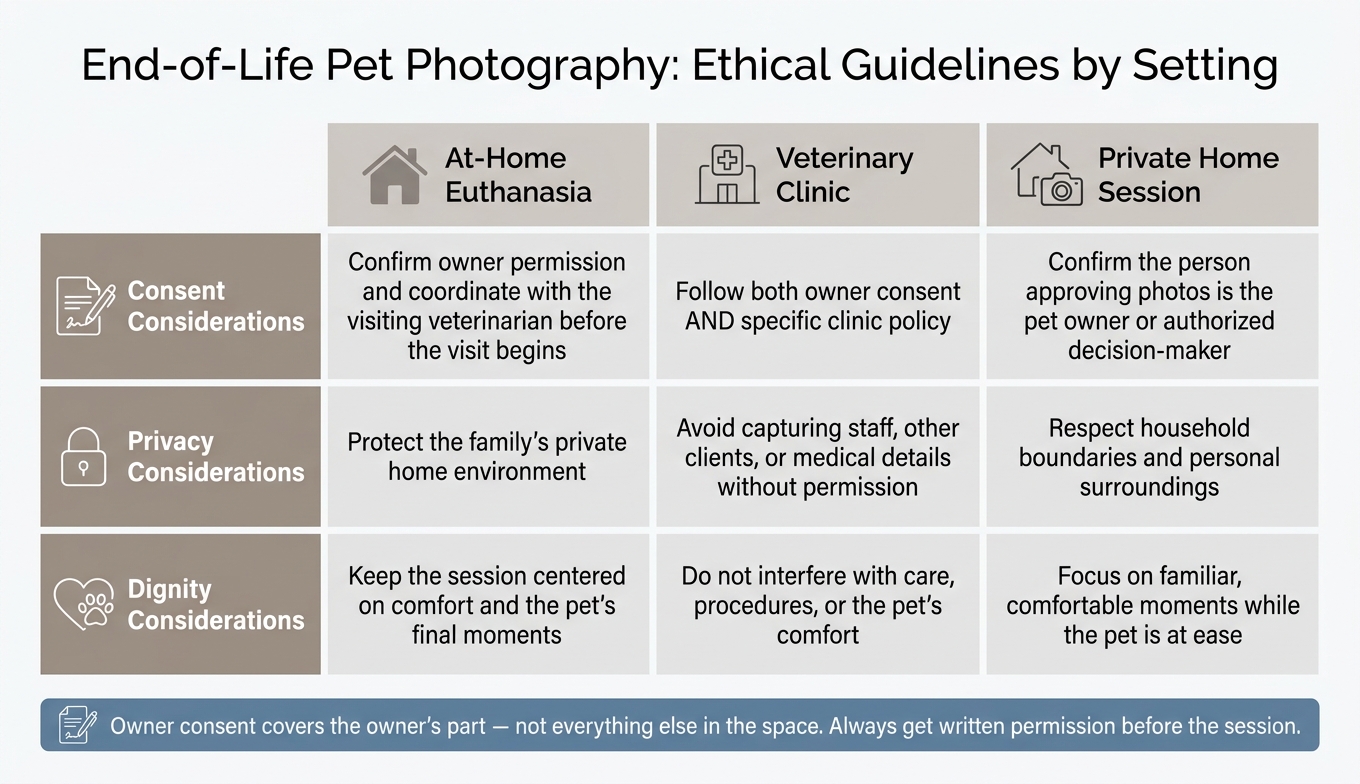
End-of-Life Pet Photography: Ethical Guidelines by Setting
In the U.S., clinic rules and privacy norms shape what end-of-life pet photography can include in each setting. Once consent and the pet’s well-being are in place, the next step is simpler but just as important: what is actually allowed in that space.
Owner Permission, Clinic Policies, and Confidentiality
Veterinary clinics often treat care-related photos as sensitive client records. Many clinics also have their own photography rules, with set staff roles and clear steps for how images can or can’t be taken.
Before you photograph anything in a veterinary clinic, ask for the clinic’s written policy first. That part matters. A pet owner’s permission does not automatically give access to the clinic itself, its staff, or anything happening around the room.
That means staff members, other clients in the waiting area, and identifying medical details are off-limits unless you have separate permission. In plain terms: owner consent covers the owner’s part, but not everything else in the building.
Clinic policy may also limit what consent includes, so written approval should be confirmed before the session starts. Grief can make rushed decisions shaky, which is why written permission belongs before the session, not during it. Seeking healing advice from family therapists can help owners navigate these difficult choices.
How Ethical Limits Differ by Setting
The rules shift depending on the location, so these boundaries are worth treating seriously.
| Setting | Consent considerations | Privacy considerations | Dignity considerations |
|---|---|---|---|
| At-home euthanasia | Confirm owner permission and coordinate with the visiting veterinarian before the visit begins | Protect the family's private home environment | Keep the session centered on comfort and the pet's final moments |
| Veterinary clinic | Follow both owner consent and specific clinic policy | Avoid capturing staff, other clients, or medical details without permission | Do not interfere with care, procedures, or the pet's comfort |
| Private home session | Confirm the person approving photos is the pet owner or authorized decision-maker | Respect household boundaries and personal surroundings | Focus on familiar, comfortable moments while the pet is at ease |
Using End-of-Life Photos in Memorials While Protecting Privacy
Once the session ends, the next question is how those images will be stored, shared, and remembered.
Choose Memorial Uses That Match Your Comfort Level
After the session, you’ll need to decide how private or public the memorial should be. Many families prefer photos that show a pet’s personality, favorite poses, and little mannerisms instead of anything clinical. A dog resting in a favorite spot or a cat curled up in a familiar pose often feels far more comforting than an image linked to a medical setting.
For display, private options like framed prints, photo books, and shadow boxes keep the memory close. If a photo has a distracting background, you can lightly edit or crop it before printing. And if you want to share the images, choosing between digital vs. print pet memorial photo albums can help you stay connected with close family and friends without posting them on public platforms.
For a lot of families, the most meaningful memorials pair an image with something tangible.
Pairing Photographs with Memorial Keepsakes
A photograph matters on its own, but adding a physical keepsake can make it feel more personal. Urns, burial markers, memorial jewelry, and pet caskets can give the photo a place in the home. Putting a keepsake beside a favorite photo on a bookshelf or mantel creates a quiet remembrance space that stays private by design.
Conclusion: Consent, Welfare, and Privacy Are the Key Standards
At every stage of end-of-life pet photography - from the first conversation to the final memorial - clear consent, the pet’s welfare, and privacy are the standards that separate ethical practice from harmful practice. If the images help with healing without adding distress, it often makes sense to keep them private, simple, and intentional.
FAQs
Can I change my mind after the session?
Yes. Feeling unsure during a moment like this is completely natural.
If you need to pause or change your mind at any point, that is always your choice. Your comfort and your pet’s well-being come first, so tell your photographer as soon as you need to. This is a deeply personal experience, and the focus should stay on what feels right for you.
Who needs permission in a clinic?
You must get explicit written consent from the pet owner before filming or posting any content involving them or their pet.
People in this situation are often dealing with acute grief. That’s why documented permission - through email or a formal messaging system - before any creative work begins is an ethical must.
What if my pet gets stressed?
If your pet gets stressed, put their comfort first. Set up a calm space and give them time to play, since helping them feel safe and relaxed matters most.
If you use tools like paw print kits, pick non-toxic, pain-free options that only need light contact. And if your pet has health issues or injuries, check with your veterinarian about the right approach.