


Losing a pet can hurt as much as losing a family member, and that pain is valid. In the U.S., about 66% of households own a pet, which helps explain why this kind of loss hits so hard. If I were guiding someone through it, I’d keep it simple: name the grief, let the feelings out, honor the pet, care for daily needs, and ask for help when the weight feels too heavy.
Here’s the short version:
- I accept the 7 stages of pet loss grief as real.
- I give my feelings a place to go, like writing, crying, talking, or sitting quietly.
- I honor my pet with memorial ideas with a photo, candle, tree, box, or small ritual.
- I stick to basic daily care like water, food, sleep, and short walks.
- I reach out for support from a friend, group, hotline, or counselor if I feel stuck.
A few facts help put this in context:
- In many homes, pets are part of daily life, not “just animals.”
- Grief can bring guilt, anger, shock, loneliness, and regret all at once.
- There is no set timeline for healing.
- Support matters, especially when other people do not understand the loss.
The core idea is simple: I do not need to “get over it.” I need to move through it, one day at a time, while keeping my pet’s memory close.
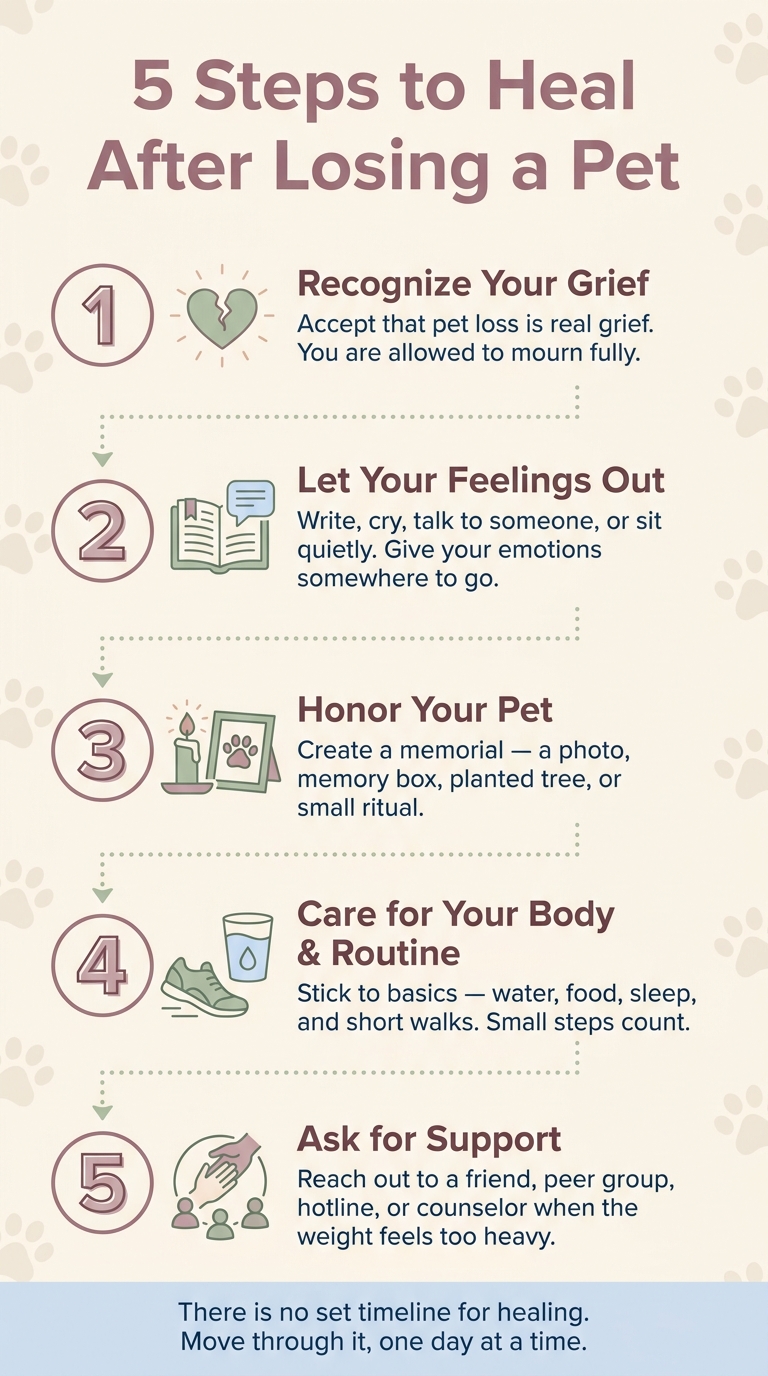
5 Steps to Heal After Losing a Pet
Overcoming the grief of losing a pet: a conversation with Annette Scanlon
sbb-itb-c538f2f
Step 1: Recognize Your Grief and Accept That It Is Real
The grief you feel after losing a pet is real. It deserves to be treated that way.
For many people, a pet isn't just part of the household. They're part of the rhythm of the day. Morning walks, feeding times, play, quiet time on the couch - all of that gets woven into daily life. When they're gone, the loss doesn't stay in one corner of your mind. You feel it all through the house.
Why Pet Loss Hurts So Deeply
That pain can hit hard because the bond is close, steady, and built into ordinary life.
"The bond we share with animals is a profound expression of pure, unfiltered love. When we lose a pet, the grief can be deep and overwhelming due to the intensity and simplicity of this relationship." - Gary Kowalski, Author of Goodbye, Friend
A lot of people see pets as family members. So when a pet dies, the loss can feel just as serious as losing a human relative. The hard part is that other people don't always get it. When grief isn't recognized, it can leave you feeling alone, dismissed, or even ashamed.
"Disenfranchised grief is not recognized or validated by one's culture whether that is one's family, friends, co-workers, local community, or community-at-large." - Erica Messer, Founder of Wolfie's Wish
If someone has told you it was "just an animal", you do not have to accept that. You are allowed to mourn your pet the same way you would mourn any loved one. That's not too much. That's grief. Reading a pet loss companion book can help you navigate these complex emotions.
Common Feelings After a Pet Dies
Grief usually doesn't show up as simple sadness. It can come in waves, shift by the hour, and bring several emotions at once.
| Emotion | What It Might Look Like |
|---|---|
| Shock & Helplessness | Feeling stunned, especially if the loss was sudden |
| Guilt & Regret | Second-guessing medical decisions or replaying the final days |
| Loneliness & Longing | Missing the daily companionship and physical presence |
| Loss of routine | Feeling lost without the responsibilities of caring for your pet |
| Anger | A natural reaction to the unfairness of the loss |
| Feeling judged for grieving | Feeling like you shouldn't be this upset, tied to disenfranchised grief |
These reactions are normal parts of grief. There is no fixed timeline for healing. It moves at your pace.
Once you can name the grief, it gets a little easier to find safe ways to let it out.
Step 2: Let Yourself Grieve in Simple, Practical Ways
Naming your grief is a good start. The next step is giving it somewhere to go.
Simple Outlets for Your Emotions
Try writing to your pet. Spend a few minutes each day saying what you miss, what you're thankful for, or what you wish you'd said. It doesn't need to be polished. A few plain sentences can be enough.
If writing feels too heavy, keep it even simpler. Sit for a short meditation, or read supportive material in small doses. You don't have to do a lot for it to help.
Still can't write? Talk to one person you trust. Not for advice. Just to say your pet's name out loud and let someone listen. You can also give yourself room to cry, sit in silence, or look through a few old photos. Sometimes that's the whole task for the day.
How to Handle Guilt, Regret, and Painful Memories
Guilt often shows up right alongside grief. It can make the loss feel even harder. You may replay a medical decision, wonder whether you missed early signs of illness, or second-guess the timing of euthanasia. That's hindsight bias: judging a past choice with information you didn't have at the time.
When those thoughts start looping, a grounding exercise can help break the cycle. Slow your breathing. Put both feet flat on the floor. Then name five things you can see around you. It's a simple way to bring your mind back to the present.
It also helps to look at your pet's whole life, not only the final days. Think about the walks, the daily routines, the way they curled up beside you. That's the real story. The end is just one page in it.
As the guilt begins to loosen, a small memorial or ritual may help you honor your pet. For many people, that becomes the next step in healing.
Step 3: Honor Your Pet With Memorials and Rituals
When grief feels too heavy to carry all at once, a small ritual can make it feel a little less overwhelming. Rituals give your grief somewhere to go. They honor the bond you had without forcing you to sit in the pain all day. As Beth Bigler, a pet loss grief counselor, puts it:
"Honoring Our Animals... provides a daily space for remembrance, healing, and continued closeness."
Create a Personal Memorial at Home or Outdoors
A framed photo on a shelf, a candle you light each evening, or a memory box with a collar and a few favorite toys can be enough. These simple, physical reminders give you a place to put your feelings when the silence in the house feels the hardest.
If you’d like something outdoors, planting a tree or bush in your yard can become a living tribute you can visit and care for. Even a small family moment around the planting, with just a few spoken words, can help mark the loss in a way that feels whole.
A scrapbook can also help if you want to tell the full story of your pet’s life. Add photos, notes, and little memories from different family members. For children, this can be especially helpful. It gives them a clear way to express what they’re feeling and shows them that remembering is part of loving.
Choose Memorial Items That Feel Right for Your Family
Some families want something they can hold or wear. Others want a marker in the yard or a quiet space at home. There isn’t one right choice. What matters is picking something that fits your family, your space, and the way you grieve.
Common options include:
- Urns
- Memorial jewelry
- Burial markers and headstones
- Memory boxes
- Planted trees
- Framed photos
Try to choose something that reflects your pet’s personality and the role they had in your home. A memorial isn’t only about loss. It can also be a way to honor the life they shared with you.
Once remembrance feels settled, it may help to return to the small daily routines that keep life moving.
Step 4: Take Care of Your Body, Mind, and Daily Routine
Losing a pet can shake up your whole day-to-day life. It can leave you feeling lost, off-balance, and unsure what to do next. After creating memorials, routine often becomes the next thing you can hold onto. You do not need to fix everything at once. Small, steady steps are enough.
Start With Small Daily Actions
Begin with the basics: get dressed, drink water, and eat at set times. If you used to take a daily walk with your pet, try keeping a shorter version of that habit. Even a short walk can bring back some structure, and it gets you outside for fresh air.
If that still feels too hard, go even smaller. Pick just one action and let that be enough for today.
Self-Care Options by Energy Level
Not every day will feel the same. Some days, you may have enough energy for a walk. Other days, the gentlest options will make more sense. This table can help you match your self-care to how you feel.
| Self-Care Option | Energy Needed | Best Used When... |
|---|---|---|
| Breathing exercises | Very low | You feel sudden waves of anxiety or panic |
| Daily meditation or affirmations | Low | You want a gentle, structured start to the day |
| Write tomorrow's top three tasks | Medium | You want a simple way to restore a sense of order |
| Short stretch break | Low | Your body feels tense and your focus is limited |
| 20–30 minute walk | Medium | You want routine and fresh air |
Keep your routine simple, and count small steps as progress. If daily life still feels hard to manage, turn to support in Step 5.
Step 5: Reach Out for Support and Keep Moving Forward
When everyday tasks still feel heavy, other people can help hold some of that weight. If self-care feels out of reach, ask for support. You don't have to explain your grief to everyone. Sometimes one person who gets it, or one group where you feel seen, can make the day feel a little less hard.
Pet loss is often brushed aside, which is why validation matters so much. The right kind of support can help in different moments:
- Informal support: friends and family who can sit with you, listen, and share memories.
- Peer support: groups and hotlines where people understand this kind of loss firsthand.
- Professional care: pet grief counselors who can help if guilt lingers, daily life feels hard to manage, or grief starts to feel stuck.
Peer groups, hotlines, and pet-loss counselors can each help at different stages of grief.
Conclusion: Healing Takes Time, and You Do Not Have to Do It Alone
Your grief is real, and getting support is a healthy part of moving through it. Healing doesn't mean forgetting. It means learning to live with the loss, one day at a time.
FAQs
How long does pet grief last?
There’s no set timeline for pet grief. The sources describe it as a deep, overwhelming, and deeply personal experience that takes time to process.
Healing is personal, so grief lasts a different amount of time for each person.
When should I seek help for pet loss grief?
Grief after losing a pet is deeply personal. It’s natural to feel overwhelmed, lost, or in pain. If your grief starts to feel too heavy to carry, if the intensity of your emotions makes daily life hard, or if you feel alone in your sorrow, it may help to talk to a professional.
Reaching out for support takes courage. It’s a hard step, but it can make a big difference. Help is out there through pet loss support groups, bereavement counselors, and dedicated hotlines.
How can I help a child after a pet dies?
Support a child with open, honest conversation, and let them know their feelings make sense. Give them room to talk about the loss, ask questions, and show emotion in their own way.
It can also help to include them in a personal ritual or small ceremony to honor and celebrate their pet’s life. That might be something simple, like drawing a picture, sharing a favorite memory, or lighting a candle together. A kind, supportive environment helps a child feel seen and understood during a hard moment.