


A pet casket is more than a box for burial. To me, it shows how a family thinks about love, loss, faith, and a pet’s place in the home.
Here’s the short version:
- Material matters: metal and hardwood often point to permanence and formality.
- Simple natural materials like bamboo, wicker, willow, pine, or cardboard often fit return-to-earth beliefs.
- Belief shapes the choice: some families want a full burial service, while others prefer cremation and keep ashes at home.
- Place matters too: in the U.S., cemetery rules, home-burial laws, and green burial options all affect what you can use.
- Pets are now treated more like family: the article notes that 72% of families prefer memorial items made to feel personal.
- Price can vary a lot: many pet caskets fall between about $25 and $170, depending on material and purpose.
If I had to sum it up in one line, it’s this: the casket people choose often reflects what kind of goodbye they believe is right.
A few key patterns stand out:
- Families who want a burial that feels formal may choose lined wood or metal caskets.
- Families focused on simplicity may choose plain containers or cremation.
- Families who want the body to return to the ground may pick biodegradable materials.
- In cremation-focused places, the urn often matters more than the casket.
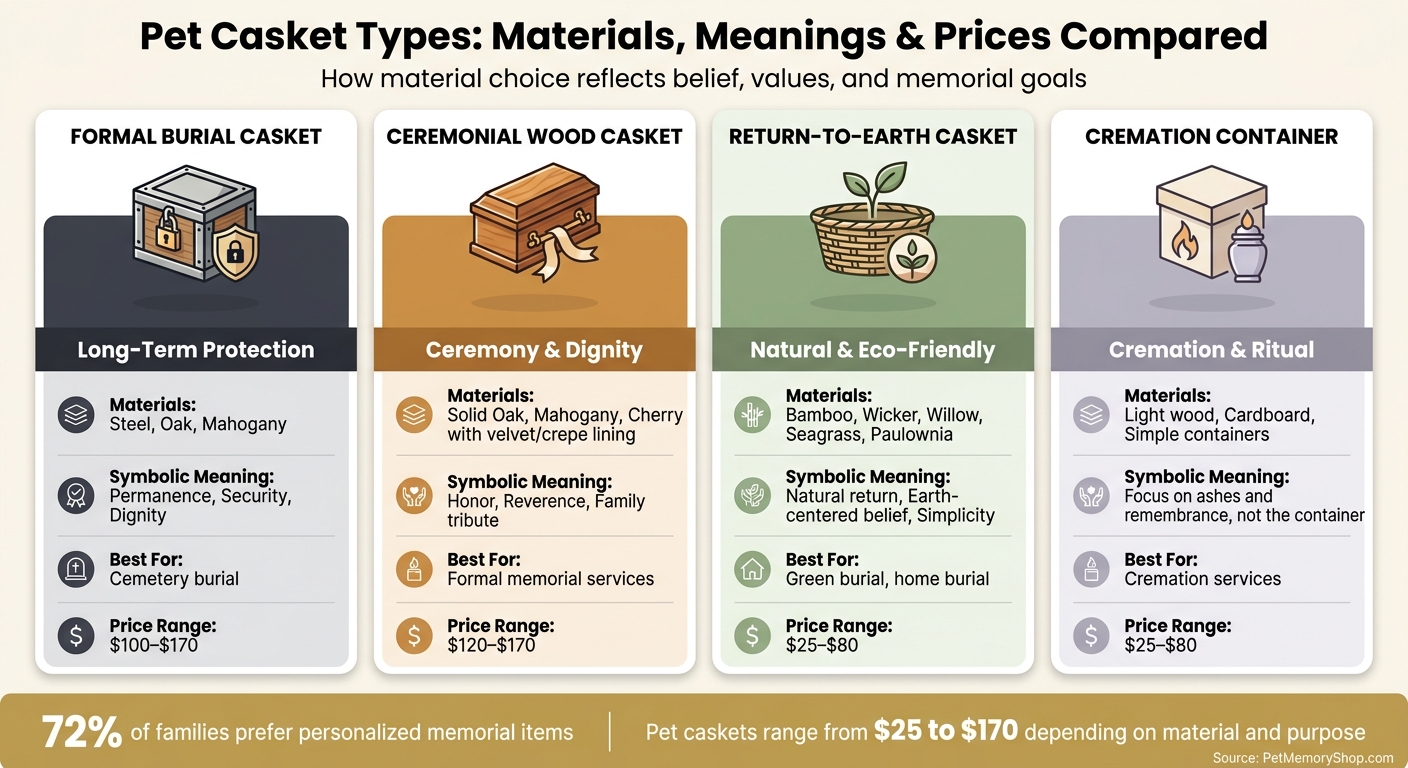
Pet Casket Types: Materials, Meanings & Prices Compared
The Untold History of Pet Funerals
sbb-itb-c538f2f
Quick comparison
| Choice | What it often shows | Common materials | Usual use |
|---|---|---|---|
| Formal burial casket | Honor, ceremony, lasting care | Steel, oak, mahogany | Cemetery burial |
| Simple burial container | Modesty, plain remembrance | Pine, cardboard, fiberboard | Home or simple burial |
| Return-to-earth casket | Natural decay, earth-centered belief | Bamboo, wicker, willow, seagrass | Green burial |
| Cremation container | Ritual focus on ashes, not the container | Light wood, cardboard, simple containers | Cremation service |
So when I look at different types of pet caskets, I don’t just see style or cost. I see belief, family values, and the kind of farewell people want to give.
How casket materials and design reflect beliefs about remembrance
Casket materials often show what a family wants to express: permanence, ceremony, or a natural return to the earth. You can see those values most clearly in the material they choose.
Protective caskets for long-term care and permanence
Families who pick metal or solid hardwood caskets often want long-term protection and durability. Materials like steel, along with hardwoods such as oak or mahogany, stand up to moisture, pests, and wear over time.
Wood and lined interiors for dignity and ceremony
Wood caskets with padding, crepe cloth or velvet linings, and pillows add a ceremonial feel and a sense of dignity. Those details support the idea that a pet is being honored as a family member.
Biodegradable materials for return-to-earth beliefs
For families focused on burial, the goal may shift from protection to decomposition. Some choose biodegradable options like wicker, bamboo, and unfinished pine because they fit a belief in a natural return to the earth. These materials break down over time without leaving behind plastics or synthetic materials.
| Material | Common Use | Symbolic Meaning | Practical Tradeoffs |
|---|---|---|---|
| Metal (Steel/Bronze) | Long-term burial | Permanence, security, modern dignity | Heavy; non-biodegradable; highest protection |
| Hardwood (Oak/Mahogany) | Ceremony | Lasting tribute, reverence | Higher cost; classic look |
| Softwood (Pine/Paulownia) | Green or lower-cost burial | Natural return, simplicity | Less durable; eco-friendly if unfinished |
| Biodegradable (Wicker/Bamboo) | Eco-friendly burial | Return-to-earth | Breaks down over time; lighter weight |
| Cardboard or fiber | Lower-cost option or cremation | Practicality, transient nature of life | Least durable; often used for temporary transport |
Material choices can also reflect religious and spiritual beliefs, which shape pet burial customs in different communities.
Religious, spiritual, and symbolic beliefs behind pet casket choices
Beliefs about death often shape one basic choice: a formal casket, a simple burial container, or cremation. Those views tend to affect the kind of ceremony a family wants, how permanent the burial should feel, and whether the body is meant to return to the earth.
Christian-influenced and secular U.S. beliefs about pet afterlife
In the U.S., this often shows up in burial rituals that feel familiar. Many families take comfort in the idea that pets go to heaven or cross the Rainbow Bridge. That feeling of continued connection can lead to formal memorials, including human-style caskets and private burial services.
Buddhist, East Asian, and cremation-centered practices
In Japan and other East Asian settings, cremation is often the standard choice. The focus is usually on ceremony and remembrance, not so much on the container itself. Families may use simple containers and keep ashes on memorial altars at home as part of continued remembrance. This lines up with Buddhist views of impermanence and ritual care.
Islamic, Indigenous, and earth-centered views on respectful burial
Traditional Islamic teachings generally favor modest burial and avoid elaborate memorial objects. In practice, that often means direct burial with simple containers instead of ornate displays.
Other belief systems put more weight on simplicity and a natural return to the ground. Earth-centered and Indigenous views often see a pet's body as part of a natural cycle, meant to go back to the earth. Materials such as wicker, bamboo, willow, and seagrass fit that view because they break down over time.
Regional practices and U.S. memorial customs that shape pet casket use
Local rules and customs often shape which pet caskets families can use. Beliefs may set the memorial goal, but local rules often decide what works in practice. Burial habits and social expectations also play a part, and in the U.S., that leads to a mix of choices.
United States: pet cemeteries, home burial, and green burial options
Pet cemeteries often have strict burial rules, so it’s smart to check those before buying a casket. Some cemeteries limit the materials you can use, set size requirements, and even decide who can place the casket at the site.
Home burial can be an option too, but families should check local zoning and health rules first.
Green burial is also becoming more common. That shift is helping drive demand for biodegradable caskets and burial materials made from bamboo, cardboard, and other natural fibers.
How cremation-focused regions influence casket style
In places where cremation is the usual choice, the casket often serves as a temporary ceremonial container instead of the main memorial. Cremation is common in the U.S. pet aftercare market, and when that’s the norm, caskets are often simpler. The memorial focus tends to move to the urn or another keepsake.
| Region | Dominant Method | Common Casket Styles | Key Considerations |
|---|---|---|---|
| United States | Cremation and growing burial | Protective metal or wood; biodegradable options | State and local zoning rules; cemetery standards |
| Japan | Cremation-focused | Simple ceremonial caskets; urns and altars | Limited burial space; household memorials |
| Europe (UK, Germany, France) | Cremation and green burial | Biodegradable materials such as bamboo, willow, and cardboard | Sustainability and environmental concerns |
In cremation-heavy settings, families often choose a simpler casket, while the urn becomes the item that lasts.
Choosing a pet casket that fits your beliefs and memorial goals
Matching material, style, and memorial setting
Once your beliefs point you toward a memorial goal, the next step is more practical: What kind of casket makes sense for the burial you have in mind? In most cases, the choice comes down to four things: burial location, casket size, the kind of memorial you want, and how much you plan to spend.
If you're arranging a cemetery burial, metal or high-end wood caskets often make the most sense because they're built for longer-term use. It also helps to check pet cemetery material rules before you buy. Some locations have their own requirements, and it's better to know that upfront.
For a home burial or a more return-to-earth plan, biodegradable materials are usually the better match. That includes bamboo, willow, seagrass, paulownia wood, and recycled cardboard. These options line up well with natural burial preferences and keep the focus on simplicity.
Size matters too. Measure with care, since pet caskets usually range from 12 to 36 inches. Price also shifts based on material and purpose. Protective metal caskets are usually about $100 to $170, ceremonial wood caskets are about $120 to $170, and return-to-earth options tend to fall around $25 to $80.
| Goal | Best Material | Typical Price Range (USD) |
|---|---|---|
| Long-term protection | Metal (steel, brass, aluminum) or high-gauge steel, often with air-tight or water-tight seals | $100–$170 |
| Ceremony and dignity | Solid wood (oak, mahogany, cherry) with high-gloss finish and velvet or crepe lining | $120–$170 |
| Return-to-earth | Bamboo, willow, seagrass, paulownia, recycled cardboard | $25–$80 |
Those same material and setting choices also help narrow down the product style that fits your memorial plan.
How Pet Memory Shop products fit different remembrance styles
If you're shopping within those categories, Pet Memory Shop sorts its caskets by style and level of protection. That makes it a bit easier to match the product to the kind of remembrance you want.
The Elegance Series is aimed at families who want a more formal, human-style design. It includes crepe and velvet linings with padding, and it has a 4.5/5 rating on Amazon. The Caring Series is a better fit for people who want durable, secure construction meant for long-term protection. It has a 4.6/5 rating on Amazon. The Classical Series has a more traditional look, with secure latching and silver or black finishes.
Pet Memory Shop also sells urns, burial markers, memorial jewelry, and loss support resources.
FAQs
How do I choose a pet casket that fits my beliefs?
Choosing a pet casket that fits your beliefs is a personal way to honor your pet. The material and design can say a lot about what matters to you.
If sustainability matters most, biodegradable options made from recycled paper, natural fibers, or sustainable wood can feel like the right fit. If you want a more classic, lasting tribute, metal or solid wood caskets offer durability and a timeless look.
Are biodegradable pet caskets allowed everywhere?
No. Biodegradable pet caskets aren’t allowed everywhere.
Whether you can use one depends on local rules and the policies of the pet cemetery or burial site. Before you move ahead, check with the location you’ve chosen to make sure the casket fits its guidelines.
Is a pet casket needed for cremation?
No. A pet casket is not required for cremation.
Pet caskets are usually made for burial. For cremation, the service provider will typically use its own container and equipment during the process.
If you choose cremation, you may want to get an urn or a keepsake for your pet’s ashes instead.