


If I had to sum up 2025 in one line, it’s this: pet memory boxes are now made to show, protect, and personalize keepsakes at the same time.
If you’re shopping this year, the main things to look for are simple:
- More custom detail: names, dates in MM/DD/YYYY, photo engraving, paw-print art, and short memorial lines
- Lower-waste materials: wood, bamboo, recycled paperboard, and acid-free interior lining
- Display-first design: photo fronts, glass panels, and shadow-box layouts for shelves and mantels
- Better fit for keepsakes: small boxes for photos and fur, medium boxes for collars and cards, and larger boxes for toys or mixed items
- More protection: fabric or archival lining, divided sections, and latches that help keep out dust
Here’s the short version: wood still leads, display-ready boxes are showing up more often, and buyers now expect personalization as a basic feature, not an add-on. In most cases, a 6" × 4" box fits one or two small items, a 12" × 8" box fits common keepsakes like a collar and paw print, and 20" × 12" or more works better for mixed items.
| What changed in 2025 | What it means for you |
|---|---|
| Personalization is now expected | You can look for custom details without treating them like luxury extras |
| More natural and recycled materials | You have more lower-waste options for home display |
| Boxes are made to stay visible | A memory box can sit on a shelf instead of staying tucked away |
| Protection features matter more | Linings, compartments, and latches help preserve photos, tags, and prints |
I’d read 2025 this way: pick the box based on what you want to keep, where you want to place it, and how often you plan to open it.
Pet memory box trends in 2025
Three trends stand out in pet memory boxes in 2025. You can see them most clearly in personalization, materials, and the way these boxes are meant to be displayed.
Personalized details are now a standard expectation
Buyers now want more than a simple name on the lid. Laser-etched photographs, custom epitaphs, paw-print motifs, and personalized memorial plaques formatted as MM/DD/YYYY have shifted from premium extras to standard expectations.
Laser engraving and precision cutting also make room for finer custom work than before. So instead of generic pet memorials, the final piece feels made for one pet and one story. That same attention to detail shows up in the materials people pick.
Eco-friendly materials and reusable packaging are growing
Natural wood, recycled paperboard, bamboo, and archival-safe linings appear much more often in 2025 than in past years. They also give these boxes a warmer, simpler look that fits more easily into home decor.
There’s a practical side too. Archival-safe linings help protect photos and keepsakes over time. Packaging has changed as well, with kraft tissue and recycled mailer boxes taking the place of plastic-heavy options. That shift ties closely to another change: boxes aren’t just for storage anymore.
Display-ready designs are replacing hidden storage
The biggest visual change in 2025 is the move away from boxes that stay hidden in a drawer. Integrated photo frames, shadow-box fronts, and glass viewing panels are now common, so owners can display a collar, paw print, or photo in a way that looks right at home on a shelf or mantel.
Many boxes now include dual compartments as well - one visible area for display pieces and a separate enclosed space for private keepsakes like letters or tags.
sbb-itb-c538f2f
Popular materials and box styles
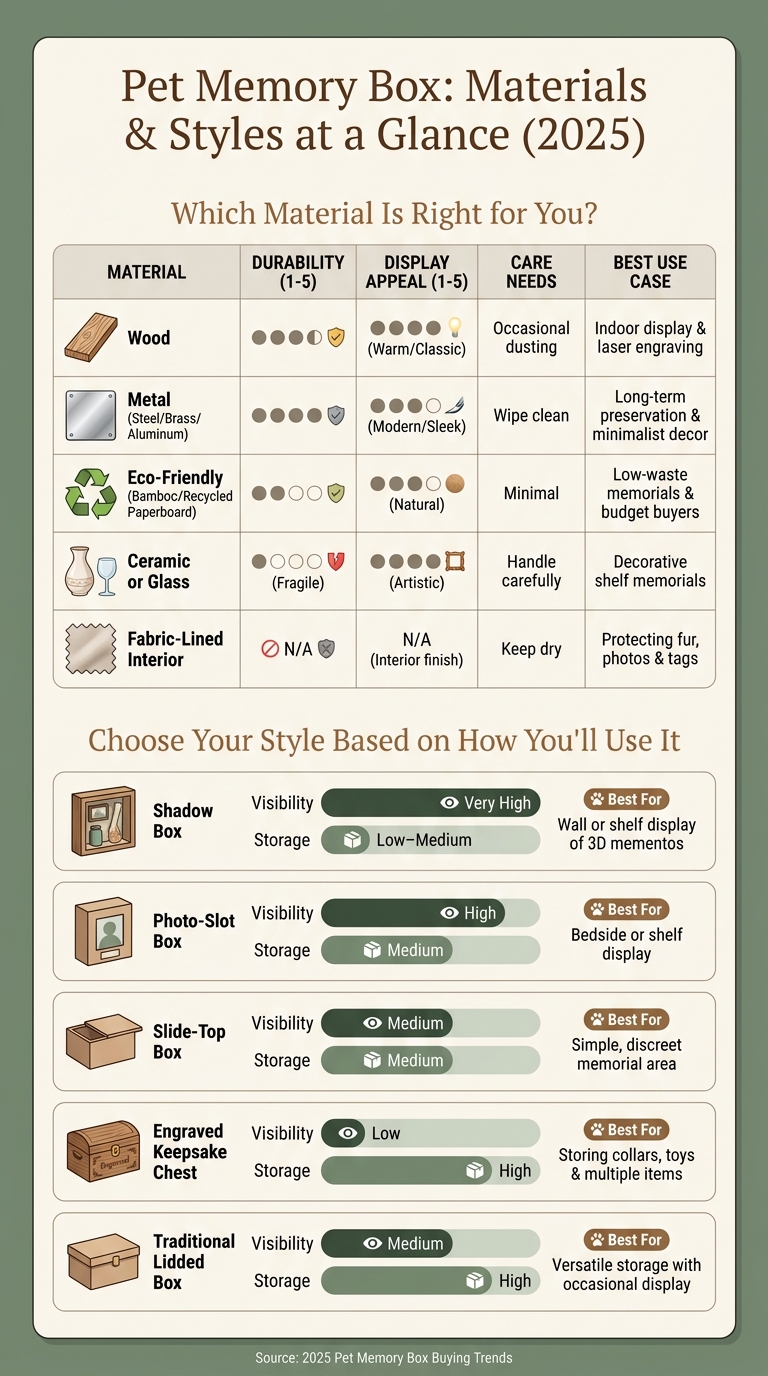
Pet Memory Box Materials & Styles Compared: 2025 Guide
The 2025 trends stand out most in the materials and box formats people pick.
Materials used most often in 2025
Wood is still the top pick in 2025 because it engraves cleanly and looks right at home in indoor displays. If someone wants something tougher and easier to care for, metal is a strong option. Stainless steel, brass, and aluminum stand out for their clean, modern look and long wear.
Velvet or crepe linings help protect delicate items and give the inside a more finished feel. If the box is meant for long-term storage, an archival-safe lining is the better route.
| Material | Durability | Display Appeal | Care Needs | Best Use Case |
|---|---|---|---|---|
| Wood | Medium–High | High (Warm/Classic) | Occasional dusting | Indoor display; laser engraving |
| Metal | Very High | Medium (Modern/Sleek) | Low (Wipe clean) | Long-term preservation; minimalist decor |
| Eco-friendly (bamboo/recycled paperboard) | Low–Medium | Medium (Natural) | Minimal | Low-waste memorials; budget-conscious buyers |
| Ceramic or glass | Low (Fragile) | Very High (Artistic) | Handle carefully | Decorative shelf memorials |
| Fabric-Lined Interior | N/A | N/A (Interior finish) | Keep dry | Protecting fur, photos, and tags |
Each material sends a slightly different message. Wood feels warm and classic. Metal feels clean and modern. Bamboo or recycled paperboard fits buyers who want a lower-waste option without spending much. Ceramic and glass lean more decorative, though they need a gentler touch.
Box styles pet owners choose most
Style shapes how the box will be used day to day, whether that's display, storage, or a mix of both. Shadow boxes are a good fit for visible 3D memorials. Photo-slot boxes work well on a shelf or bedside table. Slide-top boxes keep things simple and more discreet, which can feel easier in a quiet memorial space.
Engraved keepsake chests make more sense when protected storage matters most. They hold more and keep the contents out of sight.
| Style | Visibility | Storage Capacity | Best For |
|---|---|---|---|
| Shadow Box | Very High | Low–Medium | Wall or shelf display of 3D mementos |
| Photo-Slot Box | High | Medium | Bedside or shelf display |
| Slide-Top Box | Medium | Medium | Simple, discreet memorial area |
| Engraved Keepsake Chest | Low | High | Storing collars, toys, and multiple items |
| Traditional Lidded Box | Medium | High | Versatile storage with occasional display |
A shadow box puts the memory front and center. A keepsake chest does almost the opposite: it protects more items and keeps them private. That difference matters, because some pet owners want a memorial they see every day, while others want a safe place to store things they aren't ready to look at all the time.
Once the material and style are set, the contents become easier to plan. You can then explore various pet loss memorial gifts to fill the space.
What goes inside and how to personalize it
Items most commonly stored in a pet memory box
What you keep in the box should shape the size you buy. A collar and a couple of photos take up far less space than a set of keepsakes like a favorite toy, a paw print shadow box, and sympathy cards.
The items pet owners store most often are collars, ID tags, printed photos, paw prints, fur clippings, adoption papers, sympathy cards, and handwritten notes. Paw prints are often saved in ink, clay, or cast form.
Fragile pieces need more than extra room. They also need protection. Separate compartments and soft linings, such as crepe or velvet, help protect paper keepsakes and heavier items.
Personalization options that feel current and meaningful
After you choose the contents, you can match the personalization to the box surface and the way you plan to display it. Laser engraving can add names, dates, and detailed portraits to wood, metal, or stone.
Other current options include nameplates, photo inserts, paw-print artwork, and custom phrases that reflect the pet's personality. Some boxes also include QR codes or NFC tags that link to online memorial pages.
How to choose the right pet memory box in 2025
Key buying factors: size, protection, and display location
Once you’ve picked a style and material, the last part comes down to size and where the box will live.
Start with the items you want to keep inside. A 6" × 4" box works for a photo, a fur clipping, or another small keepsake. A 12" × 8" box gives you enough room for a collar, a paw print, and sympathy cards. If you want to store a bulky toy or keep several items together, you’ll want something 20" × 12" or larger.
Placement matters too. A box that sits on a shelf and rarely gets moved has different needs than one you’ll open often. In plain terms: match the material to the room and to how much handling the box will get.
Closure type is another detail people often overlook. But it makes a big difference. A secure latch helps keep dust out and keeps the lid shut when the box is moved. It also protects the contents better than a basic lift-off lid.
Quick decision guide and final takeaways
Use the table below to match common keepsakes with the box style that fits best.
| Keepsake Type | Recommended Box Style | Key Factor |
|---|---|---|
| Collar & ID tags | Personalized wooden box (medium) | Depth to avoid crushing the collar |
| Paw print mold | Display-ready shadow box | Protection from dust and moisture |
| Sympathy cards & photos | Medium rectangular box with latch | Width to fit standard envelopes |
| Mixed keepsakes | Engraved keepsake chest (large) | Capacity to hold varied items together |
| Fragile items | Fabric-lined box with secure closure | Interior padding to prevent damage |
The main point from 2025 buying trends is simple: the best memory box fits your keepsakes, not just a general size label. The strongest options this year combine personalization, display-ready design, and solid protection.
FAQs
How do I choose the right box size?
Start by thinking about where the pet memory box will live. Maybe it’s going indoors on a mantel, shelf, or small altar. Maybe it’ll sit outside. That choice affects both the size and the overall look.
It also helps to decide how much visual space you want it to take up. A small box feels quiet and personal. A larger one stands out more and gives you extra room for photos and wording.
- Small (about 6 in. x 4 in. or 8 in. x 6 in.): a compact keepsake for a single photo
- Medium (about 12 in. x 8 in. or 16 in. x 10 in.): enough space for a name, dates, and extra photos or notes
- Large (20 in. x 12 in. and up): best if you want more text or a statement piece
Which material protects keepsakes best?
Granite - especially polished black granite - offers the best protection for pet keepsakes. It has low porosity, so it takes in less moisture, stands up well to weather and chemical exposure, and helps reduce freeze-thaw cracking and surface wear over time.
Its hardness and long life also help preserve fine engraving details, which matters if you want a memorial keepsake that stays clear and readable for years.
What personalization is worth adding?
Personalizing a pet memory box can turn it into something deeply personal. Small details often make the biggest difference: your pet’s name, important dates, a breed-specific silhouette, or a short engraved message like an epitaph, a line from a poem, or a favorite quote.
You can also include a high-resolution photo, either with a frame insert or as a laser etching. If you want a more modern touch, some boxes come with QR codes or NFC tags that link to digital memorials.