


If you want a pet memorial that will stay outside for years with less worry, I’d pick stone. If I want lower cost, lighter weight, and more shape detail, I’d pick resin.
That’s the short answer. Stone - especially granite - handles sun, rain, and freeze-thaw weather better. It also stays put because it’s heavy: a 12" x 12" x 1" granite piece weighs about 13 lbs. Resin is much lighter, often costs less, and is easier to place in flower beds or on patios. But it can fade in strong sun, crack in cold weather, or tip in wind if it isn’t secured.
Before I choose, I’d look at:
- How it looks outside over time
- Weight and how hard it is to move
- Price, from about $12 to under $60 for many resin pieces
- Weather wear, especially UV and winter freeze-thaw
- Cleaning and care
- Best spot, like a gravesite, garden bed, patio, or balcony
My rule of thumb is simple:
- Stone = better for fixed, long-term outdoor memorials
- Resin = better for tighter budgets, easier setup, and more sculpted detail
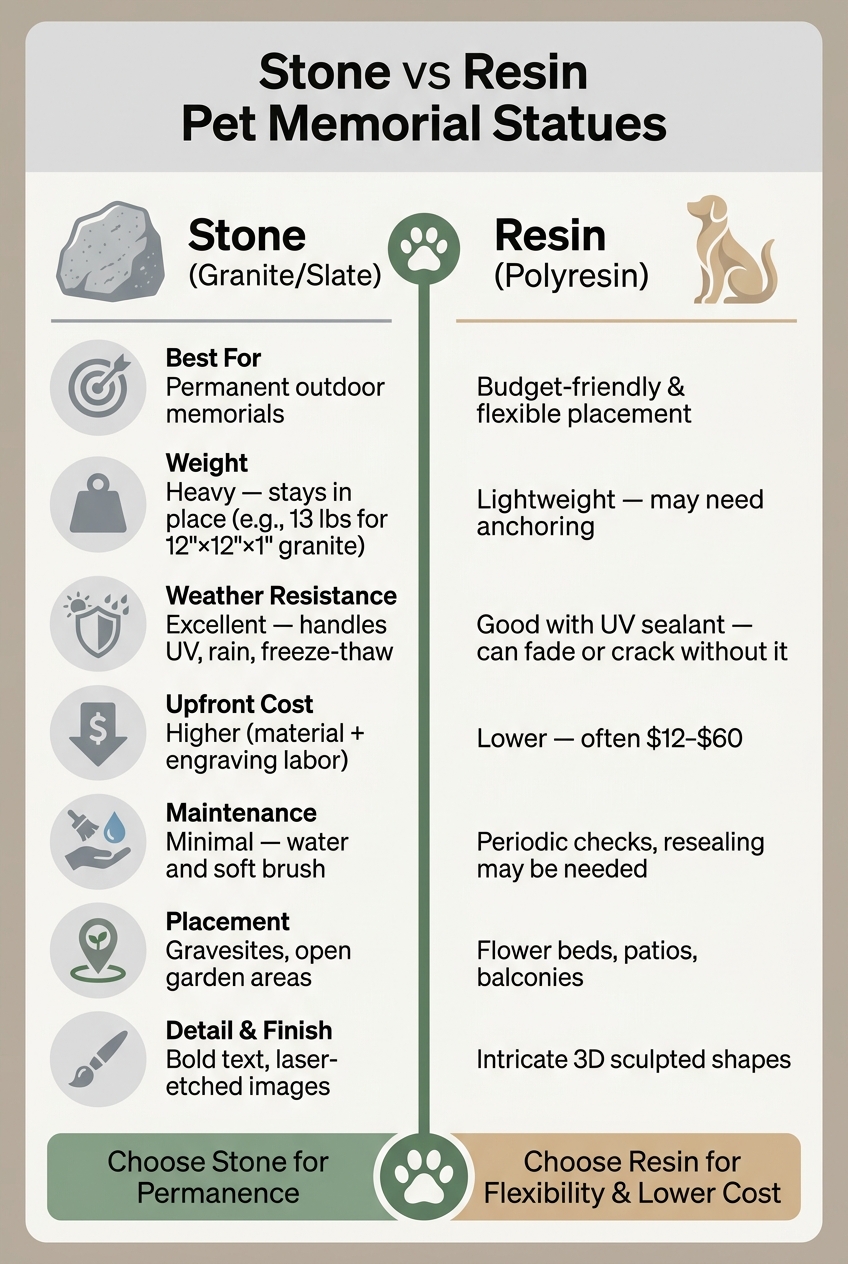
Stone vs Resin Pet Memorial Statues: Side-by-Side Comparison
Quick Comparison
| Feature | Stone | Resin |
|---|---|---|
| Best for | Pet burial markers and grave stones | Lower-cost and lighter memorials |
| Weight | Heavy; stays in place | Light; may need anchoring |
| Weather | Better in sun, rain, and winter cold | Can fade or crack over time |
| Care | Low; water and soft brush | Mild soap, water, and periodic checks |
| Cost | Higher in many cases | Lower in many cases |
| Placement | Gravesites and open garden areas | Flower beds, patios, balconies |
So if I were deciding fast, I’d match the material to the spot first, then the climate, then the budget.
sbb-itb-c538f2f
Stone Pet Memorial Statues: Look, Stability, and Long-Term Use
Stone has a permanent, monument-like feel that fits an outdoor pet memorial well. A 12" x 12" piece of granite that’s 1 inch thick weighs about 13 pounds. That kind of weight helps the memorial stay put in one outdoor spot instead of shifting around.
One of stone’s biggest strengths is engraving. Use sandblasting for names and dates. Use laser etching for detailed images or fine script on polished stone like Absolute Black granite. If you want the memorial to stay easy to read outdoors for years, that matters a lot.
How Stone Holds Up Outdoors
Not all stone handles the weather the same way. Granite has low porosity and a hardness of 6 to 7 on the Mohs scale, which helps it resist freeze-thaw damage and surface wear. Slate also performs well outdoors. Marble can be damaged by acid rain, and sandstone tends to weather badly in wet climates. For outdoor pet memorials, granite and slate are the safest long-term picks.
| Stone Type | Weather Resistance | Porosity | Best For |
|---|---|---|---|
| Granite | Excellent | Very Low | Long-term outdoor memorials |
| Slate | Good | Very Low | Natural-looking memorials with low upkeep |
| Marble | Poor to Fair | Low to Medium | Sheltered or lower-exposure spots |
| Sandstone | Poor to Fair | High | Generally not recommended outdoors |
That’s why stone works best in fixed, exposed locations where you want the memorial to stay in place and keep its appearance over time.
Caring for and Placing a Stone Statue
Stone doesn’t need much upkeep. Clean it with plain water and a soft brush. It also helps to place it on a flat, level base so it doesn’t shift or tilt as soil or mulch settles over time.
Resin meets the same need with lighter weight and easier placement.
Resin Pet Memorial Statues: Detail, Light Weight, and Easy Placement
If stone is about staying power, resin is about options. Resin statues are made in molds, so they can show fine details and complex shapes that are hard to carve from natural stone. Cold-cast resin mixes stone or metal powder into the mold to give the piece a more realistic finish without the extra weight. That's resin's biggest selling point.
Because resin is light, it's easy to move and place in flower beds, borders, or tucked-away corners. It also keeps the upfront price lower, which makes sense for smaller memorials. Choosing personalized memorial stones for dogs can also provide a sense of closure during the grieving process.
How Resin Holds Up Outdoors
Resin usually handles moisture well, but sun is where problems start. Without UV protection, direct sunlight can fade the surface and make the material brittle over time. Freeze-thaw cycles can cause cracks too, especially if moisture gets inside and then freezes. If the statue is properly sealed and rated for outdoor use, it can last 10 to 50+ years.
Caring for and Placing a Resin Statue
Care is pretty simple. Wash it with mild soap and water. Skip bleach-based or acidic cleaners, since they can damage the finish. It's also smart to check now and then for peeling, cracks, or fading, especially after winter.
Since resin is lightweight, it can tip in strong wind or shift if pets brush against it. You can secure it to a heavier base or set it in a more sheltered spot. If you can, place it in partial shade to help slow UV fading.
That balance of detail, placement, and upkeep stands out even more when you compare resin side by side with other materials.
Stone vs Resin: Side-by-Side Outdoor Comparison
Stone is the pick if you want something built to stay put. Resin makes more sense if you want finer detail and less hassle during setup. In practice, the right fit comes down to location and how much weather the memorial will face.
| Feature | Stone (Granite or Slate) | Resin (Polyresin) |
|---|---|---|
| Look | Natural texture; best for bold text and laser-etched images | Smooth, molded; excellent for intricate 3D shapes |
| Weight | Very heavy; stays put in wind and storms | Lightweight; may tip or shift without anchoring |
| Upfront Price | Usually higher because of material and labor costs | Usually more budget-friendly |
| Weather Wear | Excellent across rain, UV, and freeze-thaw conditions | Good with an intact seal; prone to fading and cracking without UV protection |
| Upkeep | Minimal; water and a soft cloth are usually enough | May need resealing or UV protection |
| Relocation | Difficult once installed | Easy to move and reposition |
| Impact Risk | Low, though slate can still split if struck | Moderate; can crack or blow over under stress |
| Refinishing | Stone rarely needs refinishing; resin may need repainting or resealing |
Key Trade-Offs at a Glance
The big trade-off is permanence vs. portability.
Stone comes out ahead for:
- Long-term stability
- Weather resistance
- Low maintenance
Resin stands out for:
- Fine detail
- Easier placement
- Lower upfront cost
That said, the result isn't just about the material. Size matters. Finish quality matters. Your local climate matters too. A well-sealed resin piece in a mild area may hold up better than expected, while a poorly finished one in harsh sun or repeated freeze-thaw cycles can wear down much sooner.
The next step is to match the material to the setting—whether you are choosing memorial plaques for graves, flower beds, or patio areas—while considering climate and budget.
Choosing by Location, Climate, and Budget
Gravesites, Flower Beds, and Patio Memorial Spots
Placement matters just as much as the material.
Gravesites are where stone often makes the most sense. Granite stays in place and deals with weather well. If you plan to place a marker in a formal pet cemetery, check the rules first. Many cemeteries have strict limits on size, material, and installation.
Flower beds often work well with resin because it’s easier to move around plants and edging. Stone can still work there, of course, but flat markers set into garden beds may need more cleaning. Rain can wash dirt into engraved letters, which means a bit more upkeep.
Patios and balconies also tend to lean toward resin because weight can be a big issue on raised or load-sensitive surfaces. A 12"×12"×1" granite slab weighs about 13 lbs, and that can be a dealbreaker in some spots. Resin is lighter, but it still needs to be secured so wind doesn’t shift it.
Once you know where the marker will go, the next thing to look at is weather.
Hot Sun, Freezing Winters, and Low-Maintenance Needs
After location, climate usually narrows the choice fast.
In hot, sunny climates, resin needs a UV-protective sealant or some partial shade to help limit fading and brittleness. Granite handles direct sun and heat well and doesn’t need any coating.
In places with freezing winters, granite is usually the safer pick. Freeze-thaw cycles can crack porous materials because trapped water expands as it freezes. Granite has very low porosity, so it’s much less likely to run into that problem. That makes it a better long-term option than marble or sandstone in cold areas.
Budget also shapes the decision. Resin markers often start around $12 and usually stay under $60, while stone tends to cost more because of size, customization, and engraving.
Final Takeaway
After comparing look, weight, weather wear, and upkeep, stone - especially granite - comes out ahead for long-term use at permanent gravesites and in freezing climates. It holds up better over time and asks for less from you once it's in place.
Resin, on the other hand, works well for lower budgets, easier placement, and finer sculptural detail. It's a practical pick when cost and design flexibility matter more than long-term outdoor durability.
In simple terms: choose stone for permanence. Choose resin for flexibility and lower cost.
Pet Memory Shop offers pet memorial markers and burial products for families planning an outdoor memorial.
FAQs
Which lasts longer outdoors?
Stone - especially granite - tends to last longer outdoors. It’s extremely hard, has low porosity, and stands up well to weather and freeze-thaw damage. That’s why outdoor memorials made from stone can remain in place for decades, and in many cases, even centuries.
Resin products depend more on weather conditions and usually need a strong UV-protective seal to help limit fading and surface wear as the years pass.
Is resin okay in full sun?
Yes, resin is usually fine for outdoor use. But full, direct sun can make it fade or wear down over time. How long it lasts comes down to the resin’s quality and what it’s made from.
If you want a memorial that can stand up to intense sunlight for many years with less chance of fading or damage, natural stone like granite is the better pick.
What should I choose for a gravesite?
For a gravesite, focus on durability and stability first. Granite is the best pick for outdoor graves because it’s dense, stands up well to weather, and has enough weight to stay in place.
If you go with an upright headstone, set it on a sturdy granite base. If you prefer a flush ground marker, choose a stone that’s 1 to 2 inches thick. Before you buy anything, always check the cemetery’s rules.