


Guilt after a pet dies is common, and it usually points to love - not proof that I failed. If I keep replaying vet visits, symptoms, costs, or euthanasia timing, this article’s core message is simple: I made choices with the facts, time, and limits I had then.
Here’s the short version:
- Grief and guilt are not the same. Grief is the pain of loss. Guilt is self-blame.
- Guilt often comes from responsibility and uncertainty. I had to make care decisions for a pet who could not speak.
- Hindsight distorts memory. After I know the ending, past signs can look more obvious than they were.
- Guilt can start before death or return later. It may hit during illness, right after euthanasia, or on anniversaries.
- Euthanasia guilt is often the heaviest. I may feel like I caused the death, even if I was trying to stop pain.
- There are ways to work through it. I can name the regret, check the facts, ask my vet questions, and remember the full life - not only the last day. Seeking online pet grief counseling can also provide professional support during this time.
A key fact from pet-bereavement research: guilt is one of the feelings people report most often after pet loss. That matters because it means what I’m feeling is common, even if it feels lonely.
If I need one takeaway before reading more, it’s this: feeling guilty does not mean I did something wrong - it often means the bond was deep.
Pet Loss Guilt: How to Heal After “Did I Do Enough?” Decisions
sbb-itb-c538f2f
Why guilt happens after a pet dies
Pets often hide pain. So when symptoms finally show up, the illness may already be far along. At the same time, pet owners carry so much of the day-to-day burden: food, shelter, comfort, and medical choices made for an animal that can't speak for itself. That weight can turn into one painful question: "What did I miss?" When responsibility and uncertainty collide like that, guilt often shows up first.
There’s another layer too. Guilt can give people a sense of control, even if that control isn’t real. Blaming yourself may feel easier than facing the fact that some outcomes were never fully in your hands. Research on pet bereavement shows that guilt is one of the emotions people report most often after a loss. In some stages of grief, it can hit harder than anger or denial.
Common guilt thoughts and what they reflect
A lot of guilt tends to sound familiar: I caught it too late, chose the wrong treatment, wasn't there enough, or made the wrong final call. Those thoughts usually point to love and regret, not proof that you failed, and seeking healing advice can help process these emotions.
That burden can feel especially heavy because pet owners are often the ones making the medical and end-of-life choices themselves. After a painful outcome, the mind starts replaying each step, almost like reviewing game tape, trying to find the one moment when things might have turned out another way.
Why knowing the outcome changes how the past looks
This is where hindsight bias comes in. Once you know the ending, earlier details can seem obvious. But in the moment, decisions were made with partial information, time pressure, cost limits, and a focus on comfort.
That matters. The choices you made came from the care and information you had at the time, not from the sharp view that only shows up afterward. That’s why guilt can appear before a pet dies, right after the loss, or much later as grief keeps unfolding.
When guilt tends to show up during grief
Guilt can show up at different stages of grief. And the timing matters.
Why? Because guilt often changes form as grief moves from waiting, to losing, to remembering. It doesn't always hit all at once. Sometimes it starts early. Sometimes it crashes in right after the loss. And sometimes it comes back later, out of nowhere.
Anticipatory guilt before a pet dies
For many pet owners, guilt starts before the loss. Illness, decline, and hard choices can fill those final days or weeks with doubt.
Watching a pet decline can bring guilt before the loss itself. You may second-guess daily care, treatment choices, or whether you're seeing the signs clearly enough. That kind of guilt often grows in uncertainty, when there isn't one obvious right answer.
Guilt after death and delayed triggers
Guilt that shows up right after a loss - especially after euthanasia - can feel intense. For some people, that's when self-blame is loudest.
But guilt doesn't always stay tied to the day of the loss. It can come back on anniversaries or during memorial choices.
When guilt returns later, it's often because a memory, date, or ritual opens the loss again. That's part of why guilt can feel so unpredictable. One moment you think you've got your footing, and then a small reminder pulls you straight back.
It can also get heavier when other people minimize the loss. When others don't see the bond or treat the grief like "just a pet", self-blame often gets louder. In those moments, guilt can sink in even more deeply.
When guilt centers on a final decision, it often becomes the hardest kind to sort through.
Guilt and end-of-life decisions
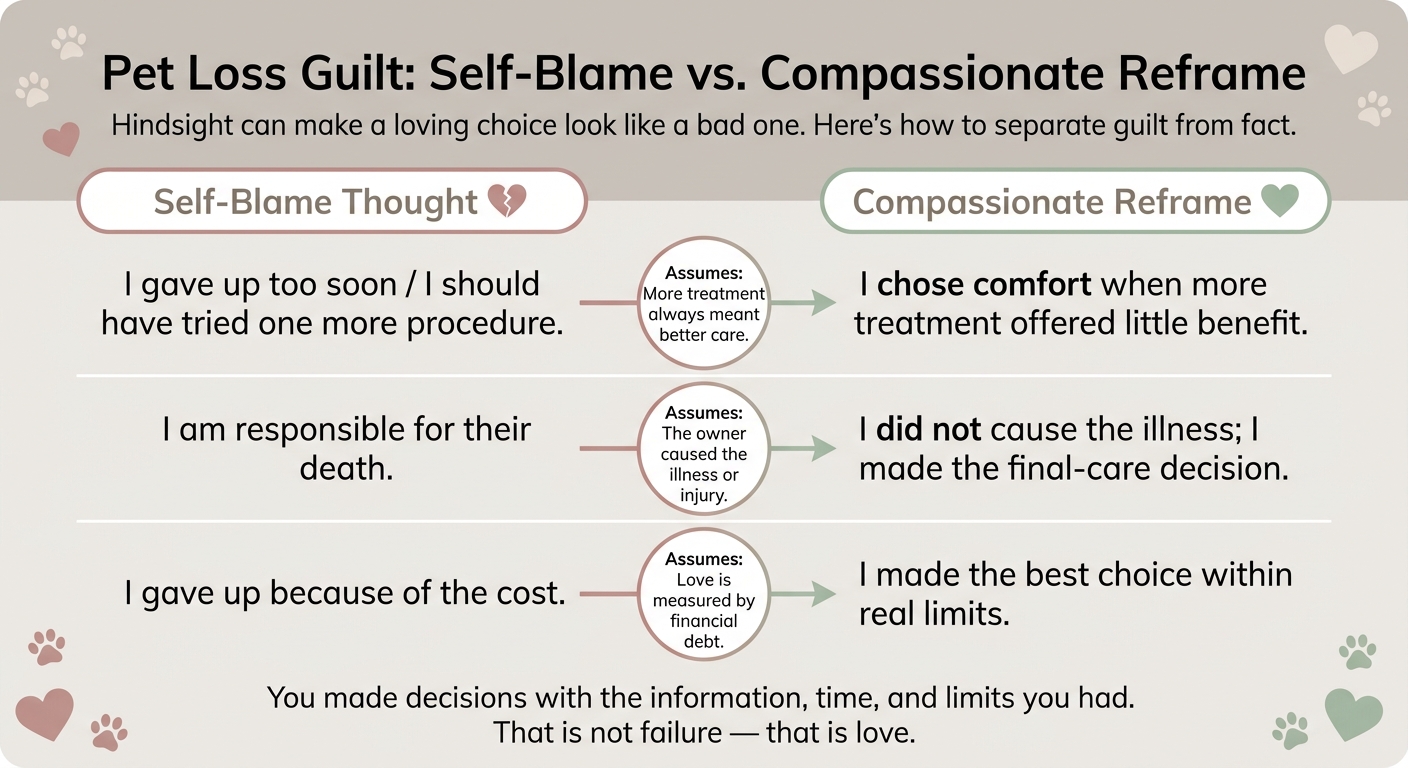
Pet Loss Guilt: Self-Blame vs. Compassionate Reframe
Guilt around end-of-life decisions is often the heaviest kind to carry after losing a pet. If you helped decide to stop treatment or choose euthanasia, that can cut deep. Even when the choice came from love and a wish to ease suffering, it can still hurt in a very personal way.
Why euthanasia can lead to intense self-blame
The bond with a pet is built on care and protection. You were the person they counted on. So when you also had to make the final call, that role can feel painfully reversed. Euthanasia can seem like betrayal, even when the point was to ease suffering. And that's the cruel part of it: the same love that made you protect them may also have led you to choose a calm ending instead of more pain.
Timing adds another layer. Many pet owners worry they acted too early or waited too long. That fear is common. But it helps to separate responsibility from blame. You were responsible for the decision. You were not the cause of the illness, injury, or death. The illness brought your pet to the end of life; you chose how that transition would happen, with peace rather than suffering. Many find comfort in choosing pet memorials and remembrances to honor that final act of love.
Veterinary quality-of-life markers can help ground the decision in your pet's condition instead of guilt alone.
A practical way to review the decision with self-compassion
One of the hardest things about guilt is that it rewrites the past using facts you didn't have at the time. Hindsight can make a loving choice look like a bad one. A simple way to slow that down is to separate the thought from the facts. Try this check: name the guilt thought, identify what it's assuming, and then answer with the facts you had then.
| Thought Pattern (Self-Blame) | What It Assumes | Compassionate Reframe |
|---|---|---|
| "I gave up too soon" or "I should have tried one more procedure." | Assumes more treatment always meant better care or that a perfect moment was missed. | I chose comfort when more treatment offered little benefit. |
| "I am responsible for their death." | Assumes the owner caused the underlying illness or injury. | I did not cause the illness; I made the final-care decision. |
| "I gave up because of the cost." | Assumes that love is measured by financial debt. | I made the best choice within real limits. |
The point isn't to make the pain disappear. It's to stop putting a past decision on trial with knowledge you didn't have then. That shift can make guilt a little easier to carry without changing what the bond meant.
How to work through guilt and honor your pet
Guilt has a way of rewriting the past. So the first step is simple: separate the facts from the self-blame. After pet loss, guilt is easier to face when you treat it like a signal - pointing to a need, fear, or regret - instead of taking it as proof that you failed.
Ways to replace self-blame with a clearer view of the relationship
Start by naming the exact regret, not just the feeling. That matters more than it may seem. A feelings wheel can help you sort guilt from grief, helplessness, or shock.
Then test that regret against the facts. Write a short, factual account of your pet's condition, what your veterinarian explained at the time, and what your goal was in that moment. After that, make a care list: the attention you gave, the vet visits, the treatment, the comfort, the love.
When the "what if" thoughts start looping, go back to both lists. Guilt shrinks the story down to the final moments. A care list brings back the whole relationship.
If unanswered medical questions are still feeding the guilt, call your veterinarian directly. A clearer sense of how an illness progressed can stop self-blame from filling in the blanks with worst-case guesses. And if those questions still don't settle, a pet-loss counselor can help you sort fear from fact.
Memorial rituals that support healing
Once you've grounded yourself in the facts, remembrance can help shift your focus from the death to the life your pet lived. Choosing a memorial - burial markers, urns, or memorial jewelry - can anchor that love in something you can see and hold. It puts the focus back on the full span of the relationship, not just its last chapter.
Pet Memory Shop offers urns, caskets, burial markers, and memorial jewelry for families who want a tangible way to honor a pet.
Conclusion: Guilt is common, but it is not the full story
Pet-loss guilt often grows out of love, not neglect. It can show up before a pet dies and after, in quiet moments or all at once. Hindsight can make old choices look worse than they were because you're judging them with information you didn't have at the time.
A kind review of the facts, honest talks with supportive people, and meaningful ways to honor your pet's life can help lighten that weight. Feeling guilty doesn't mean you failed your pet. More often, it means the bond was deep.
FAQs
How do I know if it’s guilt or grief?
Guilt is a common, valid part of grief after losing a pet. You may feel it if you keep replaying end-of-life decisions, wonder if the loss could have been prevented, or blame yourself for what happened.
These feelings often sit right next to sadness, anger, and helplessness. Naming them and accepting that they’re there can be an important part of healing.
Is it normal to feel guilty after euthanasia?
Yes. Feeling guilty after a pet’s euthanasia is normal and valid.
A lot of pet owners feel guilt alongside sadness, doubt, and helplessness when they face hard end-of-life choices. It’s common to replay the decision in your mind and wonder if you did the right thing.
Knowing you’re not alone can help. For many people, that simple fact is part of how healing starts.
What can I do when guilt keeps coming back?
When guilt comes back, name it instead of trying to shove it aside. Guilt is a common and natural part of grief.
Simple, deliberate acts can help. You might try writing things down, sitting in quiet reflection, or creating a personal ritual to honor your pet. Support matters too. You do not have to carry this by yourself. Pet Memory Shop offers a Pet Loss Support Center with resources and 24/7 assistance.